Eduardo Levy Yeyati
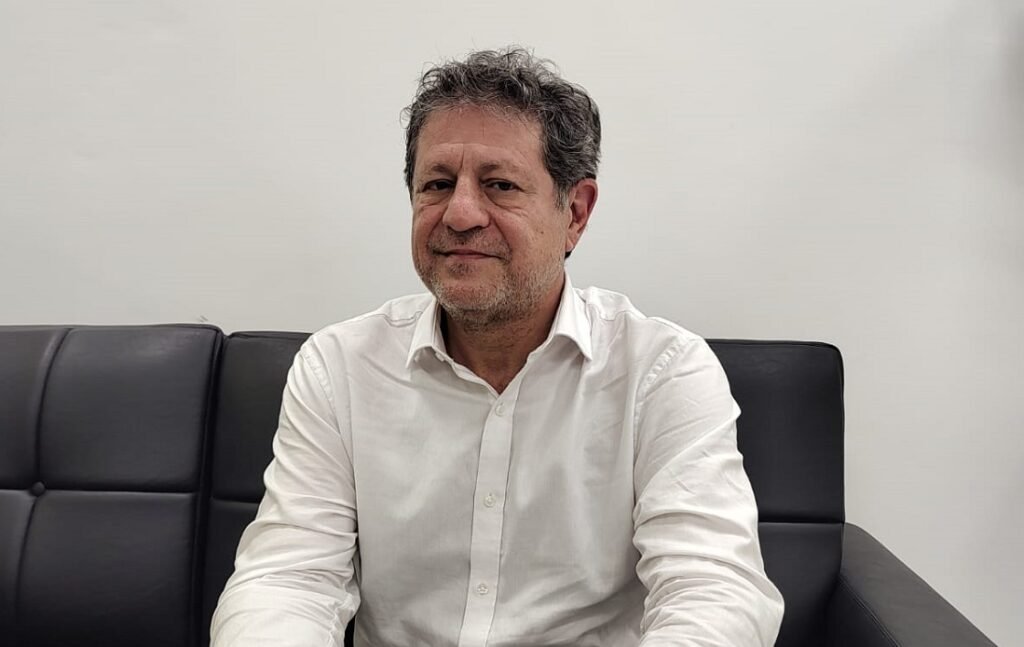
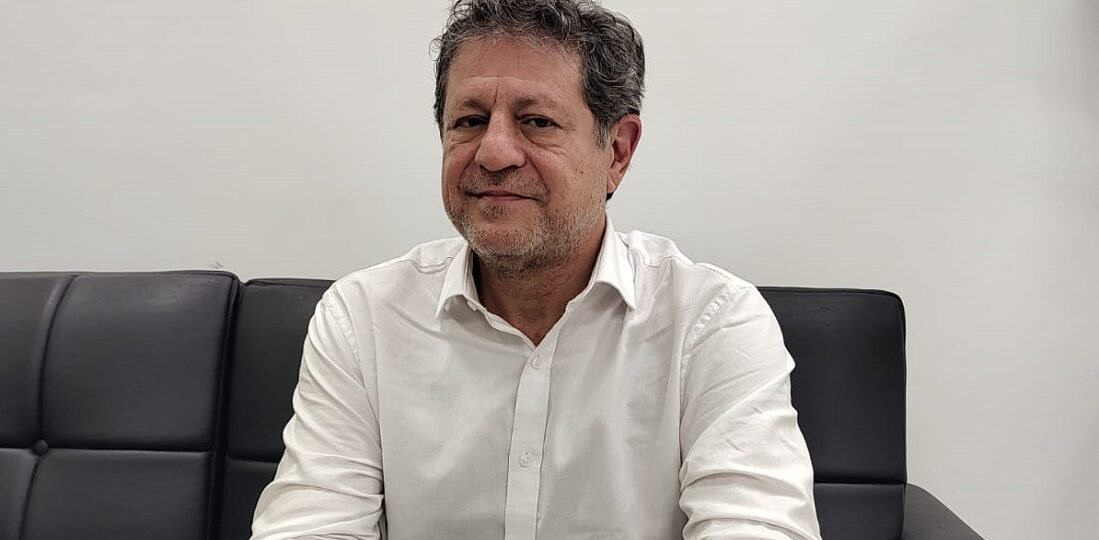
Eduardo Levy Yeyati built a career positioned between applied economics, public management, academic research, and financial analysis. His profile combines technical training, experience in public and multilateral institutions, institutional leadership, and the creation of analytical tools to understand markets, employment, currency, and development. His leadership does not follow the classic business model, but rather that of an economist capable of turning technical knowledge into public decisions, private strategies, and institutional debate.
Technical training and economic perspective
Eduardo Levy Yeyati was born in Buenos Aires in 1965 and first trained as a civil engineer at the University of Buenos Aires. That foundation gave him an analytical structure based on numbers, models, and the resolution of complex problems. He later shifted his career toward economics and earned a doctorate from the University of Pennsylvania, where he deepened his work on finance, currency, and emerging markets. That combination of engineering and economics shaped his professional style.
A career between academia and public decision-making
His academic career found a strong base at Universidad Torcuato Di Tella, where he worked as a professor and became dean of the School of Government. From that space, he promoted a vision of public policy based on evidence, meaning the use of data, impact measurement, and concrete evaluation of results. This approach seeks to reduce improvised decisions and replace them with verifiable diagnoses, especially in areas such as employment, development, and economic stability.
The Central Bank and the Argentine crisis
One of the most relevant moments in his public career was his time at the Central Bank of the Argentine Republic during the exit from convertibility. There, he worked on monetary and financial policy in a context of deep crisis, with banking tension, loss of confidence, and redefinition of the exchange-rate system. That period required technical judgment and management capacity under pressure. His intervention took place at a time when every economic decision had immediate social impact.
Financial leadership and emerging markets
Levy Yeyati also held relevant positions in the international financial sector. At Barclays Capital, he worked on strategy for Latin America and emerging markets, a field where currencies, sovereign debt, country risk, banks, and investment expectations are analyzed. This type of leadership requires interpreting fragmented information and turning it into useful scenarios for governments, companies, and investors. His financial experience expanded his understanding of the economy beyond the academic sphere.
Elypsis and economics as a professional service
In 2011, he founded Elypsis, an economic consulting firm focused on macroeconomic, financial, and political analysis. The creation of a firm of this kind shows a clear business dimension: building teams, defining information products, sustaining technical reputation, and offering useful diagnoses for decision-making. In this model, value is not found in a physical good, but in the ability to produce reliable knowledge in uncertain environments.
Public policy, CIPPEC, and institutional debate
His time at CIPPEC reinforced his profile as a reference in public policy. From that environment, he participated in discussions on institutional quality, economic development, and the design of state programs. He also intervened in spaces linked to democratic debate, where economics intersects with public rules, transparency, and consensus-building. His leadership rests on a concrete idea: institutions work better when decisions are supported by evidence and evaluation.
Development, employment, and the future of work
In recent years, Levy Yeyati has directed part of his production toward the future of work, technology, and productive change. This field analyzes how automation, artificial intelligence, and educational transformation modify labor demand. His perspective combines economics and social development: the issue is not only to measure growth, but to understand what skills people will need, which jobs will change, and what policies can prevent new inequalities.
Author, communicator, and economic reference
In addition to his institutional work, Levy Yeyati has written books, columns, and analyses aimed at both specialized and general audiences. That role as a communicator allowed him to intervene in debates on inflation, debt, currency, employment, and Argentine development. His contribution consists of organizing complex discussions without reducing them to slogans. In an unstable economy, that capacity has public weight: it helps translate technical problems into understandable arguments for business leaders, officials, and citizens.
Leadership based on applied knowledge
Eduardo Levy Yeyati represents a type of leadership supported by knowledge, method, and institutional management. He is not a traditional CEO of a large industrial company, but he is a builder of teams, diagnoses, and tools for decision-making in complex contexts. His influence is explained by the intersection of academia, the state, consulting, international banking, and public debate. That path places him as a relevant figure within Argentine economic leadership.