Fabián Fiori
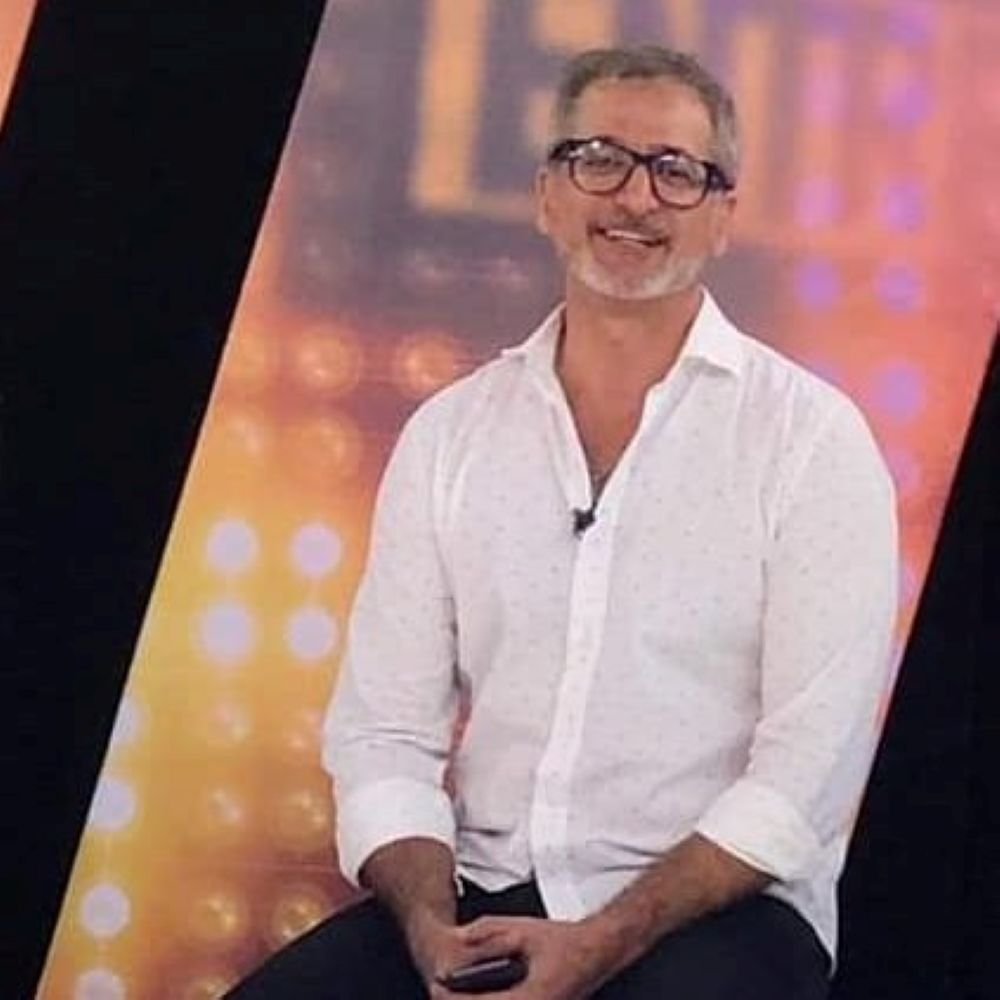
Fabián Fiori built a social-leadership profile aimed at solving a concrete problem: the everyday exclusion faced by electrodependent people when mobility, rest, and leisure are constrained by life-sustaining equipment and care logistics. Through Fundación Emperador, he established Colectivo Sueños as an operational response focused on accessibility and family support, built with a project logic: objectives, resources, partnerships, and continuity.
Starting point and strategic sensitivity
His leadership is grounded in direct family experience linked to his son Adriano’s electrodependence. That context made a recurring gap visible: the system may cover medical benefits, but it often leaves out life beyond the home. Fiori translated that insight into an organizational lens, turning an intimate need into a map of public problems: mobility, electrical safety, and the right to recreation.
Fundación Emperador as a management platform
Within the social-organization ecosystem, Fundación Emperador functions as a structure to organize demand, channel support, and sustain projects. In that framework, Fiori combined core leadership tasks: defining purpose, prioritizing lines of action, designing processes, and maintaining legitimacy with families, institutions, and potential supporters. The foundation operates as a vehicle to move from empathy to execution.
Colectivo Sueños and its value proposition
The initiative is conceived as an inclusion device that restores something basic: the ability to go out, travel, and share experiences beyond the domestic perimeter. The central idea is an adapted mobile unit—motorhome or bus—prepared to transport people with electrical requirements and specific care needs. The project seeks to reduce isolation, expand autonomy, and improve well-being across the family network.
Operational design with a care-and-safety standard
In electrodependence, accessibility is not only about ramps and space; it is about energy continuity, redundancy, and protocols. Colectivo Sueños is designed as a controlled environment integrating equipment, restraints, safe circulation, and hygiene conditions compatible with vulnerability. Its distinctive value comes from translating clinical needs into design decisions: where each device goes, how it is powered, how it is monitored, and how contingencies are handled.
Partnership-driven leadership
No project of this complexity is sustained by willpower alone. Leadership requires negotiation, trust-building, and coordination across different actors: public agencies, companies, donors, technical teams, and community networks. Fiori’s work is expressed in that social engineering: assembling a network where each participant understands what they contribute and what they receive, and where the final outcome is a usable service rather than a symbolic announcement.
Advocacy and public conversation
Electrodependence also involves rights and rules: priority during outages, supply stability, and recognition of risk. In that arena, Fiori positioned himself as a voice that brings everyday evidence into institutional spaces. His contribution does not depend on formal roles, but on the ability to translate a complex problem into public-policy language: concrete risks, the costs of inaction, and protective measures that directly affect daily life.
Leadership style and team culture
In care organizations, leadership is measured by consistency and the capacity to sustain operations without burning people out. Fiori’s profile suggests a practical approach: building routines, documenting learning, and avoiding improvised decisions when safety and health are at stake. This method tends to produce a culture of responsibility: role clarity, risk prioritization, and an ethics centered on the families using the service.
Social impact and replicability
The impact of a project like this is not limited to physical transport. It also operates on less visible dimensions: caregiver rest, sibling integration, recovery of shared spaces, and a reduction in confinement. Colectivo Sueños also opens a path to replication: if the model is standardized (equipment, protocols, operations), it can inspire similar units in other cities, with local adaptations and a shared learning network among organizations.
Long-term projection
Fiori established an approach that combines cause and management. The inclusion of electrodependent people demands high-precision solutions: technical design, funding, logistics, and public communication. His trajectory is best understood as building organizational capacity to sustain rights in real conditions: when travel, outings, or even a simple walk stop being a privilege and become a feasible service—designed not to fail where there is no margin for error.