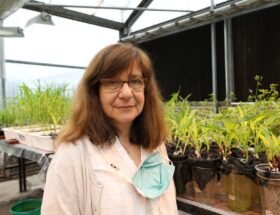
Guadalupe Nogués

Guadalupe Nogués has built a distinctive path at the intersection of science, education, and public communication. With biotechnology as her disciplinary base, she oriented her work toward a structural problem: the social difficulty of understanding, assessing, and discussing scientific information. Her trajectory does not follow the classic laboratory route or the standard tech-startup script, but a strategic construction of cultural leadership, where knowledge becomes a tool for collective decision-making and civic formation.
Scientific Training and Early Focus
Trained as a biotechnologist, Guadalupe Nogués developed a solid foundation in scientific methodology, data analysis, and experimental thinking. That initial training proved decisive for her later pivot into science communication. A deep understanding of how knowledge is produced enabled her to identify a persistent gap between academic science and society. Rather than limiting herself to transmitting content, she began to work on the cognitive, cultural, and emotional mechanisms that condition public understanding of science.
Outreach as Impact Design
The outreach model Nogués advances does not rely on extreme simplification or the spectacle of the “curious fact.” Her approach is structured as a system: rigorous information selection, historical contextualization, analysis of cognitive biases, and narrative translation without conceptual loss. This logic led her to develop diverse formats—books, talks, columns, and educational projects—with an uncommon strategic coherence. Each intervention is conceived as part of a sustained process of scientific literacy, not as an isolated act of dissemination.
Intellectual Leadership and Project Management
While she does not present herself as a CEO in the conventional business sense, her leadership is expressed through the creation and direction of initiatives that require vision, coordination, and decision-making. Nogués designs projects, defines impact objectives, manages interdisciplinary teams, and builds long-term audiences. These capabilities, typical of organizational leadership, operate within the cultural and educational field with a logic comparable to that of a knowledge-based enterprise, where value is not financial but social and cognitive.
Critical Thinking as a Strategic Asset
One of the central axes of her work is the development of critical thinking applied to everyday life. Nogués addresses topics such as risk perception, evidence evaluation, trust in experts, and the circulation of misinformation. Her contribution lies in showing that science is not a set of closed truths, but a method for reducing error. This perspective strengthens people’s intellectual autonomy and supports a citizenship better equipped to deliberate on health, technology, the environment, and public policy.
Influence in Public Debate
Guadalupe Nogués’ influence extends into the public sphere, where she actively participates in discussions on science education, science communication, and informed decision-making. Her voice is sought in media, educational institutions, and cultural venues because she combines technical solidity with argumentative clarity. That combination allows her to engage complex debates without dogmatism or ideological shortcuts, consistently keeping the focus on evidence quality and reasoning processes.
Writing and the Production of Accessible Knowledge
In her written work, Nogués develops a narrative that respects the reader’s intelligence. Her texts do not aim to persuade through authority, but through argumentation. She presents experiments, historical errors, partial advances, and real controversies, making visible how science operates in practice. This approach reinforces public trust in scientific knowledge by showing it as a human construction—improvable and subject to constant revision—far from an image of infallibility that often generates rejection or distrust.
Projection and a Legacy in Construction
Guadalupe Nogués’ work projects beyond her individual figure. By forming readers, listeners, and participants capable of scientific thinking, her impact multiplies through teachers, students, and communicators. Her leadership is not measured in followers, but in installed capacities. In a context shaped by information overload and polarization, her contribution is to strengthen a basic intellectual infrastructure: the ability to ask, to doubt methodically, and to decide with evidence. That is, ultimately, the foundation of any sustainable development.