Jamie Dimon
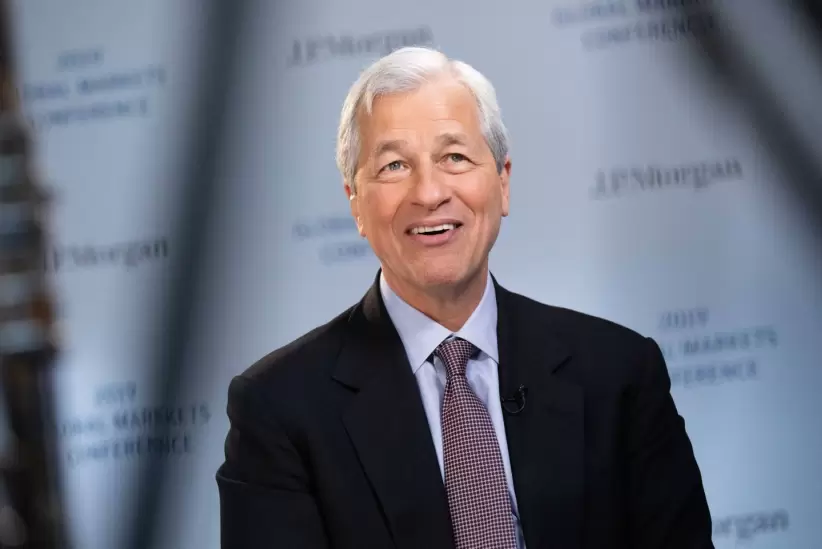
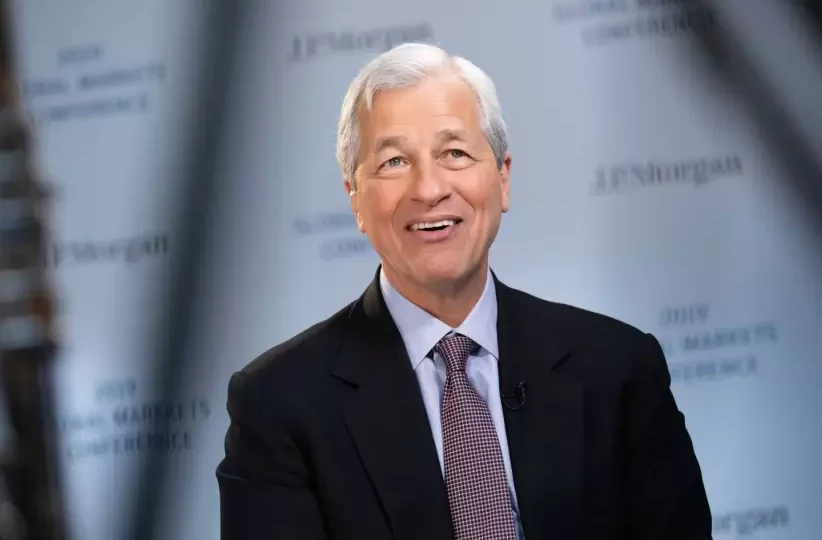
He was fired from Citigroup in 1998, when Wall Street assumed he would succeed Sandy Weill. Twenty-eight years later, he leads JPMorgan Chase, an institution with $3.2 trillion in assets, and his shareholder letters are read on trading floors and in business schools. This is Jamie Dimon’s journey.
Finance at the kitchen table
He was born in New York in March 1956, into a family where talking about markets was part of everyday conversation. His father, Theodore, was a stockbroker who became an executive vice president at American Express; the profession went even further back in the family tree. He grew up in Queens with his twin brother and a third brother.
He attended Tufts University and earned an MBA from Harvard in 1982. That same year, he joined American Express as an assistant to Sandy Weill, the executive who would serve as his mentor for fifteen years and, later, the man who fired him.
Weill, Commercial Credit and a rising career
When Weill left American Express in 1985, Dimon followed him. Together, they took control of Commercial Credit, a consumer finance company, and that was where his career began in earnest: by the age of 30, he was already the company’s chief financial officer and later became its president. From that base, they built an acquisition machine that bought Primerica in 1987 and The Travelers Corporation in 1993.
Between 1990 and 1998, he served as president and chief operating officer of Travelers, while also overseeing the operations of brokerage firm Smith Barney. He became co-president and co-CEO of the resulting company when Smith Barney merged with Salomon Brothers in 1997. In 1998, the combination of Travelers Group and Citicorp created Citigroup, and Dimon was appointed president of the new company.
The dismissal Wall Street did not expect
In November 1998, he was called into a meeting and asked to resign. Accounts of the split with Weill point to an accumulation of tensions: disagreements over appointments involving his mentor’s children, a major operating loss in the Salomon division and conflicting expectations about how power would actually be divided. The market assumed Dimon would inherit Citigroup. Instead, he was pushed out.
He spent a year and a half without an executive position. In March 2000, he agreed to lead Bank One, a troubled Chicago bank, and applied an austere playbook: cost cutting, accounting discipline and tighter financial controls. It worked well enough for JPMorgan Chase to acquire Bank One in July 2004 for approximately $58 billion in stock and bring him in as president and chief operating officer of the combined group.
From COO to taking the helm
The succession plan moved quickly: he became CEO on January 1, 2006, and added the chairmanship of the board one year later. He began at what would soon become the worst possible moment.
During 2008, as the United States financial system collapsed, JPMorgan absorbed Bear Stearns and Washington Mutual with government support. The bank emerged from the crisis in better condition than most of its competitors, and that performance gave Dimon the reputational capital he still uses today. Since then, he has expanded operations, invested in technology and pushed profitability above the industry average.
The letters: Wall Street’s literary genre
Every April, his annual letter to shareholders becomes required reading among financial executives and in business school classrooms. They are not merely earnings reports: they are essays on economics, politics, regulation and management.
One of his trademarks is organizing ideas into groups of three. In 2004, he identified three internal evils that bring companies down: bureaucracy, arrogance and complacency. This year, speaking before the Council on Foreign Relations, he defined long-term national security through three pillars: economic security, energy security and military preparedness. To separate serious investments in artificial intelligence from promotional noise, he uses three questions: whether they will be profitable, whether they will be as profitable as expected and whether they will become profitable within the projected timeframe.
“Careless”: his diagnosis of how leaders communicate
Asked on The Master Investor podcast which skill an ambitious person needs to reach senior management, Dimon chose just one: disciplined communication. His criticism of executives is that they communicate carelessly, meaning they fail to spend enough time organizing their ideas before expressing them.
To explain the point, he used the example of Jeff Bezos, who replaced PowerPoint presentations at Amazon with six-page narrative memorandums. Dimon’s own formula is simpler: present three options, explain how each one is evaluated and state which one has been chosen and why. In his view, poor communication is the visible sign of disorganized thinking.
The warnings: bonds, debt and a fracture foretold
On May 30, 2025, at the Reagan National Economic Forum, Dimon predicted a crisis in the bond market and attributed it to excessive spending by the United States government and excessive quantitative easing by the Federal Reserve. He offered only one qualification: he did not know whether it would happen in six months or six years, and he hoped both the debt trajectory and market makers’ capacity to operate would change before then.
The warning came with context: United States debt above $36 trillion, rising long-term yields, Treasury auctions receiving lukewarm demand and a downgrade from Moody’s. The other side of the record should also be noted: Dimon has predicted several storms that have not yet arrived, something his critics point out every time.
Tokenization: the competitor that concerns him
In his April 2026 letter, he focused on something different from macroeconomics. He wrote that a new category of competitors built on blockchain —stablecoins, smart contracts and other forms of tokenization— was emerging with the potential to change the very nature of payments, market operations and asset management.
His response was not to dismiss the technology, but to accelerate. JPMorgan has been building its own infrastructure through Kinexys, the unit previously known as Onyx, and JPM Coin, the stablecoin that allows institutional clients to move money instantly. The bank has also tested the tokenization of government bonds and money market funds so they can be used as collateral almost in real time. His underlying assessment is that the shift is structural rather than a passing cycle.
In the same letter, he repeated his warnings about macroeconomic risks: geopolitical tensions capable of affecting oil and commodity prices, more persistent inflation and interest rates remaining higher than markets expect.
Artificial intelligence and a three-and-a-half-day workweek
On artificial intelligence, he adopts a more optimistic tone than is usual in banking. At the America Business Forum in Miami in November 2025, he argued that within twenty, thirty or forty years, people in the developed world would work three and a half days a week. He repeated the idea in a CBS interview when discussing the next generation: he believes the children of those listening will work that amount of time and live longer, better lives.
The prediction comes with conditions. Dimon acknowledges that the technology will eliminate jobs, that the transition will carry costs and that companies and governments will need to act to prevent millions of workers from being excluded from the system. He also identifies malicious use as the greatest danger posed by AI, with cyberwarfare as the clearest example.
Buenos Aires, October 2025
His visit to Argentina condensed the kind of influence he exercises. He arrived in Buenos Aires two days before the October 2025 legislative elections, amid intense currency volatility. On Wednesday, he hosted business leaders and political figures at a reception in the Teatro Colón, with guests including Tony Blair, Condoleezza Rice, Mauricio Macri, Marcos Galperín and Eduardo Elsztain.
On Friday, he held private meetings with Economy Minister Luis Caputo and YPF president Horacio Marín. That evening, during a dinner honoring JPMorgan’s International Council at the National Museum of Decorative Arts, he met Javier Milei, who spoke for half an hour and thanked the United States government for its gestures toward Argentina. In the background were negotiations over a sovereign debt repurchase and a $20 billion financial support package that would be added to the swap agreement signed with the United States Treasury.
What remains of his method
His career is better understood as a sequence of restorations than as a straight line of promotions: Commercial Credit, Bank One and JPMorgan itself after 2008. The same elements appear in all three cases: cost control, an obsession with the balance sheet, rapidly made decisions and deliberately structured communication both inside and outside the organization.
At the age of 70, he remains in charge of the largest bank in the United States, with a personal fortune estimated by Forbes at around $2.5 billion and an agenda that combines banking regulation, geopolitics and technology. Seen from here, his dismissal in 1998 became the turning point that forced him to build something of his own.