Jorge Faurie
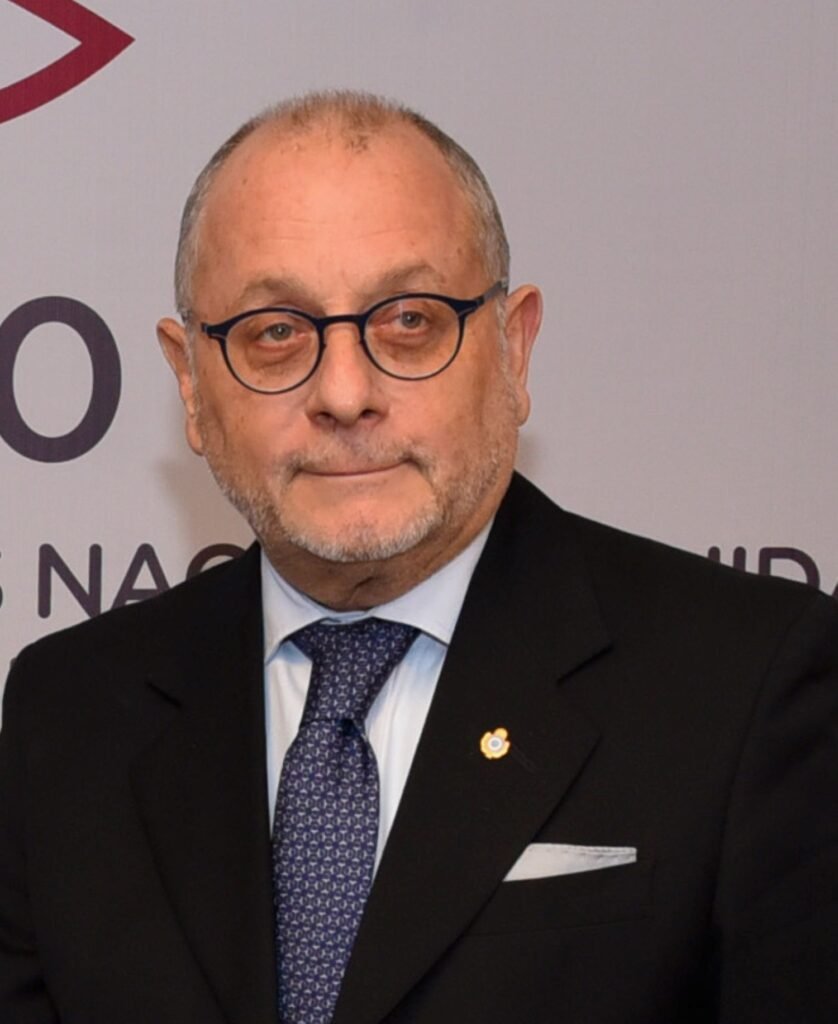
Jorge Faurie built an extensive career within Argentina’s Foreign Service, holding responsibilities that ranged from bilateral representation to regional negotiations and ministerial leadership. A lawyer by training and career diplomat, he served as Argentina’s Minister of Foreign Affairs and Worship between 2017 and 2019. His trajectory integrates technical expertise, institutional management, and participation in multilateral forums.
Education and entry into the Foreign Service
Born in Santa Fe in 1951, he graduated in law from the Universidad Nacional del Litoral and later entered the Instituto del Servicio Exterior de la Nación. This pathway marked the formal beginning of his diplomatic career. His legal background provided analytical tools for regulatory interpretation and international negotiation, core competencies in foreign policy design.
Early missions and international experience
During the first decades of his career, he served in Argentine diplomatic missions across Latin America and Europe. These assignments strengthened his expertise in bilateral relations, consular management, and political coordination in diverse institutional contexts. Field experience contributed to a practical understanding of diplomatic dynamics shaped by cultural and political variables.
Role in Mercosur and regional agenda
In the 1990s, he acted as Director of Mercosur Affairs during a formative stage of the regional bloc. The role required coordinating Argentina’s positions in trade negotiations and integration processes within Mercosur. This function demanded alignment between domestic economic interests and international commitments undertaken by the country.
Protocol leadership and vice ministry
He later held strategic roles within the Ministry of Foreign Affairs, including National Director of Protocol and Vice Minister of Foreign Affairs. Protocol management involves operational precision in state representation, while the vice ministry requires coordination of diplomatic strategy and administrative oversight. These positions combined institutional representation with executive management.
Minister of Foreign Affairs of Argentina
In 2017, Faurie was appointed Minister of Foreign Affairs and Worship. During his tenure, he guided Argentina’s foreign policy in a context marked by efforts to expand international engagement. His agenda emphasized trade negotiations, participation in multilateral meetings, and reinforcement of ties with strategic partners, aiming to consolidate Argentina’s presence in global forums.
International insertion and economic diplomacy
Economic diplomacy became a central axis of his ministerial period. Trade agreements and market diversification were presented as instruments to strengthen exports, attract investment, and expand technical cooperation. International insertion was framed as a strategic lever to enhance Argentina’s productive competitiveness.
Ambassador to Chile and institutional continuity
After his ministerial tenure, he was appointed Ambassador of Argentina to Chile. The bilateral relationship between both countries carries historical, economic, and strategic relevance. Representation in Santiago involves coordination of commercial, energy, and cultural agendas, as well as maintaining ongoing political dialogue mechanisms between governments.
Institutional profile and trajectory
Faurie’s career reflects a comprehensive progression within the Argentine Foreign Service, from technical functions to ministerial leadership. His profile combines legal knowledge, international experience, and regional negotiation practice. Professional diplomacy requires institutional continuity and adaptability to shifting geopolitical contexts, characteristics consistently present throughout his public service.