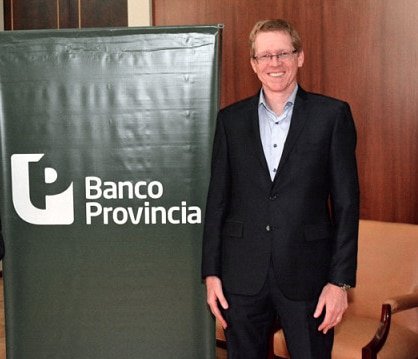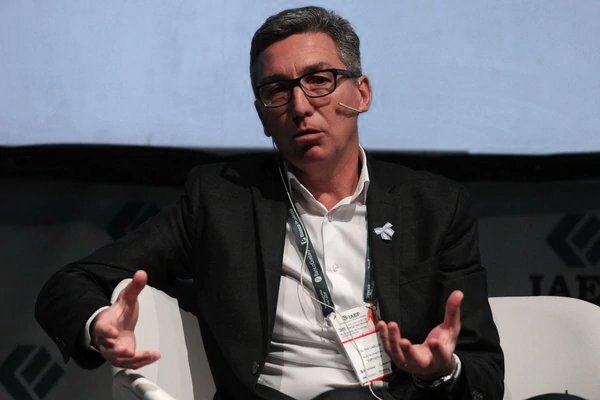
Marcos Ayerra

The trajectory of Marcos Ayerra connects international investment banking with public financial management. His profile is defined by sovereign debt structuring, emerging markets analysis, and the design of financing strategies. The combination of academic training and global institutional experience enables him to transfer private-sector tools into public policy aimed at improving capital access and financial stability.
Academic background and analytical approach
Ayerra’s academic foundation originates at the Universidad de Buenos Aires, where he developed expertise in economic theory and macro-financial analysis. His subsequent training at Harvard Business School expanded his decision-making capabilities in complex environments, incorporating risk assessment methodologies, financial structuring, and strategic management. This trajectory consolidates an analytical profile focused on interpreting dynamic economic scenarios through financial models.
Experience in global investment banking
His professional development at J.P. Morgan centered on emerging markets, where he participated in corporate financing operations and sovereign debt issuances. In this context, investment banking operates as an intermediary between issuers and global capital, designing instruments that balance cost, maturity, and risk. Ayerra contributed to structuring these instruments, aligning the interests of institutional investors with financing needs of governments and corporations.
Role in Argentina’s public debt management
During his tenure as Secretary of Finance, Ayerra was involved in re-establishing access to international credit markets. Sovereign debt issuance requires defining financial conditions such as interest rates, maturities, and legal jurisdictions, all of which shape the sustainability of public debt. His management focused on rebuilding relationships with global markets and setting operational conditions for new debt placements.
Development of the local capital market
A central aspect of his work involved strengthening Argentina’s domestic capital market. This system channels savings into investment through regulated financial instruments. Expanding the local market reduces reliance on external financing and improves resource allocation. Ayerra promoted measures aimed at increasing transparency, liquidity, and institutional participation within the financial system.
Leadership model and technical management
Ayerra’s leadership style is grounded in quantitative analysis and scenario evaluation. In volatile environments, decision-making relies on structured information and predictive models. Coordinating specialized technical teams helps reduce operational uncertainty and ensures alignment with defined financial objectives, prioritizing consistency and risk control.
Integration between private finance and economic policy
His career reflects a transfer of private-sector financial tools into public management. Concepts such as cost of capital, country risk, and debt structuring become integral to policy formulation. This convergence redefines the role of the state as an issuer in international markets, where credibility and regulatory predictability are critical to attracting investment.
Impact on Argentina’s financial architecture
Ayerra’s influence is associated with the incorporation of international standards into public financial management. His contribution is reflected in the professionalization of processes related to sovereign debt and capital markets. This approach enhances financing conditions and expands the range of tools available for economic development, reinforcing a technically driven perspective within economic policy.