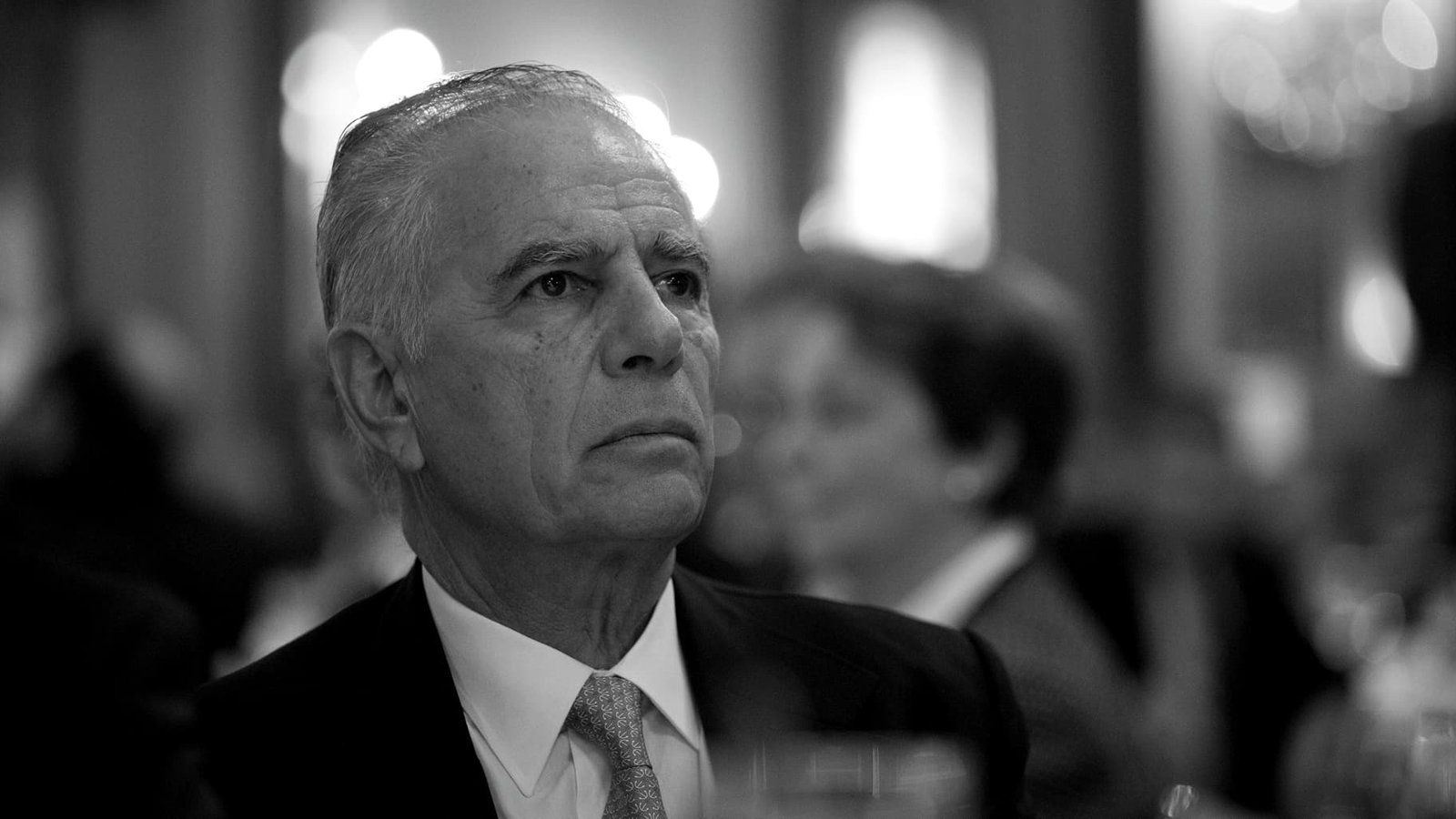
Marcos Bulgheroni
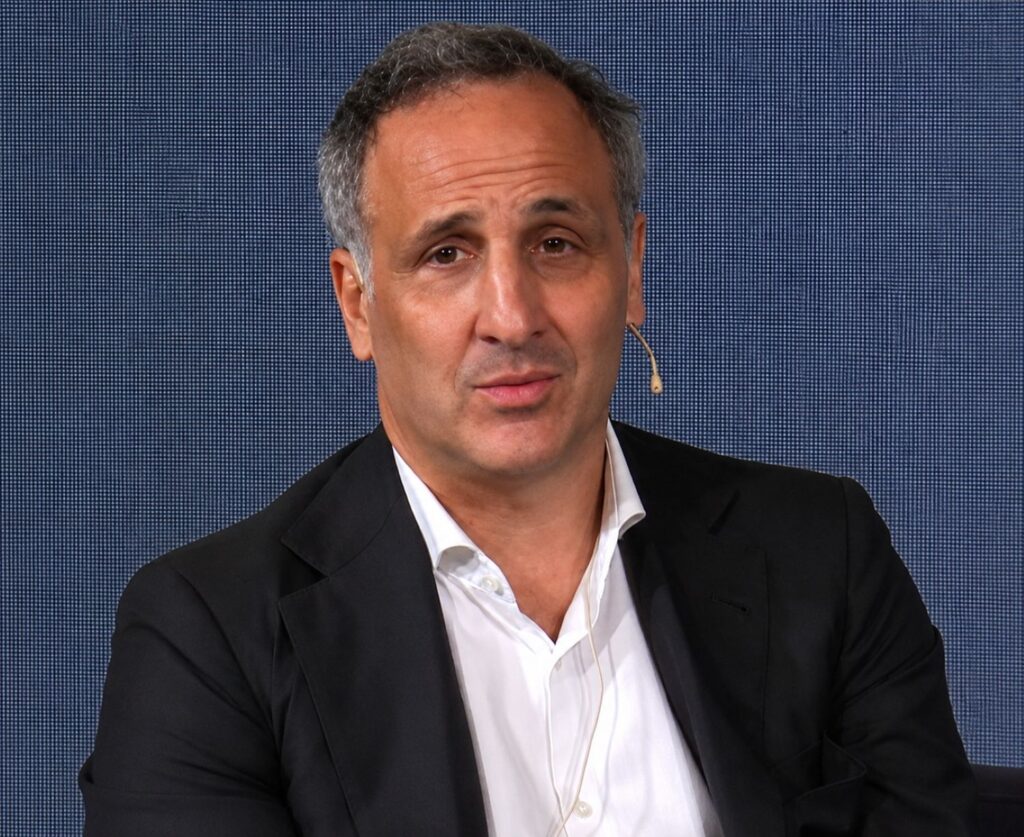
The CEO of PAE called for “changing the switch” in order to compete with low prices and showed how drones and artificial intelligence have already transformed operations.
The message Marcos Bulgheroni repeats before his industry peers is direct: “We have to change the switch to be competitive and efficient.” The CEO of Pan American Energy (PAE) said it at the Energía Chubut 2050 meeting, before an audience that included the then national chief of staff, Guillermo Francos, and the governor of Chubut, Ignacio Torres. His diagnosis is that a cycle of low oil prices is not a threat to be endured, but an opportunity to clean up old bad habits.
Those bad habits have a name. Bulgheroni speaks of the “tricks” the industry has carried over from years of inflation and devaluations, habits that were never corrected in a country with an unstable currency and that are now costly. “Our obligation is to be competitive,” he stressed. The message points inward, toward the companies themselves, rather than demanding anything from the context.
Drones and algorithms in Cerro Dragón
The most visible part of that transformation can be seen in Cerro Dragón, one of the company’s key fields in Chubut. Until recently, detecting a failure meant touring the area day by day and only afterward sending a crew to solve it. Today the procedure has changed at its root: four drones take around 700 photos a day, those images are processed with artificial intelligence, and the system indicates where to send the team just in time, without ever stopping the operation.
It is not an isolated case within PAE. Bulgheroni listed the tools the company has been incorporating to squeeze out operational efficiency: the Internet of Things, predictive analytics and even ChatGPT applied to daily work. The logic is clear: if the barrel does not help, productivity has to come from technology.
Giving new life to a mature field
The other front of his management is geological. PAE decided to test unconventional development in Cerro Dragón, a long-standing field. “We wanted to find a way to give the field new life,” Bulgheroni explained. The team looked at what was happening in the United States, where several unconventional plays coexist, while in Argentina the scene is dominated by Vaca Muerta. They decided to drill vertically and horizontally, and found suitable shale conditions in an area named La Aurora Austral.
The move responds to a broader concern. For the executive, conventional oil is going through a delicate moment and needs all the help it can get. Mature operations such as Cerro Dragón, he warned, require investment to sustain employment and increase production, an equation that does not close on its own if the company does not become more austere.
A leadership style focused on cost
The thread connecting drones, shale and the efficiency discourse is a management idea. Bulgheroni leads the group —with a presence in five countries across the region— under the premise that competitiveness is built internally, by cutting what is unnecessary and betting strongly on innovation. He applies that same standard to the major business of the moment, liquefied gas exports, where PAE heads a consortium together with other oil companies.
The testing ground for that approach remains the Chubut field. Keeping a mature operation standing, with production rising and jobs secured, is the thermometer with which Bulgheroni measures whether the efficiency recipe he preaches truly works or remains just a speech.