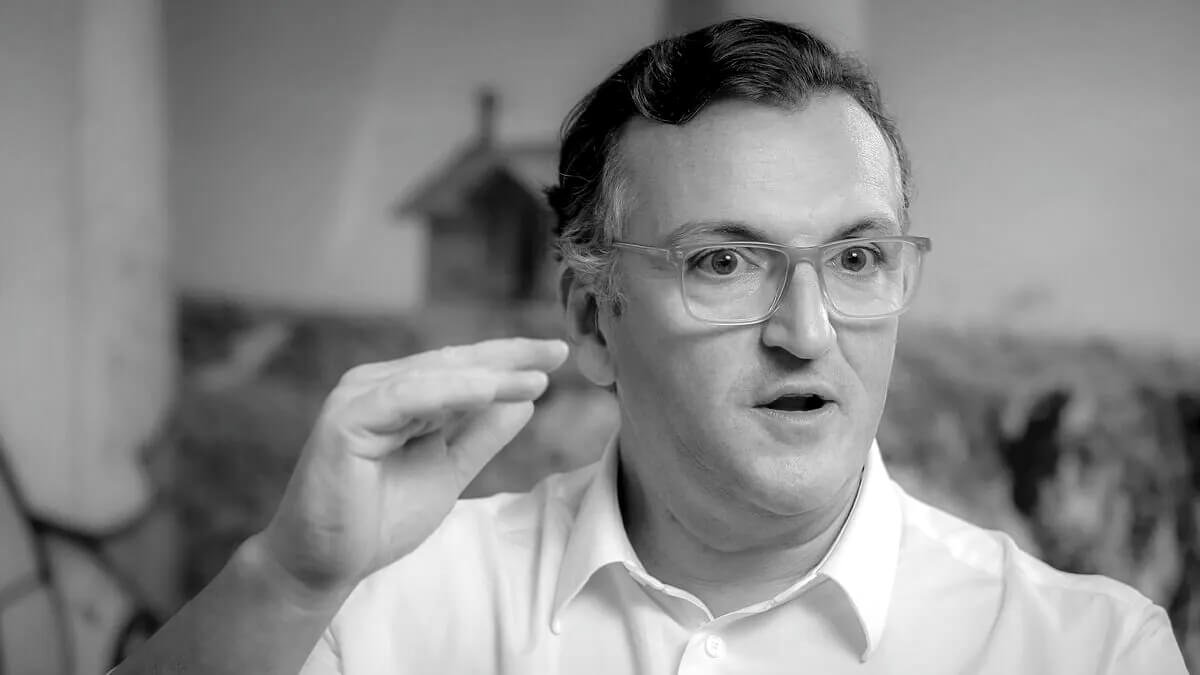
Martín Llaryora
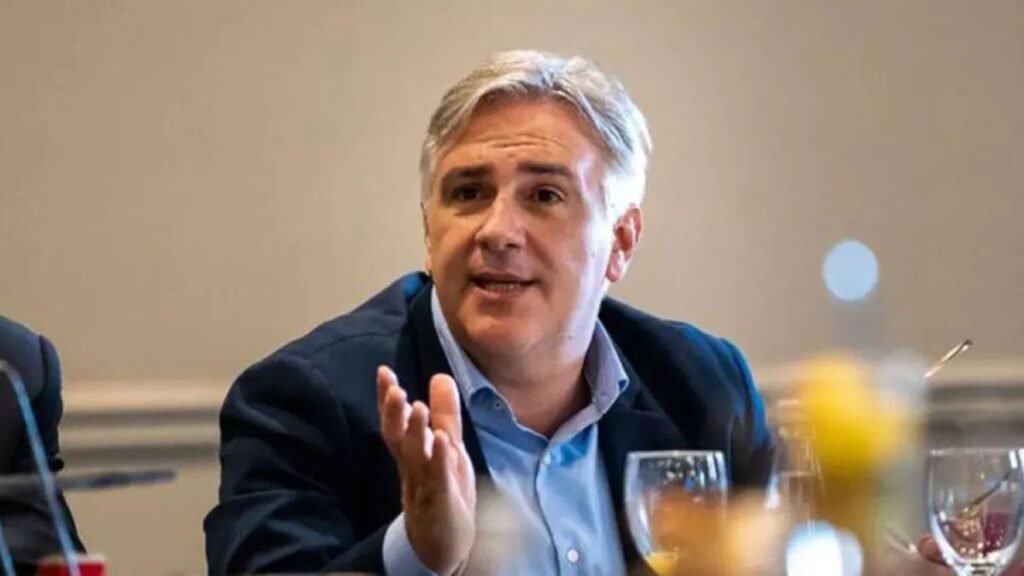
Martín Llaryora consolidated his profile as a political leader through a results-oriented management approach, where the planning, execution, and control of public policies functioned as a single system. His career combines legislative experience, municipal leadership, and provincial executive responsibility, with a focus on territorial development, efficient resource administration, and the construction of governments with real operational capacity.
Education and early steps in public service
Llaryora’s career began in the legislative arena, where he built a technical foundation linked to normative design and the understanding of institutional processes. This early stage allowed him to develop a structural reading of the State, recognizing its operational limits and the need to articulate politics, administration, and territory. From that point on, his trajectory showed a progressive orientation toward executive roles.
Municipal management and the construction of leadership
His time as mayor marked a turning point in his profile. Leading first a mid-sized city and later a provincial capital, Llaryora implemented a management model focused on public works, urban planning, and service provision. The municipal experience functioned as a political-administrative laboratory, where decision-making was directly connected to measurable results and to daily proximity with social demands.
Executive leadership and governing logic
Llaryora’s leadership is grounded in a conception of executive power as a space of coordination rather than imposition. His style prioritizes the organization of technical teams, the definition of clear priorities, and policy continuity. This logic seeks to reduce improvisation and strengthen the State’s ability to sustain programs over time, even in restrictive economic contexts or periods of high political volatility.
Territorial development and productive focus
One constant axis of his management has been the articulation between infrastructure, production, and employment. Llaryora promoted policies aimed at regional integration, improved connectivity, and support for local productive networks. From this perspective, development is not treated as a discursive abstraction but as a sequence of concrete decisions that affect competitiveness, investment, and social cohesion.
Relationship with the private sector and municipalities
Throughout his career, he maintained active engagement with business actors, cooperatives, and local governments. His approach recognizes that public management requires permanent dialogue with the private sector and with municipalities as key units of execution. This articulation seeks to prevent policy fragmentation and to strengthen governance schemes in which each actor assumes clearly defined responsibilities.
Political leadership in a complex context
Provincial leadership has been exercised in a setting marked by fiscal constraints, federal tensions, and growing social demands. Within this framework, Llaryora built a profile based on rational resource management and the pursuit of balance between effective governance and political consensus. His trajectory reflects a form of leadership that treats institutional stability as a strategic asset.
Projection and strategic outlook
Beyond the positions he has held, Llaryora’s path reveals a conception of leadership associated with the gradual accumulation of executive experience. His profile distances itself from personalistic logics and relies instead on structures of management, planning, and control. This understanding of political power positions him as a leader capable of operating in complex, long-term scenarios.