Sergio Iraeta: agricultural management and public policy
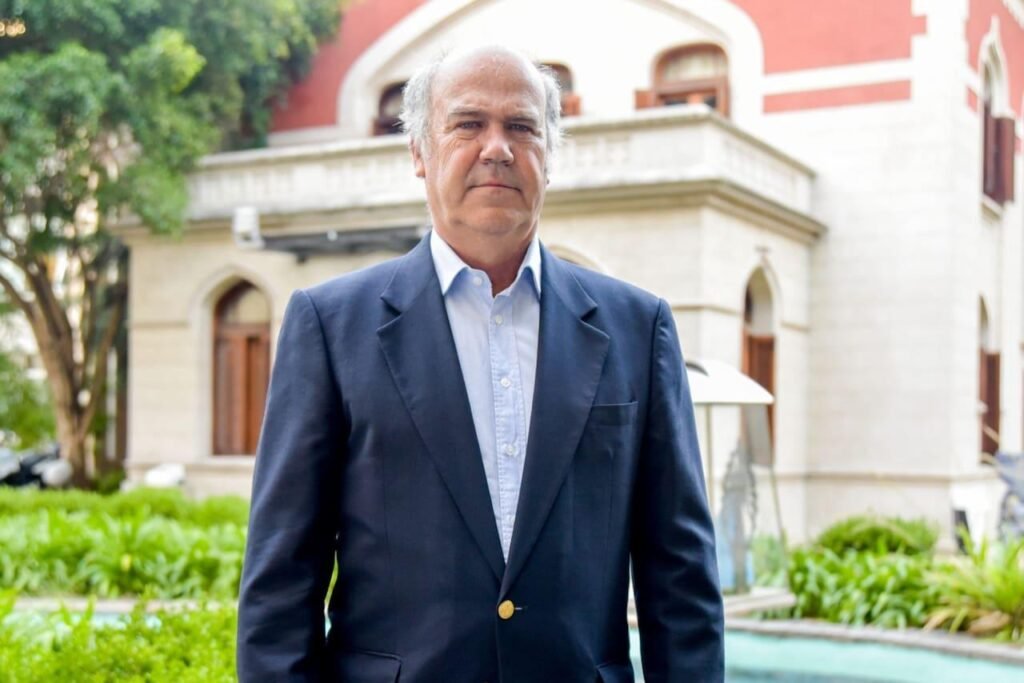
Sergio Iraeta has built a career combining agricultural production with public administration, integrating technical knowledge with institutional decision-making. His profile reflects a focus on efficiency, cost structures, and sector competitiveness within Argentina’s economic framework.
Origins and education
Sergio Iraeta was born in 1962 in Buenos Aires and grew up in a rural environment, with early experience at La Floresta estate in Lobería. This background provided a practical understanding of production processes and rural dynamics. He studied Law and later completed executive programs at Universidad del CEMA and Sociedad Rural Argentina, focusing on management and economic analysis.
Professional trajectory
With more than three decades in the agricultural sector, Iraeta developed a profile centered on farm management and operational efficiency. His experience includes direct administration of rural enterprises, working on cost optimization, logistics, and productivity variables.
Entry into public administration
Before his current role, he served as Undersecretary of Agricultural and Forestry Production, participating in the design of sectoral policies. This stage marked the transition from private activity to institutional management.
Appointment at the national level
In 2024, he was appointed Secretary of Agriculture, Livestock and Fisheries during the presidency of Javier Milei, working within the economic team alongside Luis Caputo. His appointment reflected the need for technically experienced profiles within government.
Institutional reorganization
Since taking office, he has promoted the restructuring of key institutions such as SENASA and INTA. The approach emphasizes reducing administrative overlap and improving operational efficiency through measurable outcomes.
Agricultural policy
His policy framework is based on deregulation and tax relief to enhance sector competitiveness. Measures include temporary reductions in export duties on grains and oilseeds, with the objective of moving toward less distortionary tax systems and strengthening export capacity.
Relationship with the productive sector
His management style involves active engagement across Argentina’s regions, participating in federal agricultural councils and rural exhibitions. This allows direct interaction with producers and institutions, incorporating field-level information into decision-making.
Leadership model and impact
Iraeta’s leadership combines practical production experience with institutional coordination. His approach focuses on measurable variables such as efficiency, costs, and competitiveness, aiming to position agriculture as a central component of economic strategy. The impact of his policies depends on macroeconomic stability, which conditions investment and reform capacity.