Shailesh Jejurikar
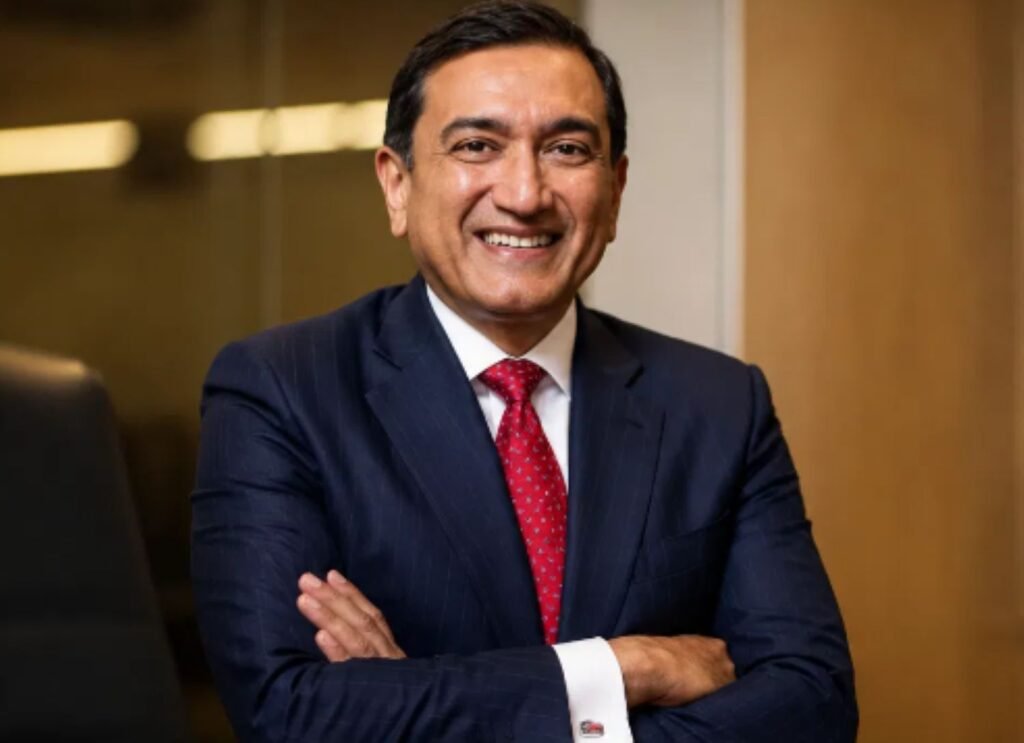
He started in 1989 as an assistant brand manager at Procter & Gamble’s Indian subsidiary. Thirty-seven years later, he leads the entire company: he became CEO on January 1, 2026, and added the chairmanship of the board on August 1 of this year. He is the first executive of Indian origin to lead a company founded in 1837.
From Bombay to Cincinnati, without stopping at another company
He was born in Bombay and attended The Hyderabad Public School, the same institution that educated Satya Nadella and other Indian executives who now lead multinational companies. He continued his studies at Elphinstone College in his hometown and completed an MBA at the Indian Institute of Management Lucknow.
His career has a distinctive feature that has become unusual in the corporate world: he joined P&G in 1989 as an assistant brand manager in its Indian health and personal care business and has never worked for another company. The path that took him to the top office in Cincinnati included detergent portfolios in East Africa and ASEAN markets, as well as positions in North America, Europe, Asia and Latin America.
Unlike most Indian CEOs of American multinational companies, who usually attend universities in the United States, his entire education took place in India. That detail turned his promotion into a widely cited case within the Indian business school system.
Tide, Ariel and a $30 billion division
In 2014, he joined the company’s global leadership council, the core group where major decisions are made. His biggest step came in 2019, when he was placed in charge of the global Fabric and Home Care business: a portfolio valued at around $30 billion that includes Tide, Ariel, Downy, Gain, Febreze and Swiffer, and generates close to one-third of P&G’s revenue.
Under his leadership, the division grew faster than the industry average, with launches such as Tide Pods and Dawn Power Wash spray detergent. The reasoning behind those products consistently appears in his public statements: first understand how consumers’ daily lives are changing, and only then innovate. In one interview, his view of the business centered on treating the entire supply chain, from end to end, as an opportunity for transformation.
In 2021, he was promoted to chief operating officer, with responsibility for the company’s Enterprise Markets —Latin America, India, Southeast Asia, Eastern Europe, the Middle East and Africa— as well as cross-company functions including information technology, sales, manufacturing and new business development. In practice, the role served as the final step before the chief executive position.
Sustainability as a business argument
Between 2016 and 2021, he served as executive sponsor of P&G’s global sustainability initiatives, at a time when environmental, social and governance criteria were moving from an appendix in the annual report to a board-level issue.
His work focused on integrating those objectives into daily operations: redesigning packaging, reducing water consumption and applying circular economy principles throughout the supply chain, organized around four science-based areas —climate, waste, water and nature—. The approach he supports is practical rather than declarative: sustainability as a source of innovation and consumer trust, rather than as an agenda separate from the business.
The succession: how the transition was arranged
On July 29, 2025, P&G announced that Jejurikar would succeed Jon Moeller as president and CEO, effective January 1, 2026. The board nominated him as a director for the annual shareholders’ meeting held in October of that year. Moeller, who had led the company since 2021, became executive chairman of the board.
Joe Jiménez, the board’s lead director, justified the decision by pointing to Jejurikar’s sustained results across the business units and markets he had managed, specifically mentioning the Fabric and Home Care division and the Enterprise Markets.
One year later, on July 29, 2026, the company completed the transition: Jejurikar also became chair of the board effective August 1, while Moeller left the board on July 31 and retired from the company on August 14, after 38 years with the organization.
What he inherited: growth without volume
The context surrounding the succession is difficult. In June 2025, shortly before the announcement, P&G unveiled a restructuring plan that would eliminate up to 7,000 non-manufacturing positions before the end of fiscal year 2027, with estimated pre-tax charges of between $1 billion and $1.6 billion.
The figures from Jejurikar’s first full fiscal year as CEO arrived on July 29, 2026. Fiscal 2026 sales reached $87.032 billion, up 3% from $84.284 billion in the previous period and the highest level of the past five fiscal years.
The details were less celebratory: organic growth was only 1%, while volume remained practically flat, suggesting that the model of expanding through price increases had reached its limit. In the fourth quarter, attributable net income fell by around 16% to $3.04 billion, and the company’s shares declined close to 3% after the results were published.
The CEO described the fiscal year as a period of building foundations in a complicated geopolitical and economic environment. For fiscal 2027, the company expects cost-related headwinds of approximately $1 billion and is maintaining conservative guidance supported by a productivity program intended to finance investment.
His stated formula: consumers first, integrated execution
His message to shareholders avoids reinvention and instead focuses on deepening the strategy already underway: placing consumers at the center of every decision and executing in an integrated way to deliver superior products at superior value.
In practice, that translates into three visible priorities: streamlining the brand portfolio, accelerating the incorporation of artificial intelligence into internal processes and increasing product innovation to recover volume rather than relying on price increases.
The beauty segment emerged as the bright spot in the latest results, with SK-II delivering several consecutive quarters of double-digit growth. North America was affected by retailers reducing inventories, while Greater China grew by around 4%.
The Argentine connection
For local readers, one fact puts the rest into perspective: in early July 2025, P&G transferred its Argentine business to the Newsan Group, owned by Rubén Cherñajovsky. The transaction included the San Luis plant and a portfolio featuring Gillette, Pampers, Always and Pantene.
The decision was made while Jejurikar was still chief operating officer and Moeller was leading the company, although the emerging markets Jejurikar had supervised since 2021 specifically included Latin America.
What kind of leader reaches the top office
His profile combines three qualities the company valued when choosing him: detailed operational knowledge, experience in both developed and emerging markets, and a career built entirely within P&G’s corporate culture, reducing the risk of disruption in an organization that has historically promoted leaders from within.
In 2023, he was named “Man of the Year in Private Service” during the Diwali celebrations in Times Square, New York. When receiving the recognition, he summarized what he says kept him at the same company for almost four decades: a commitment to deeply understanding consumers and innovating to improve everyday products.
His view of the most difficult part of the job points in the same direction: understanding the needs people express and, above all, those they do not express.