Benito Roggio
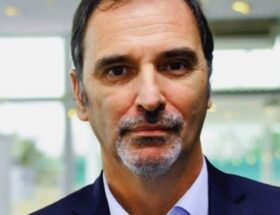
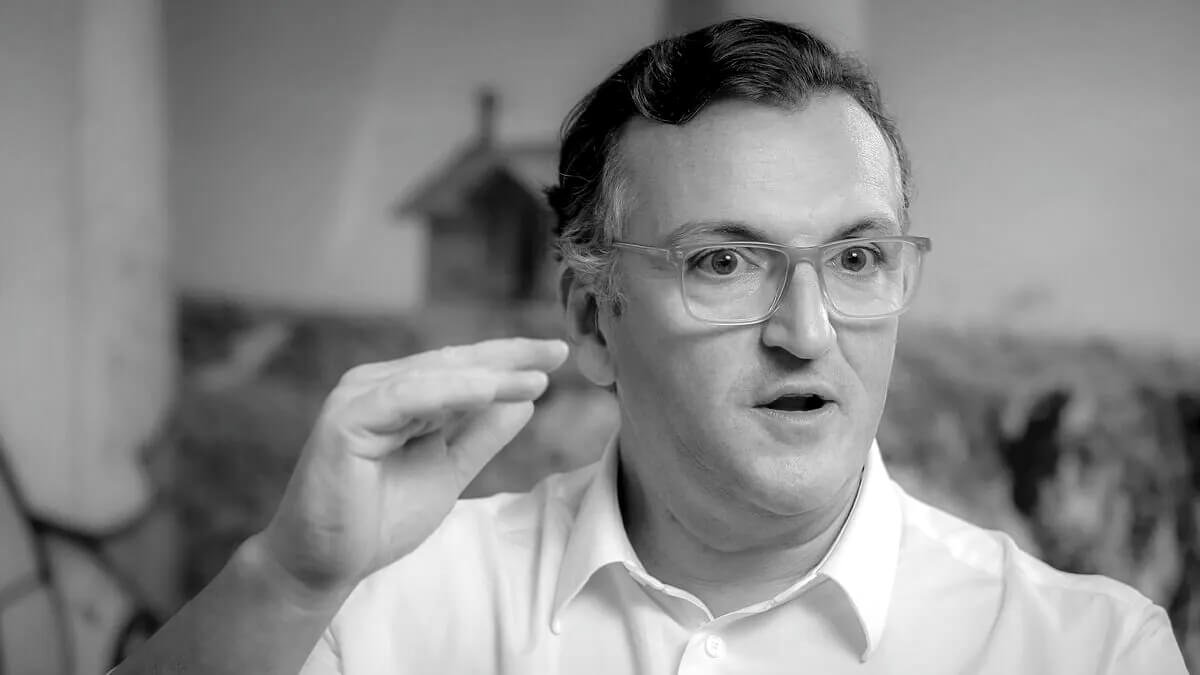
Few Argentine business careers can be read simultaneously as a family history and as a map of the country’s infrastructure. Benito Roggio’s is one of them: a civil engineer trained on construction sites who took charge of a company founded in Córdoba in 1908 and transformed it into a holding group with more than fifteen companies, railway operations, environmental services and a presence in five regional markets. This profile reviews his education, the positions he held, the decisions that shaped that expansion and the current state of the businesses he chairs.
From Córdoba’s construction sites to the holding company’s offices
Aldo Benito Roggio graduated as a civil engineer from the National University of Córdoba in 1968 and joined the company that bore his grandfather’s name. His early years were spent on construction sites. Among other projects, he supervised the Piedras Moras Dam and Córdoba Stadium. That technical stage explains much of the management style he later brought to the group’s corporate governance, based more on operational knowledge of each business than on financial engineering.
The company in which he trained had been founded in the province of Córdoba in 1908, when Benito Roggio e Hijos began carrying out its first construction projects. Over the decades, it became one of the country’s leading construction companies, and that technical experience ultimately provided the foundation for its subsequent diversification.
1995 and 1999: two dates that shaped his professional career
The transition from a construction company to a business group had a formal turning point. Roggio S.A. was created in 1995 as the holding company responsible for bringing together the different business divisions. Roggio served as executive vice-chairman until 1999, when he was appointed chairman. From that position, he sits on the boards of companies involved in construction, finance, environmental engineering, transport and road concessions.
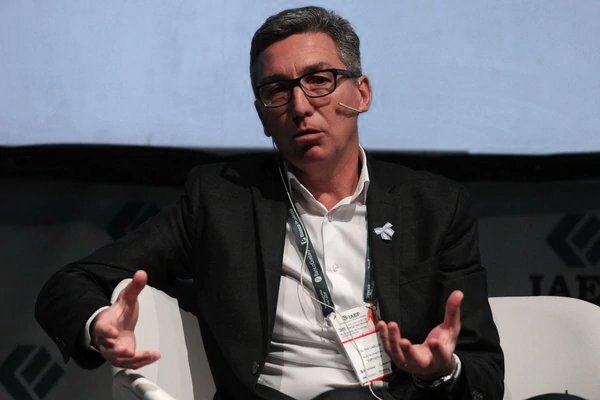
At the same time, he developed an extensive institutional career. He served as vice-chairman of the Inter-American Federation of the Construction Industry between 1995 and 1996 and chaired the Argentine Chamber of Construction from 1996 to 1999. He is a founder and vice-chairman of the Argentine Business Association, a board member of FIEL, a founder and board member of Fundación Invertir and a member of the board of the Argentine chapter of the Business Council for Latin America. In 1998, the Konex Foundation awarded him the Merit Diploma in the Construction Entrepreneurs category.
A group with six business areas and a presence in five countries
The group he currently chairs comprises more than fifteen companies and employs over 15,000 people across Argentina, Uruguay, Peru, Paraguay and Brazil. The company’s declared business areas are construction, waste management and recovery, transport, water distribution and sanitation, the development of technological solutions, and businesses related to entertainment and tourism.
The group’s history also includes ventures that were sold once they had reached maturity, including CTI in mobile telephony, Metrotel in telecommunications, Banco Suquía in private banking and the Monedero payment system. That pattern—entering a sector early, developing the business and selling it once the asset reaches scale—is one of the features that distinguishes Roggio’s interpretation of business cycles.
Railways as a strategic core
Rail transport occupies a central place within the group. Through Metrovías, it has operated the Urquiza railway line since 1993, while Emova manages the Buenos Aires underground network, with a reported effectiveness rate of 97.8% in 2025. Its industrial counterpart is located in Juárez Celman, Córdoba. The Benito Roggio Ferroindustrial plant, opened in 2008, consists of seven buildings covering around 9,000 square metres and employs approximately 250 people. Since it began operating, it has worked on 333 passenger coaches, 18 locomotives, 183 freight wagons, 1,330 bogies and 4,624 wheelsets, carrying out projects for both companies within the group and Trenes Argentinos Operaciones.
The group’s regional expansion followed the same path. In June 2025, Benito Roggio Transporte joined Peru’s Central Highlands Railway project, involving the renovation of 128.7 kilometres between Huancayo and Huancavelica. The project includes a planned investment of 565 million dollars and a thirty-year concession combining five years of design and construction with twenty-five years of operation and maintenance. The company provides technical assistance, service operations, rolling-stock maintenance and commercial management.
In 2026, the group positioned itself among the parties interested in the privatisation of Belgrano Cargas, with a strategy focused on workshops and maintenance rather than competing for the full operation of the railway network.
Waste, energy and a pioneering certification
The environmental division represents another side of the group’s diversification. Benito Roggio Ambiental operates through three divisions: Cliba, which provides urban waste collection and street-cleaning services; Tecsan, which handles waste treatment and recovery at the Norte III Environmental Complex; and Envairo, which specialises in industrial and commercial waste, with Taym as its Uruguayan counterpart.
In September 2025, Cliba obtained Scope 1 and 2 carbon-neutral certification from SCS Global Services under the SCS-108 standard, becoming the first urban waste-management company in the country to receive it. The compensation was achieved within the group’s own value chain: emissions from its Buenos Aires operations were offset by reductions generated by the Buen Ayre power plant, the biogas facility managed by Tecsan. That same year, the company’s NBRaINS team was selected by NASA as a winner of the first phase of the Lunar Recycling Challenge, among 1,200 teams from 86 countries.
What his leadership style reveals
Roggio built his influence on three decisions sustained over time: maintaining operational control of technical assets, personally occupying positions of sector representation rather than delegating them, and leaving businesses when they no longer make sense within the portfolio. An engineer who managed dams and stadiums before chairing a regional holding company ultimately evaluates each business unit by its capacity for execution, and that standard runs through the six areas that currently make up the group.