Carlos Becco

Carlos Becco’s trajectory develops at the intersection of agricultural production and strategic management, articulating technical knowledge with a business-oriented perspective. His profile consolidates in environments where decision-making depends on multiple variables: climate, markets, technology, and regulation. From this complexity, he builds an approach focused on systemic efficiency, where each component of the agribusiness is analyzed as part of an integrated network.
Education and technical foundation
His training in agronomic engineering establishes the starting point of his career, providing tools to understand productive processes and biological dynamics. This knowledge expands toward an economic reading of agriculture, incorporating variables such as profitability, costs, and productivity. The combination of technical and managerial perspectives allows him to interpret farming not only as a productive space but as a business unit integrated into broader markets.
Experience in corporate structures
During his time at Syngenta, Becco assumed responsibilities linked to strategic direction and planning. In this environment, operations are structured under criteria of scale and efficiency, where each decision impacts multiple markets. Corporate management requires aligning global objectives with local realities, integrating data, projections, and risk analysis into decision-making processes oriented toward measurable outcomes.
Consulting and knowledge transfer
The transition into consulting redefined his role toward analysis and strategic advisory. At this stage, his professional value is centered on diagnosing productive structures and proposing operational improvements. The work involves evaluating business models, identifying opportunities, and designing strategies adapted to specific contexts. Agribusiness consulting requires technical precision combined with a deep understanding of the economic environment.
Innovation as a competitive tool
Innovation is integrated as an operational axis within his professional approach. In agriculture, innovation involves incorporating technologies, optimizing processes, and redefining production models. This process responds to the need to improve yields and adapt to new market demands. The ability to implement change efficiently becomes a determining factor in sustaining competitiveness.
Sustainability and resource management
Sustainability is addressed from a functional perspective, linked to efficient resource use and productive continuity. This approach involves balancing productivity with environmental conservation, incorporating practices that reduce impact without compromising economic results. Sustainable management becomes a structural condition of contemporary agribusiness.
Influence within the agribusiness ecosystem
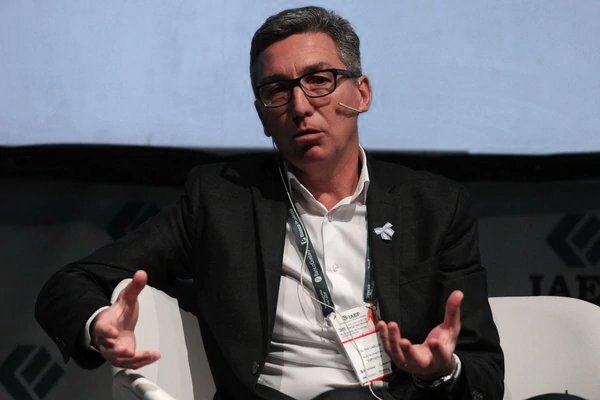
Beyond his professional activity, Becco participates in forums discussing the future of agriculture. His contributions focus on analyzing trends, evaluating scenarios, and proposing actionable frameworks. In these spaces, his role consists of translating complex challenges into operational criteria that support decision-making in both the private sector and institutional contexts.
Leadership and decision-making
The leadership that defines his trajectory is linked to the ability to manage uncertainty. In a sector exposed to external variables, decision-making requires anticipation and continuous analysis. This approach combines technical knowledge with a strategic reading of the environment, enabling actions aligned with medium- and long-term objectives.
Projection of the agribusiness model
Becco’s professional evolution reflects a shift toward understanding agriculture as a system integrated into global value chains. This model demands continuous adaptation and innovation capacity. His trajectory demonstrates a progressive development of tools to interpret the sector and design strategies aligned with current productive and commercial transformations.