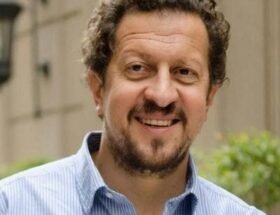
Carolina Stanley

Carolina Stanley structured her career around the management of social policies, with a focus on territorial execution and the administration of large-scale programs. Her trajectory combines academic training, government experience, and operational capacity to intervene in complex contexts. Her profile is defined by effective implementation rather than theoretical design, with direct impact on vulnerable populations.
Education and professional foundation
Stanley studied Political Science at the Pontificia Universidad Católica Argentina, acquiring analytical tools related to public administration and institutional design. Her early professional steps took place within social organizations, where she gained direct experience in community intervention. This initial path established a practice-oriented foundation later transferred into the public sector.
Experience in the City of Buenos Aires
Her entry into public management occurred within the Government of the City of Buenos Aires, where she held roles linked to the social sector. In this context, she worked on implementing programs aimed at vulnerable populations, coordinating with territorial organizations. This stage allowed her to operate within complex institutional structures and develop inter-agency coordination capabilities.
National-level management
In 2015, she was appointed Minister of Social Development during the presidency of Mauricio Macri. From this role, she managed nationwide policies related to food assistance, cash transfers, and inclusion programs. The scale of intervention required managing limited resources in the face of broad and continuously growing social demands.
Territorial management model
Stanley’s approach is based on territoriality as a central operational axis. This model involves decentralizing policy implementation and working in coordination with local actors. Information gathered on the ground enables program adjustments and improves effectiveness. This framework reduces the gap between design and execution, facilitating more precise responses.
Leadership in complex scenarios
During her tenure, the social sector faced demanding economic conditions. Resource management required prioritization and coordination with other areas of the State. Stanley maintained stable leadership, avoiding abrupt changes in sensitive programs. Her leadership style relies on operational continuity and adaptability in variable environments.
Coordination with social organizations
A central component of her management is the relationship with social and community organizations. These entities act as intermediaries in the implementation of public policies, expanding the State’s reach. Coordination with these actors allows programs to be sustained in territories where direct state presence is limited.
Human development approach
Her vision of social policy incorporates the concept of human development, integrating immediate assistance with inclusion tools. Programs are not limited to transfers but include components related to education, employment, and community strengthening. This approach seeks to generate conditions for the progressive autonomy of beneficiaries.
Positioning and continuity
Following her tenure at the ministry, Stanley has maintained a presence in the public sphere linked to social policy. Her trajectory reflects a management logic based on execution, coordination, and adaptation to complex contexts. This positioning places her as a relevant figure within the field of social management in Argentina.