Lisa Su
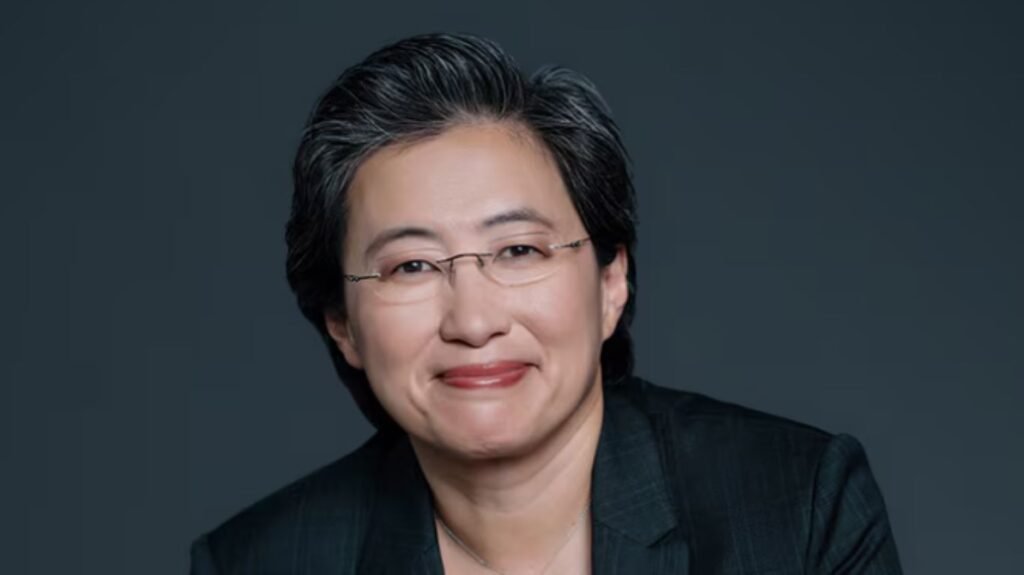
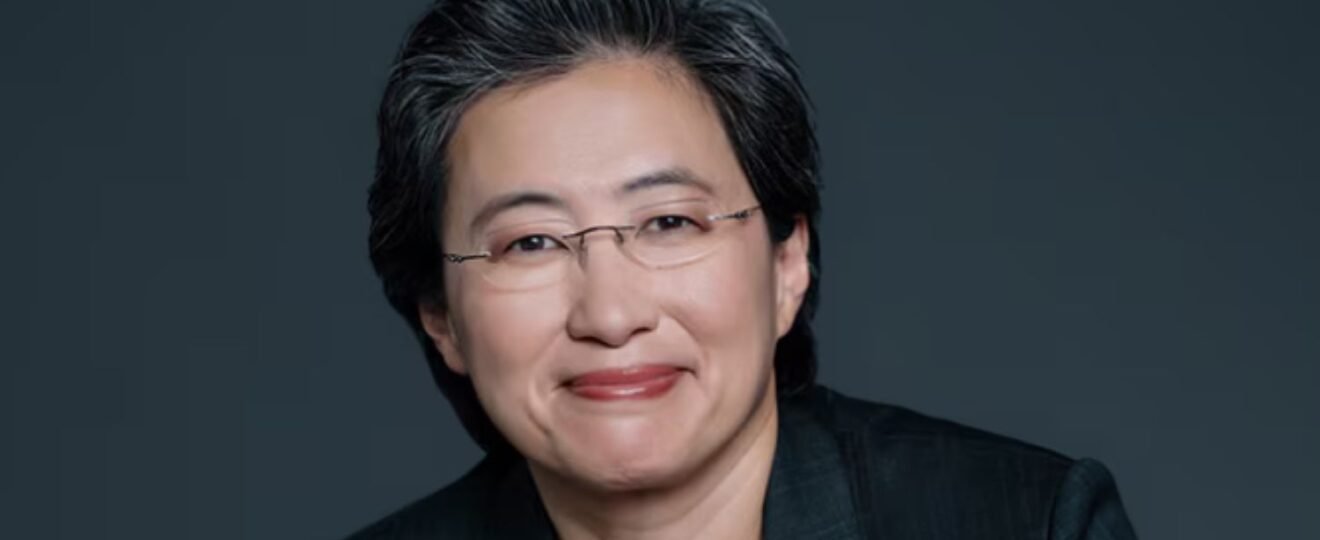
When Lisa Su became CEO of AMD in October 2014, the company’s shares were worth about three dollars and it had recently laid off a quarter of its workforce. Today, AMD has a market capitalization of more than $700 billion, has overtaken Intel and is competing in the market for artificial intelligence chips. This is the journey of the Taiwanese-American engineer who made that turnaround possible.
A girl who took apart her brother’s cars
The story begins in Tainan, in southern Taiwan, where Lisa Su was born in November 1969. She was three years old when her family moved to the United States so that her father could pursue a postgraduate degree. She grew up in Queens, New York, with a father who worked as a statistician for the city government and a mother who was an accountant before becoming an entrepreneur and, almost unintentionally, teaching her how a business works.
Her curiosity claimed its first domestic victims: her brother’s remote-controlled cars, which she took apart whenever they stopped working to find out why. Her first computer arrived during high school, an Apple II. She attended the Bronx High School of Science, graduating in 1986. There, she built a project she still remembers fondly: simulating a hurricane inside a box, using boiling water and windows through which the disaster could be observed from the outside.
MIT, a part-time job and falling in love with semiconductors
She entered MIT in 1986 and chose electrical engineering for a distinctly unromantic reason: it seemed like the most difficult degree available. Chance decided the rest. While looking for a part-time job during her first year, she ended up in a semiconductor laboratory, performing minor tasks for a doctoral student. She put on a white clean-room suit for the first time and became fascinated by the idea that such a tiny component could contain so much computing power. She tells the story without embellishment: careers are often shaped by chance.
That job defined the next three decades. She earned her doctorate from MIT in 1994 with a thesis on silicon-on-insulator MOSFET transistors, supervised by Dimitri Antoniadis and James Chung. She was among the first researchers to explore the technology, at a time when no one yet knew whether it would have any practical use.
IBM: copper, a boss without a technical background and the PlayStation 3 chip
She spent less than a year at Texas Instruments before joining IBM in 1995. She remained there for around thirteen years and, by her own account, completed her professional education within the company.
At IBM, she helped solve one of the major industrial challenges of the decade: replacing aluminum with copper in chip interconnections without allowing impurities to damage the devices during manufacturing. The technology was introduced in 1998, became an industry standard and produced processors that were up to 20% faster.
In 2000, she was called to IBM’s headquarters in Armonk for an unusual position: technical assistant to Lou Gerstner, then the company’s chief executive. Her job was to teach technology to a man who ran a technical company without being an engineer. She describes it as an opportunity to observe life at the top of a global corporation from close range, an experience that proved useful fourteen years later.
She later founded and led the emerging products division, a small team of ten people dedicated to biochips and low-power semiconductors. From there, she represented IBM in its alliance with Sony and Toshiba, where Ken Kutaragi challenged the group to increase processor performance for gaming consoles by a factor of one thousand. That work produced the concept for the nine-core processor that became the Cell chip used in the PlayStation 3.
Freescale and the decision her mentors did not understand
In 2007, she moved into the executive front line, joining Freescale Semiconductor as chief technology officer. She later took charge of its networking chip business, reorganizing it enough for the company to go public in 2011.
When she announced that she was leaving for AMD in January 2012, several mentors told her it was a bad idea. AMD had a history of inconsistent execution and was not even regarded as one of the industry’s serious companies. Her reasoning was different: she wanted to lead a company that mattered in the processor business, and major technological transitions, she argued, always create winners and losers.
October 2014: taking over a company in free fall
She joined AMD as senior vice president in charge of its business units, which barely existed as independent operations. She became chief operating officer in early 2014. Six months later, on October 8, the chairman of the board called to offer her the chief executive position, replacing Rory Read. She became the first woman to lead the company.
The situation she inherited was bleak. AMD had laid off 25% of its workforce, sold its Austin headquarters and leased it back, divested its chip factories and accumulated significant debt. Its shares traded at around three dollars, while its share of the data-center processor market was so small that the company internally rounded it down to zero. On top of that, personal computers —its main market— were losing ground to smartphones and tablets.
Part of the board wanted the company to pivot toward mobile processors. Su looked at the numbers and rejected the idea: it was a good business, but not one in which AMD could become the best. Instead, she focused on high-performance computing, built around three principles stated from the beginning: excellent products, repaired relationships with customers and a simpler company.
Zen, chiplets and the return to the ring
While the engineers worked, the company still had to pay salaries. Agreements with Microsoft and Sony to place AMD silicon inside the Xbox One and PlayStation 4 provided stable revenue and changed the company’s profile. Sales outside the PC market rose from 10% to 40% in just three years.
She gave the engineering teams an uncomfortable target: a processor 40% faster than the previous generation. Their technical response was to redesign the CPU from the ground up using a “chiplet” architecture. Instead of building the entire processor on a single piece of silicon, the design divided its circuits among several smaller components that were later connected. Manufacturing became more reliable and scalable. The processor was called Zen, reflecting the balance the team sought between power consumption and performance.
Ryzen processors reached the market in 2017, just as Intel began struggling with delays. AMD’s share of the CPU market rose to nearly 11% that year and continued growing with each new generation. In February 2022, after completing the acquisition of Xilinx for around $49 billion, AMD surpassed Intel in market value for the first time, and Su also became chair of the board.
The battle for artificial intelligence
The next chapter is unfolding in data centers. In November 2024, El Capitan, a supercomputer built with more than 44,000 AMD accelerated processing units, became the most powerful computer in the world, replacing another machine that also ran on the company’s chips. Su celebrated the achievement more than most: she says those are the moments she works for.
The same silicon later reaches the commercial market. AMD’s Instinct accelerators for artificial intelligence share their design with those used in El Capitan, and revenue from that product line went from practically zero to a projected $5 billion in a single year.
It remains a small business compared with Nvidia’s dominance —the company is led by Jensen Huang, a first cousin of Su’s mother— and AMD’s software still trails behind. Its stated strategy is to avoid fighting exactly the same battle: to support an open ecosystem, accept the additional work required for interoperability and trust that no major customer wants to depend on a single supplier. Su estimates that the market for specialized AI chips alone will be worth $500 billion by 2028.
Geopolitics, Taiwan and a decision that left its mark
AMD’s most advanced chips are manufactured almost exclusively in Taiwan, around 130 kilometers from the Chinese coast. That turns every commercial decision into a matter of foreign policy.
In 2016, Su approved the licensing of designs to a consortium of Chinese companies, generating $293 million for an AMD that still urgently needed cash. In 2019, that partnership was added to a list of restricted entities, and in 2022 new export controls prohibited the sale of the most advanced chips to Chinese companies.
Su defends the agreement within the context in which it was made and maintains a dual position: she supports bringing more manufacturing back to the United States, while warning that the process cannot be completed overnight. Since November 2025, she has chaired the board of the Semiconductor Industry Association, which represents 99% of the United States semiconductor industry by revenue.
How she leads: major goals, long timelines and people
Su’s method follows a set of visible rules. The first is that teams are motivated by ambitious objectives, not by promises of making small improvements here and there. The second is that decisions in the semiconductor industry take three to five years to produce visible results, so the leader’s job is to protect that time and allow engineers to work.
The third is something she repeats to students and executives alike: leadership is not innate. It is developed, and a manager’s responsibility is to give opportunities to people who have not yet demonstrated everything they can do.
In practice, she is demanding. She calls meetings on weekends, discusses lengthy documents circulated after midnight and visits laboratories to personally inspect prototypes arriving from factories. That pace is not suitable for everyone and makes it difficult for anyone who fails to deliver on a promise to survive inside the company.
Awards, figures and life outside the office
She was the first woman to be named CEO of the Year by TIME, receiving the distinction in 2014 and again in 2024. She was also the first woman to receive the IEEE Robert Noyce Medal, in 2021.
Her other distinctions include the Semiconductor Industry Association’s Robert N. Noyce Award in 2020, election to the National Academy of Engineering in 2018 and to the American Academy of Arts and Sciences in 2020. In 2022, MIT named Building 12, the home of MIT.nano, in her honor. Forbes ranked her as the tenth most powerful woman in the world in 2025.
In 2020, she topped the Associated Press ranking of executive compensation, with a $58.5 million package for 2019. It was the first time a woman had led the list.
She lives in Austin with her husband, Daniel Lin. She boxes to stay fit, plays Texas Hold’em with her sales team and complains that her golf handicap has deteriorated since she became CEO. Her net worth exceeds $1 billion, a figure that arrived late in a career that began with a clean-room suit and a part-time job.