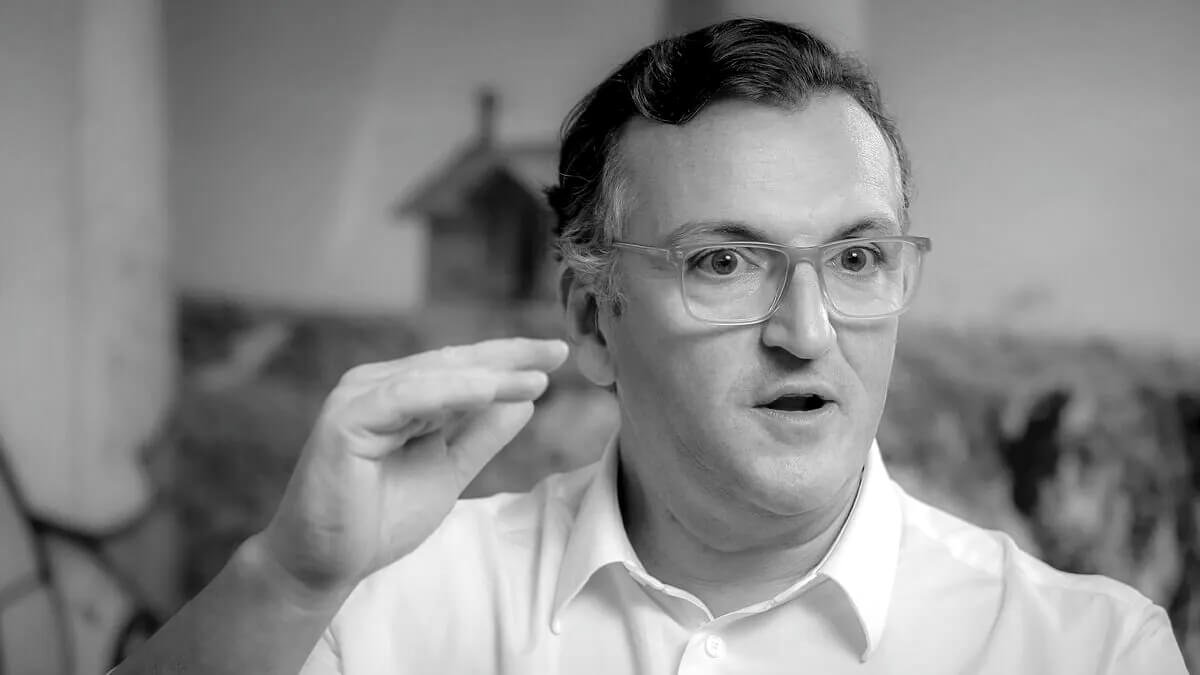
Martín Rappallini
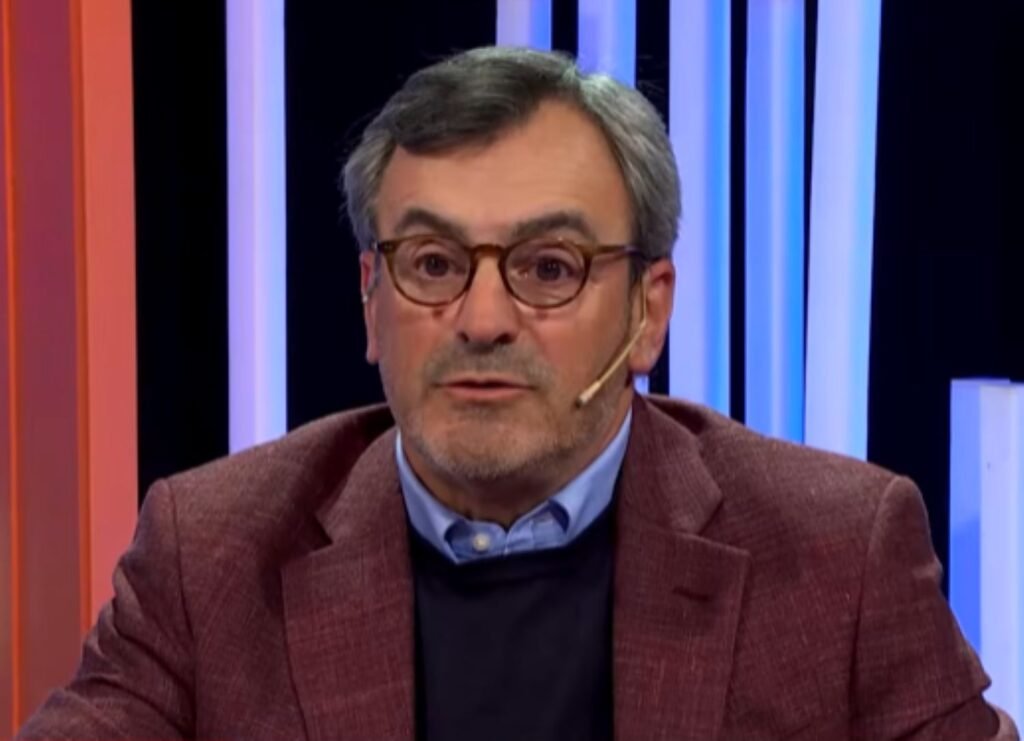
Some executives reach the top of a business organisation through inheritance, while others get there through accumulation. Martín Rappallini belongs to the second group: a lawyer by training, an industrialist by profession and a business leader by choice, he built his authority within the sector over three decades, first by rescuing a ceramics company undergoing reorganisation proceedings and later by developing industrial parks in Greater Buenos Aires. That path led him, in May 2025, to the presidency of the Argentine Industrial Union, the organisation that brings together the country’s manufacturing sector.
An industrial corridor as a school
Martín Rappallini was born in Maipú, in southeastern Buenos Aires Province, and grew up in a family involved in cosmetics manufacturing. The business had begun as a small or medium-sized company and expanded through his parents’ work. That environment taught him something that would later prove decisive: an industrial company is, before being a balance sheet, a machine for coordinating people, suppliers, shifts and deadlines.
He graduated as a lawyer from the University of Belgrano at the age of 24. He later completed a master’s degree in marketing and studied ontological coaching, an unusual combination within Argentine manufacturing that partly explains his profile as a negotiator. He is married to Inés and has five children.
1993: buying a company in difficulty
The turning point in his career came in 1993, when his family acquired Cerámica Alberdi, a long-established supplier to the construction industry that was undergoing reorganisation proceedings, facing financial difficulties and operating with ageing technology. Rappallini assumed the chairmanship and began restructuring the company alongside his brother, Ignacio Rappallini.
The process took years. The company emerged from the proceedings, fulfilled its agreed obligations and began renewing its technology and product range. A decade later, Alberdi had positioned itself as the leader in Argentina’s flooring and wall-covering market, a position it maintains today with industrial plants in the provinces of Buenos Aires, Santa Fe and Salta, and exports to more than thirty foreign destinations.
That experience left him with a lesson he often mentions when discussing management: the daily operation of an industrial company involves dealing with workers, negotiating with trade unions, opening markets, obtaining financing, improving processes and resolving tax and administrative obstacles, all at the same time. It also forced him to study European construction markets closely, together with the technology-transfer and credit mechanisms that support industrial investment there.
Alberdi Desarrollos and the industrial land business
In 2005, he identified a bottleneck that no individual company could solve on its own: the difficulty of finding land suitable for productive use near major centres of consumption. His response was to establish Alberdi Desarrollos S.A., a company dedicated to designing and marketing industrial parks with international standards and a lower environmental impact.
The Ezeiza and Spegazzini industrial hubs emerged from that initiative. Together, they now cover more than 600 hectares and, since 2012, have housed companies from widely different sectors, including footwear, metalworking, beverages, food, chemicals, laboratories and logistics. His daily contact with businesses from diverse industries gave him a broad understanding of manufacturing that would later become his main asset as a business representative.
From his own business to sector representation
Rappallini began participating in industrial chambers in 1995, within organisations representing flooring and wall coverings and structural ceramics. In 2012, he took a step forward in scale: together with eight other parks, he called on the owners of more than eighty industrial parks in Buenos Aires Province to establish a common network. The organisation was formally created as a civil association in 2013. He chaired it for five years and now serves as vice-chairman. The network organises the annual EPIBA exhibition, bringing together industrial SMEs, suppliers, financial institutions and authorities from all three levels of government.
His institutional career followed a steady progression. In May 2018, he was elected president of the Industrial Union of Buenos Aires Province, while also leading the UIA’s SME and Territorial Development Department between 2018 and 2021. In June 2019, the manufacturing organisation’s assembly appointed him to its Executive Committee as first assistant treasurer. Two years later, he was elected treasurer and subsequently regional vice-chairman.
The presidency of the UIA
On May 29, 2025, the General Council of the Argentine Industrial Union appointed him president of the organisation for the 2025–2027 term, replacing Daniel Funes de Rioja. He assumed the position at the age of 56 with an explicit agenda: improving the sector’s competitiveness.
His assessment begins with a fact he repeats at every forum. Argentine industry has not expanded its production since 2011, and the country’s industrial output per inhabitant is equivalent to half that of Brazil. On that basis, he argues that manufacturing is a tradable sector competing against the rest of the world and therefore requires conditions comparable to those faced by its competitors: a similar tax burden across all three levels of government, updated labour regulations, legal certainty, credit at reasonable rates and sustained investment in training.
The “new productive contract” as a management principle
Rappallini has organised his message around the idea of a new productive contract. His position is that the so-called Argentine cost cannot be explained by any single link in the chain, but by the accumulation of distortions throughout it: municipal, provincial and national taxes, freight costs, logistical inefficiencies, outdated collective agreements and shortcomings in technical education. Under this interpretation, continuous improvement is no longer a task for each individual company, but a shared objective involving the private sector, the State and trade unions.
He combines that domestic agenda with an international perspective. He observes that industry has regained strategic and geopolitical importance around the world, with the United States bringing the production of semiconductors and other goods back within its borders. He argues that a country’s wealth is measured not only by its natural resources or the market value of its assets, but also by its business network, technological capabilities and base of trained engineers and technicians.
Leadership through negotiation
Martín Rappallini’s leadership style relies less on public confrontation than on work around the table: technical meetings with the Ministry of Economy, presentations before congressional committees and written proposals rather than general complaints. It is the institutional expression of what he did in 1993 with a company undergoing reorganisation, when the problem could not be solved with an announcement but required years of execution. That continuity between the manager and the business leader is probably the feature that best defines his career.