Raquel Chan
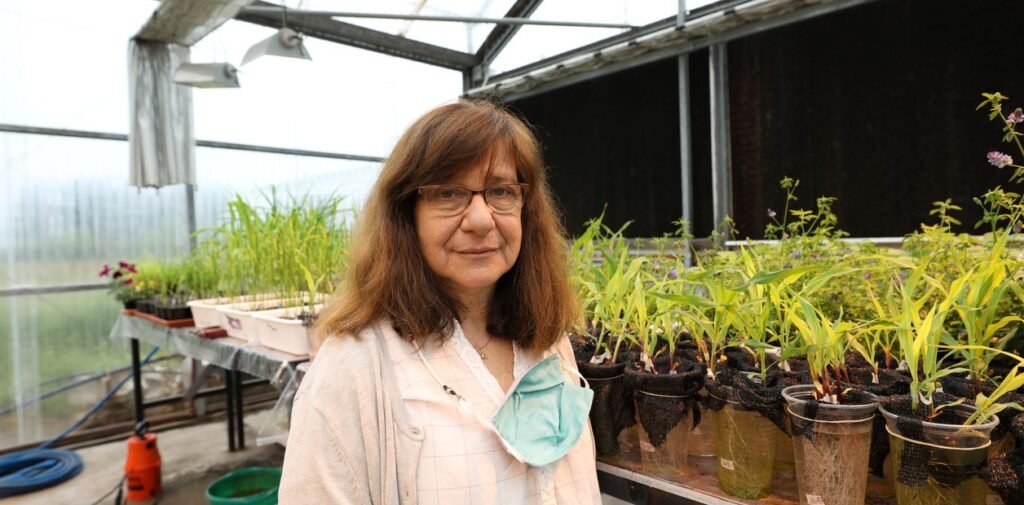
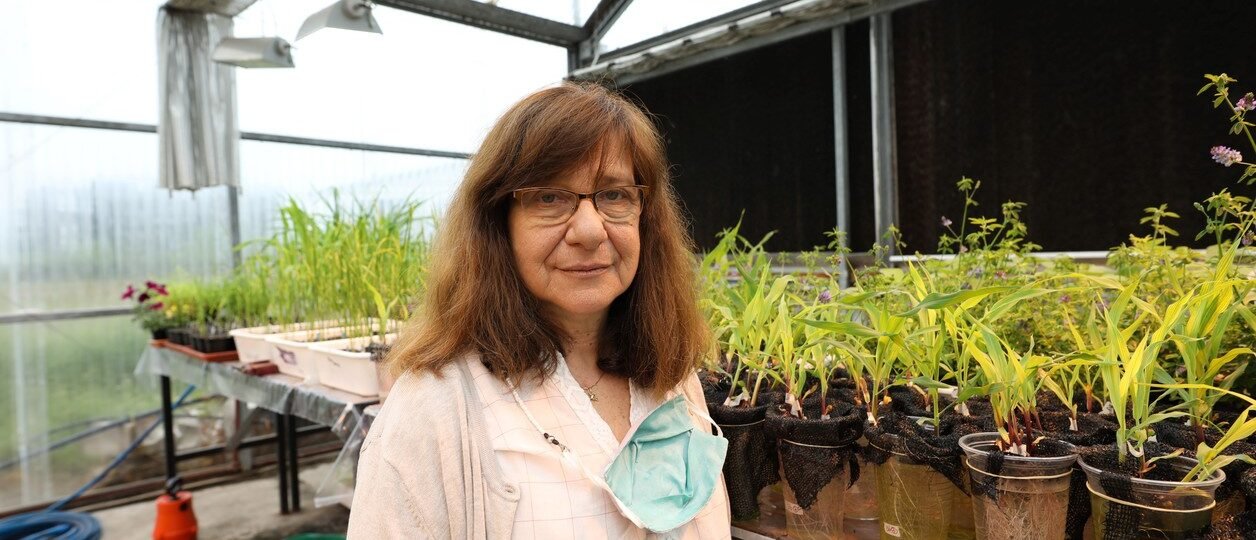
Raquel Chan is a central figure in plant biotechnology in Argentina. Her career brings together basic research, applied development, and institutional leadership in a field where science engages directly with productive and environmental challenges. Her influence does not stop at the laboratory: it extends across the scientific system, the agro-industrial sector, and public debate on innovation and technological sovereignty.
Scientific Training and Academic Consolidation
Raquel Chan trained as a biochemist and built her scientific career in the domain of plant molecular biology. From early on, she oriented her work toward understanding the genetic mechanisms that enable plants to adapt to adverse environmental conditions. That thematic choice was not neutral: it placed research at the intersection of fundamental knowledge and structural problems in agricultural production, especially under water and climate stress.
Her career consolidated at the National University of the Littoral and within CONICET, where she established stable research teams grounded in an interdisciplinary and long-term working logic. Unlike trajectories focused on isolated publication, Chan promoted continuous research lines, with cumulative hypotheses and transfer potential considered from the beginning of the scientific process.
Biotechnological Innovation and Applied Development
One of Raquel Chan’s most recognized contributions was her participation in the development of genetic technologies aimed at improving crop tolerance to water stress. These advances did not emerge as immediate commercial solutions, but as the result of decades of research on gene regulation, transcription factors, and plants’ adaptive responses.
Chan’s scientific leadership was expressed in her ability to translate complex knowledge into viable technological platforms. This required articulating public research, experimental scale-up, and productive validation in an environment where biotechnology is often dominated by large corporations. Her approach sustained the idea that innovation can originate within the national scientific system and project outward with tangible impact.
Institutional Leadership and Team Building
Beyond scientific achievements, Raquel Chan stood out for her role in training human resources. She supervised thesis students, early-career researchers, and technical teams, consolidating a work culture based on experimental rigor, critical discussion, and cooperation. Her leadership was not verticalist, but structuring: she organized capabilities, set priorities, and sustained institutional continuity.
In academic settings and scientific management, Chan held decision-making positions from which she advanced policies designed to strengthen applied research without dismantling basic research. That stance demanded negotiation skills, strategic reading of the scientific system, and a clear understanding of the relationship among science, the state, and the productive sector.
Influence in Public and Scientific Debate
Raquel Chan’s reach goes beyond the strictly academic domain. Her voice has been relevant in discussions on biotechnology, productive models, and the role of scientific knowledge in development. From a technical position, she intervened in debates that are often ideologically charged, bringing empirical evidence and evaluation criteria grounded in data.
That influence is explained by an uncommon combination: scientific authority, pedagogical capacity, and an understanding of technology’s social impact. Chan argued that science is not neutral in its effects, yet it must be rigorous in its methods—especially when connected to public policy and large-scale productive decisions.
Strategic Vision and Legacy
Raquel Chan’s trajectory reveals a leadership pattern centered on building capacities rather than personal visibility. Her legacy is expressed in technologies developed, teams trained, and research lines that remain active. In a scientific system frequently affected by discontinuities, her work showed the importance of long-term planning.
From a leadership perspective, Chan embodies a model in which a business-oriented mindset does not translate into market logic, but into efficient resource management, impact assessment, and the scalability of knowledge. That approach helped Argentine plant biotechnology secure a relevant position in the regional landscape, with public grounding and strategic projection.