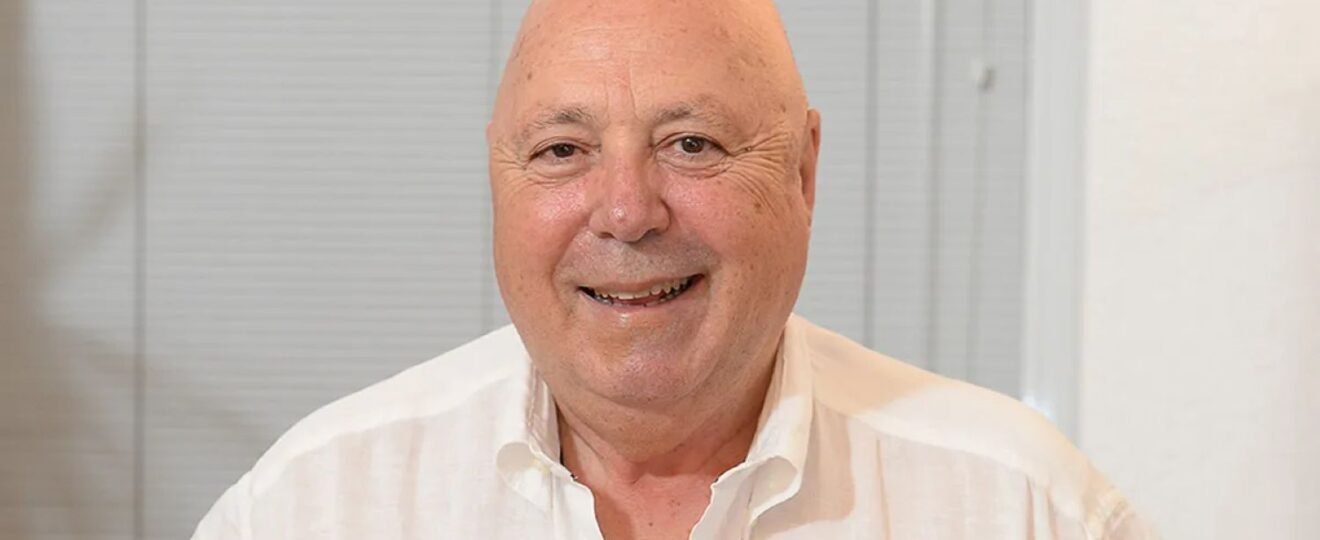
Roberto Urquía
Roberto Urquía articulates business, politics, and productive strategy within an integrated agroindustrial model. From Aceitera General Deheza, he develops a structure that combines industrialization, energy, and logistics. His approach prioritizes efficiency, scale, and control of the value chain, consolidating a sustained export position within Argentina’s agroindustrial system.
Roberto Urquía and the integrated agroindustrial model
Roberto Urquía builds his trajectory on a combination of business management, macroeconomic analysis, and institutional participation. As the leading figure of Aceitera General Deheza, he promotes a production scheme that integrates industry, energy, and logistics. His approach goes beyond expansion, focusing on value chain control, operational efficiency, and export positioning in a highly competitive sector.
Technical education and professional foundation
Trained as a public accountant at the National University of Córdoba, he incorporates tools oriented toward financial management and investment analysis. His entry into the family business takes place within a process of professionalization, where decision-making is grounded in technical criteria. This foundation supports growth in variable economic contexts and enables long-term strategic planning.
Expansion of AGD and productive diversification
Under his leadership, Aceitera General Deheza evolves into an integrated model that includes oils, vegetable proteins, and biofuels. The investment announced in 2023 to expand the bioethanol plant in Córdoba increases capacity by 50%, strengthening its presence in the energy segment. This diversification reflects a strategy that links agricultural production with industrial transformation.
Logistics integration and value chain control
Participation in Nuevo Central Argentino incorporates rail transport as a strategic component. This logistical control reduces costs and enhances export competitiveness. At the same time, port operations in Rosario alongside Bunge Argentina enable the international distribution of products. The integration of these links creates a structure that optimizes timing, costs, and export volumes.
Leadership and management criteria
His leadership style is characterized by low public exposure and a strong results-oriented focus. Management prioritizes structural business analysis, continuous reinvestment, and operational control. This approach sustains stability in volatile scenarios and strengthens positions in international markets. Decision-making is oriented toward the long term, reducing external dependencies within the production chain.
Political trajectory and positioning
His institutional path includes roles as mayor, provincial legislator, and national senator between 2003 and 2009. During his time in Congress, he participated in debates related to the agroindustrial sector. His vote against Resolution 125 marked a turning point in his relationship with the government, aligning his position with productive interests from Argentina’s interior regions.
Influence on the agroindustrial sector
The model promoted by Urquía introduces a logic of integration that combines production, industrialization, and logistics. This structure increases competitiveness and generates value added at origin. His influence is reflected in the consolidation of business schemes that replicate this integration, particularly in Argentina’s agro-export corridor and in regional economies linked to industry.
Controversies and institutional environment
His trajectory unfolds within a context where large companies interact with the political system. Mentions in the notebooks case, where he received a lack of merit ruling, and AGD’s participation in campaign financing reflect this dynamic. These elements form part of the environment in which large-scale companies operate, without interrupting the continuity of their operations.
Strategic vision and future outlook
Through the Fundación Multiplicar, he promotes the expansion of agroindustrial exports toward 2030. His approach focuses on increasing added value, strengthening industry, and generating regional employment. Coordination between the public and private sectors emerges as a condition for sustaining growth. This vision positions AGD within a productive framework oriented toward scale and global competitiveness.