Wanda Weigert
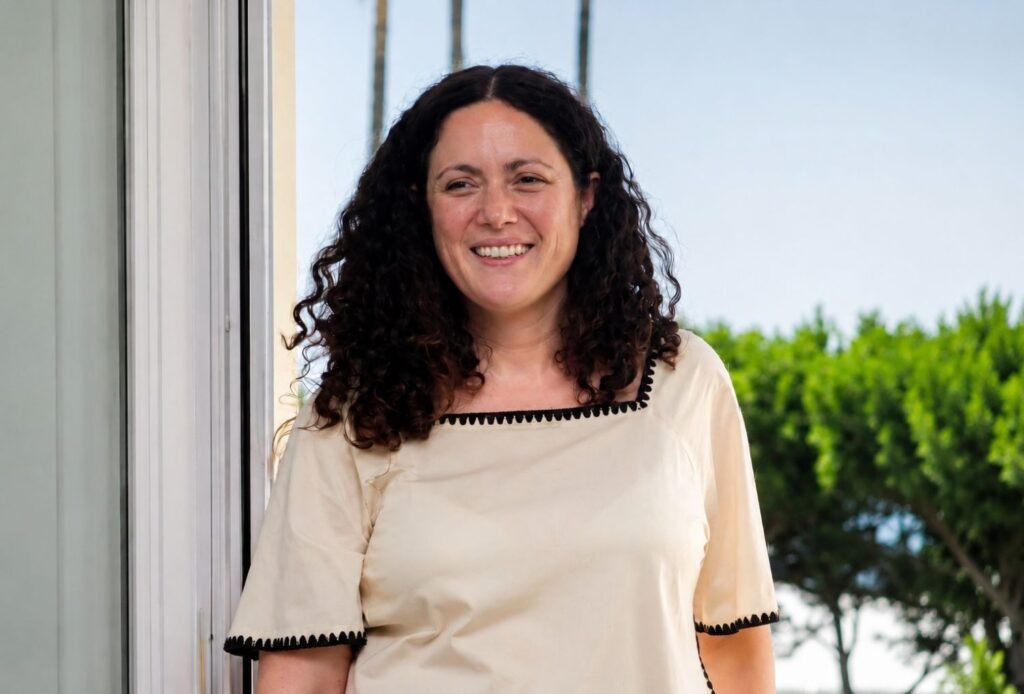
In 2005, a recent Communications graduate joined a technology company that almost no one had heard of, with one hundred employees and a green apple logo. Twenty years later, that company is listed in New York, employs tens of thousands of people across 19 countries and became one of Argentina’s first unicorns. The brand now recognised around the world was built, to a large extent, by that same person: Wanda Weigert, Globant’s Global Chief Brand Officer and Executive Director of its Argentine operation.
The department she created herself
Weigert joined Globant from a publishing company, Jota Group, where she had started as an intern while studying at Austral University. A former colleague from that job joined Globant and brought her into the company. Her first role was Senior Consultant in Internet Marketing, working on newsletters and email campaigns for one of the company’s earliest clients.
The turning point came through her own initiative. After creating several internal communication materials during quieter periods, she proposed to Martín Migoya, co-founder and CEO, that the company establish a Communications department. The response was immediate: do it. Since 2007, she has held the position of Chief Brand Officer, a role she continued defining as the company grew.
Guerrilla marketing without a budget
The brand’s early years were built with more ingenuity than money. At job fairs, with no budget for promotional merchandise, the team handed out crates of green apples bearing a Globant sticker. By the end of the event, everyone was walking around carrying the brand in their hands. In 2006, they published advertisements in a newspaper for five consecutive Sundays without revealing the company’s name. The ads challenged readers to solve a logic problem in order to discover the address where they could send their résumé. The campaign produced an avalanche of applications, and one of the current managers on her team joined the company through that route years later. To announce the opening of offices in La Plata, they placed cards inside the buses connecting that city with Buenos Aires, carrying a message from someone who no longer needed to commute for work.
Behind those ideas was a business problem: talent is scarce in the technology industry, and the employer brand matters as much as the commercial one.
Scaling at the company’s pace
Globant took sixteen years to reach ten thousand employees and only two more to double that figure. The department Weigert had founded had to reorganise into regions—Latin America, Europe and the United States—with a global layer coordinating brand, media relations, content, social media and sustainability. The commercial engine also changed. For years, the company grew through word-of-mouth recommendations, until its scale required a stronger focus on digital marketing, campaign personalisation and content production. Geography adds another layer of complexity because most clients are based in the United States and Europe, while talent is concentrated in Latin America and Asia.
Her management also gave rise to Be Kind, the framework that brought together diversity, sustainability and impact across the company’s different audiences.
Leading the Argentine subsidiary
In June 2022, after seventeen years with the company, she took on the executive leadership of Globant Argentina while retaining her global role. She assumed responsibility for more than 5,000 Globers in the country, within a workforce of over 24,500 employees across 19 countries and a client portfolio including Google, Electronic Arts and Santander. Her mandate focuses on nationwide growth: bringing international-level opportunities to professionals without requiring them to move to Buenos Aires. It is the same idea that led to the opening of the Tandil office in 2006, now framed as a national strategy.
Gender and example
In an industry where 80% of workers are men, Weigert—a mother of three daughters—argues that gender parity is built less through statements than through visible examples. She says she never encountered barriers because she was a woman, that every proposal she made received approval and that she went through two maternity leaves with enough flexibility to return. Her argument is simple: when no one demonstrates that an executive career can coexist with family life, the promise remains only on paper.
The kind of leader she is
Three traits recur throughout her career: she asked to build a department that did not exist instead of waiting for it to be assigned to her; she turned creativity into a substitute for budget and preserved it as a working method; and she understood the brand as a business asset rather than decoration. Her stated ambition is as simple as it is difficult: for the brand she saw emerge with one hundred employees to become recognised around the world.