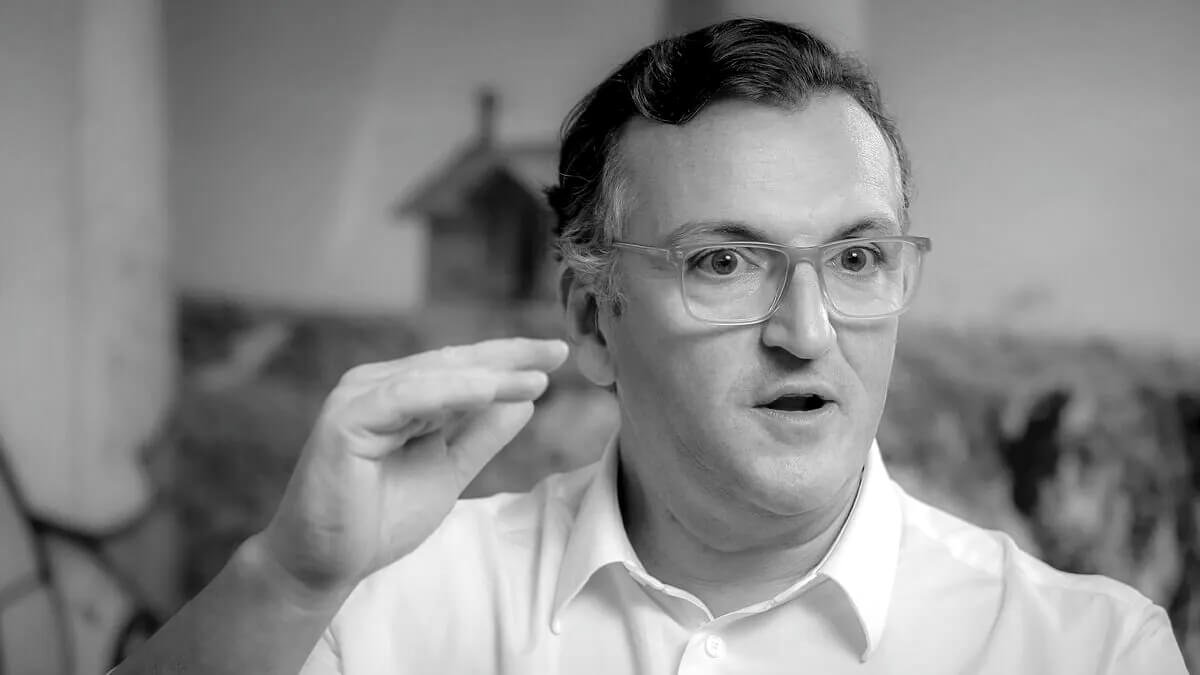
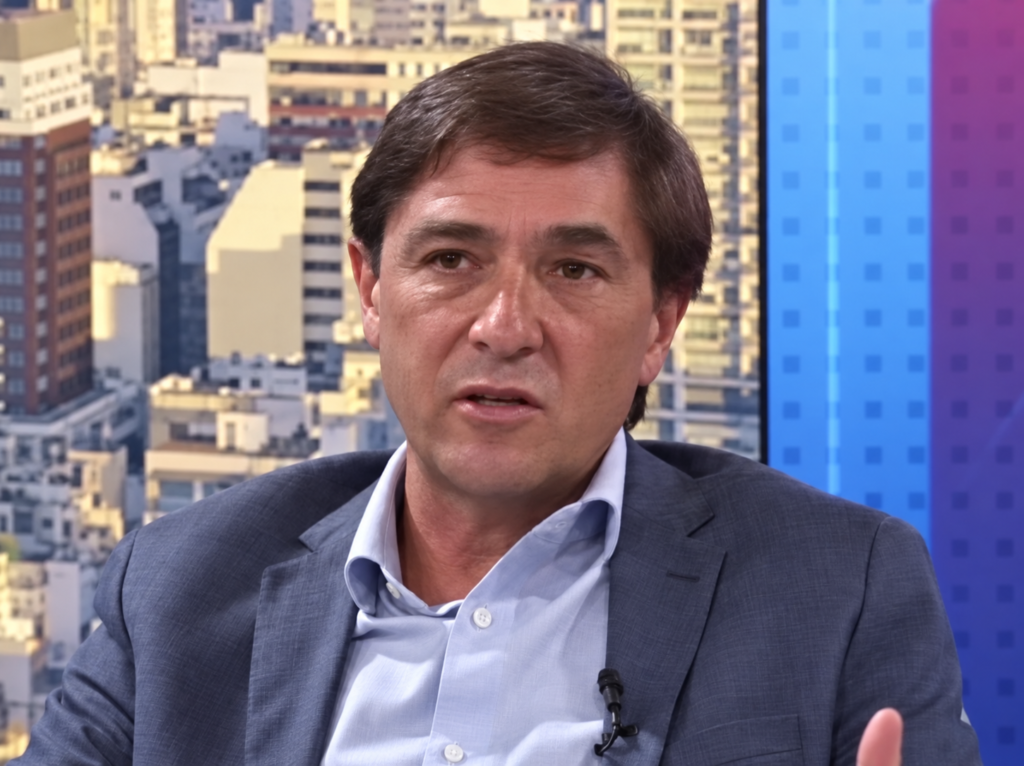
Nelson Duboscq
Selling management when the word still sounded strange
In the early 1990s, Duboscq and a partner set out to do something that seems obvious today but was not at the time: bring the discipline of management to Argentina.
The word itself was hardly even used.
In 1994, they brought Peter Drucker to the country for a series of seminars and published a book in Spanish on the subject. Duboscq describes that moment as the starting point of his entrepreneurial life, and its merit was that it was a simple idea that reached a large number of people.
Then came Gestión magazine in 1996, the first Spanish-language management and business publication designed for the Latin American market. And in 1998, Expomanagement.
That was when the company truly began to scale.
He describes the previous stage with an honesty that is unusual in this kind of story: they generated substantial revenue, had good partners and knew the business, but the company was not growing in entrepreneurial terms. They were missing the lever.
The crisis he used as a springboard
Then came 2001. Capital markets collapsed, GDP fell and consumption unraveled.
Duboscq’s interpretation of that moment is one he has repeated ever since: crises eventually show you an opportunity.
Instead of shrinking, they expanded abroad. They opened operations in Spain, Mexico and Brazil, followed by New York and Chicago. The World Business Forum was launched in the United States in 2004 and became one of the world’s largest gatherings of executives, with editions in Madrid, Milan, Frankfurt, Mexico City, São Paulo and Buenos Aires. In 2007, they added Management TV, a content channel in Spanish and English.
In 2012, all those brands —events, magazine, television and website— were integrated under the WOBI name, and the Laureate group acquired 42% of the company.
That same year, Duboscq sold.
The downturn and what came out of it
The part that successful founders’ biographies often leave out is the part he tells first.
He sold, fell into a severe depression and took time to recover. In the midst of that personal crisis, he reached a conclusion that he now uses as the central idea in his talks: the secret to entrepreneurship lies in finding yourself and creating value for society.
That period also produced one of his most frequently cited ideas, one that he applies to businesses rather than people. He says a company should always be in beta. Values remain, but the model must be constantly reviewed because markets change their behavior and businesses need the flexibility to respond.
With a new partner, he set out to build a training company capable of generating real employability. Education, technology and work, in that order.
That is how Digital House emerged.
A business built around scarcity
The diagnosis behind the entire operation is simple and documented. According to Argentina’s software industry chamber, around five thousand jobs go unfilled every year in the country because there are not enough qualified professionals.
Digital House held its first classes in March 2016 and positioned itself precisely in that gap: training programmers, data analysts, user-experience designers and digital-marketing specialists in relatively short periods, with a focus on employability.
Growth was rapid. Between those first classes and 2021, the company posted a compound annual growth rate of 118% in revenue and 145% in students. In 2020, 28,000 students used its platform across Latin America.
Funding followed. Kaszek Ventures provided the Series A at the beginning of 2017. In December of that year came a $20 million Series B led by The Rise Fund, the impact fund co-founded by Bono, the singer from U2. It was the fund’s first investment in the region, a fact Duboscq later used as a calling card.
When Galperín and Migoya came to the table
At the end of 2020, Digital House announced something unusual: a program developed jointly with Mercado Libre and Globant called Certified Tech Developer, backed by a combined investment of $10 million and 2,500 scholarships.
They expected around ten thousand applicants.
Five days later, they had fifty thousand people interested.
The next step was logical. In March 2021, the company raised more than $50 million in a round led not by investment funds, but by the two companies associated with Marcos Galperín and Martín Migoya. Riverwood Capital and Kaszek also participated. That brought the total amount raised to more than $80 million.
Duboscq attributed that interest to pure scarcity: the fastest-growing companies in the region cannot find the people they need.
In June of that year, they acquired Acámica, their main local competitor. In October, they announced a merger with Rocketseat, a coding school founded in 2017 in Santa Catarina that had built Brazil’s largest developer community. According to the Brazilian press, the transaction was completed for 150 million reais, around $27.5 million. Together, the two companies had already trained more than 1.2 million people across the region.
Brazil was not new territory: Digital House had maintained an office in São Paulo since March 2018.
The five things he says in every talk
Duboscq is a regular on the entrepreneurial speaking circuit and has refined his message considerably. When asked what a project needs in order to work, he lists five factors, none of them particularly romantic.
A good idea, immediately clarifying that plenty of people have good ideas and what is scarce is actually taking action.
A competent team that provides advice and challenges ideas instead of simply applauding them.
A business model in beta, willing to change when the market changes.
Funding, with a practical warning: entrepreneurs need to devote time to financial matters because cash-flow stress makes everything more difficult.
And timing: the product has to arrive at the right moment.
One of his phrases sums up the rest. He says entrepreneurship is a long journey and that once someone develops a taste for it, they never stop.
The lesson that worked twice
Looking at the two stages together, what Duboscq did was fairly similar in both. He identified knowledge that was not widely circulating in Argentina and built a channel to distribute it.
In the 1990s, it was management, through seminars, a magazine and an exhibition. Over the past ten years, it has been programming, through courses, a platform and partnerships with the companies that later hire the graduates.
The difference lies in the student. Before, he was selling to executives who already had the job. Now he sells to people who do not yet have one, and that is the point he identifies as his real bet: not training itself, but the employability that comes afterward.
His definition of leadership is difficult to argue with. He says leaders need values, must inspire through those values and must understand that leadership happens by example.
Coming from someone who publicly talks about falling apart after selling his company and needing time to get back on his feet, the phrase carries something more than the usual decoration of a keynote speech.