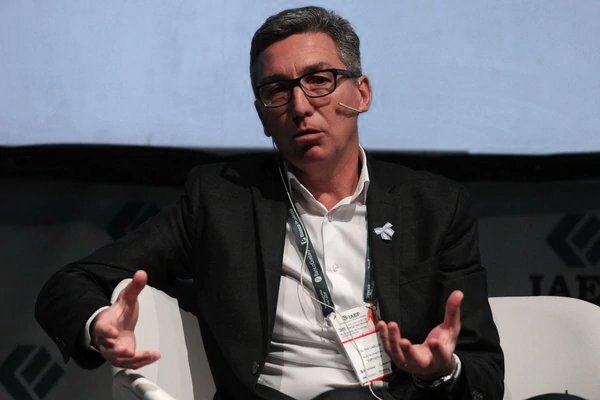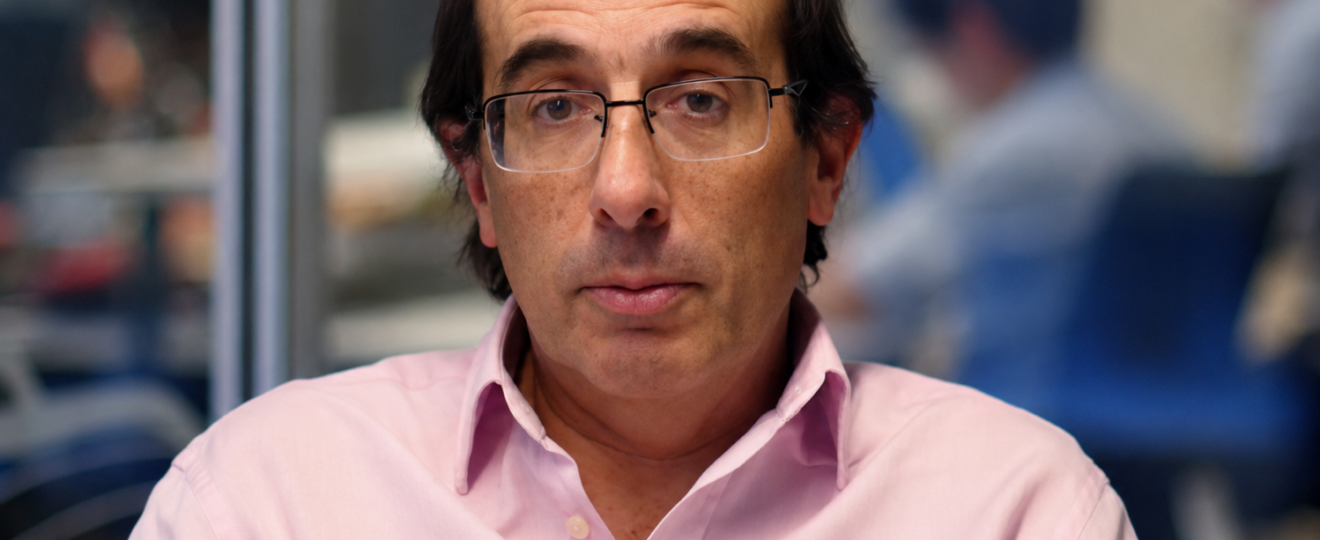
Damián Scokin
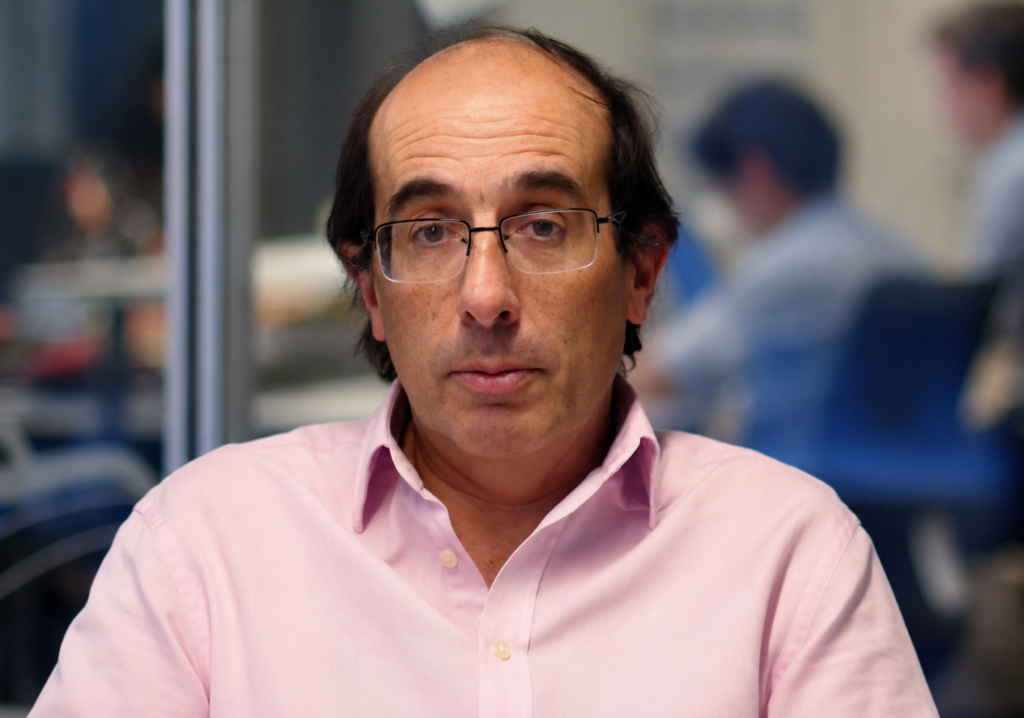
In March 2020, Damián Scokin was running a company that was losing between US$20 million and US$30 million a month. Airplanes were grounded, Despegar’s stock had fallen from US$30 to below US$5, and much of the technology sector was growing while he was cutting costs by 60%.
Five years later, that same company was being sold to Prosus for roughly US$1.7 billion in cash, after a process that attracted as many as six bidders. Between those two moments lies the full tenure of an executive who did not come from e-commerce but from ships and airplanes: eleven years at McKinsey, nine with the LAN group and two running shipping company Ultrapetrol. Scokin led Despegar for nine years, took it to Wall Street and stepped down on March 31, 2026.
The unusual profile of a digital travel CEO
When Despegar announced his arrival in 2017, Damián Scokin did not come from the startup world or e-commerce. He came from ships and airplanes. He holds two degrees from the University of Buenos Aires —Industrial Engineering and Economics— and later earned an MBA from Harvard Business School. He then spent eleven years at McKinsey & Company advising multinational companies, an experience that still shows in the way he breaks problems down before making a move.
Aviation came next. He spent nine years at the LAN group, first leading the airline’s expansion into Argentina and later running the group’s international business unit during the merger between LAN and TAM. In 2014, he changed course again and became CEO of Ultrapetrol, an industrial and river transportation shipping company, a position he held until 2016.
That combination —strategy consulting, airline operations and experience managing a company through restructuring— was what Despegar founder Roberto Souviron was looking for when he decided to step away from day-to-day management after eighteen years at the helm.
Joining Despegar and going to Wall Street
Scokin joined the company in December 2016 and formally became CEO in February 2017. In his public introduction, he laid out an idea that would shape his tenure: only about one-fifth of travel in Latin America was sold online, compared with more than half in the United States. To him, that gap was the opportunity.
His first major move came that same year. Despegar listed on the New York Stock Exchange under the ticker DESP, becoming the first Latin American online travel agency to trade on Wall Street. Scokin often describes the decision as a matter of timing: by the middle of 2018, the region’s IPO window had closed, regardless of how strong individual companies’ numbers were.
Before the listing, Expedia was already a strategic partner, giving Despegar access to its global network of hotels and flights. That relationship provided the Argentine company with inventory scale and international credibility.
The ultimate test: 2020
The pandemic left Despegar in the opposite position from much of the technology sector. While many digital platforms grew as people stayed home, the business of selling travel stopped almost completely. The company went from having a healthy cash position to burning between US$20 million and US$30 million a month, while much of its cost structure remained in place.
The response was severe, and Scokin does not soften it when he talks about the period. Between March and October 2020, the company cut costs by 60%, including layoffs. Shares that had once traded at US$30 fell below US$5.
At the same time, Despegar went looking for capital through entirely virtual fundraising rounds and secured a US$200 million investment from UAE-based Waha Capital and U.S. private equity firm L Catterton through preferred shares and warrants.
The results of those cuts could only be measured years later. By 2024, the company was generating nearly twice the revenue it had before 2020 and, according to Scokin, had also doubled its pre-crisis profitability.
Brazil, B2B and the technology bet
Geography became a central part of Scokin’s strategy. Under the Decolar brand, Brazil grew to represent around 40% of the business, with a tendency to move closer to half. Scokin explains it simply: the company was born in Argentina, but the region’s largest markets are Brazil and Mexico. Acting accordingly meant looking beyond the country where the company started.
That importance also translated into agreements with public institutions. In 2023, Embratur —Brazil’s tourism promotion agency— signed a data-sharing agreement with Decolar to help target campaigns toward Latin American travelers. At the time, one in every five tickets to Brazil purchased from another country in the region went through the platform.
Technology was the other major bet. Under Scokin, the company completed five acquisitions, including Brazilian companies ViajaNet and Stays; developed its B2B business through HotelDO; opened physical stores in six countries; and launched SOFIA, its generative AI travel agent.
The sale to Prosus and a planned departure
In September 2024, Despegar received an unsolicited offer. Because it was a public company without a controlling shareholder, the board took charge of the process, with management playing a limited role. To the team’s surprise, as many as six bidders eventually emerged.
Prosus, the investment arm of Dutch holding company Naspers, ultimately won with an offer of roughly US$1.7 billion in cash. It was not the buyer the team had expected. Scokin acknowledged that they had assumed Despegar would eventually become part of a travel group, rather than a broader digital ecosystem with investments in companies such as iFood, Just Eat and Delivery Hero. Prosus had a different logic: combining platforms that shared users.
In October 2025, the end of Scokin’s executive tenure was announced. He stepped down on March 31, 2026, after nine years, and was replaced by Gonzalo García Estebarena, then the company’s CTO and someone Scokin had known from his years at LATAM. Scokin remains connected to Despegar as a board member and advisor.
What defines his leadership style
Three traits appear repeatedly throughout his career. The first is timing: he took Despegar public while the regional IPO window was still open and agreed to sell when an attractive offer appeared, without clinging to the CEO role.
The second is a willingness to make difficult decisions quickly, something that became especially clear during the 2020 cost cuts. The third appears in his view of Brazil and works almost like a management principle: recognize where the market really is, even when it is not where the company was born.
His tenure also offers an interesting example of succession planning. Despegar chose an executive developed inside the company, with a technical background, while Scokin remained on the board to support the transition. That decision says as much about his approach to leadership as many of the financial transactions he signed during his nine years in charge.