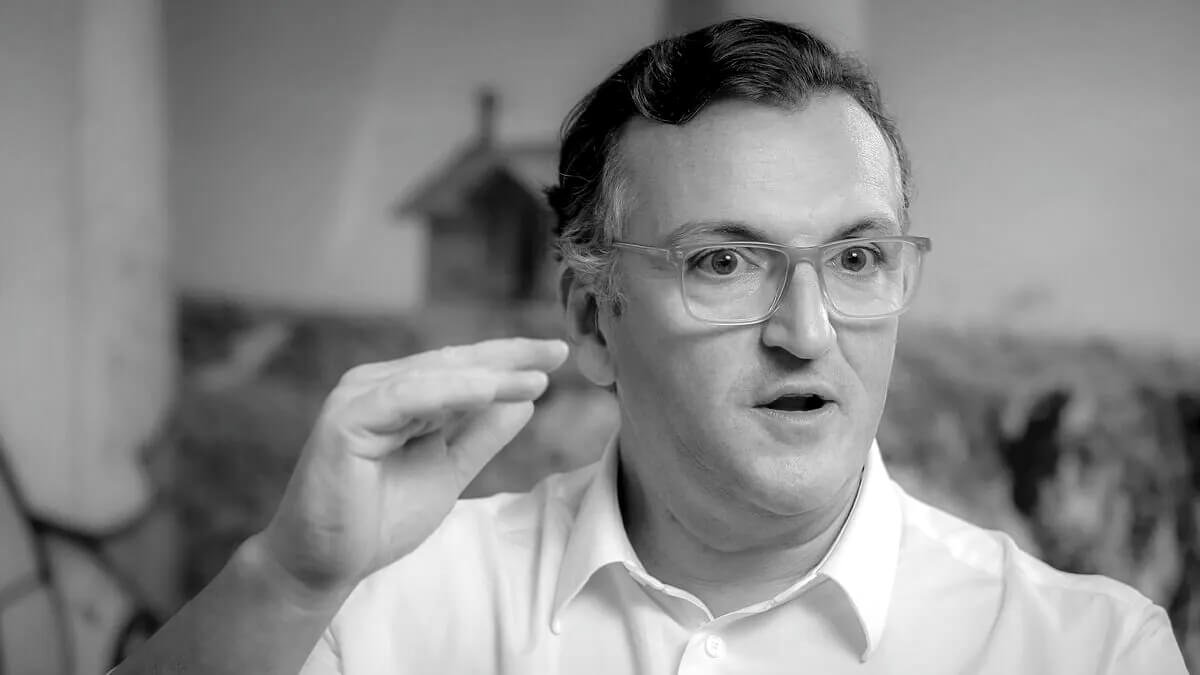
Marcelo Álvarez

With almost four decades in the solar industry, a career that included positions at BP Solar and Total, and international experience with the Global Solar Council, Marcelo Álvarez is serving his second period as president of the Argentine Chamber of Renewable Energy. His 2026–2027 term begins with renewable generation at record levels and with the industry working on a comprehensive energy transition bill.
From research laboratories to regional management
Few Argentine business leaders witnessed the birth of the industry they now represent. A professional profile published in 2023 recorded 37 years of work in solar energy, divided between scientific research and private-sector management.
Álvarez worked as a scientific researcher at the University of Buenos Aires and Oxford Brookes University in the United Kingdom. That combination helps explain his public style: he supports his arguments with studies and translates technical figures into the language of investment and business.
His corporate experience was equally significant. He held regional management positions at Solarex, BP Solar and Total Energie–Tenesol, the solar subsidiary of the Total group. Those companies represented three different stages in the development of the global photovoltaic industry.
He currently works in institutional relations and development at CORAL Energía and is a member of the board of IRESUD, a public-private consortium that develops photovoltaic technology for urban environments.
A second term at the head of CADER
Álvarez previously led the Argentine Chamber of Renewable Energy, known as CADER, during the second half of the 2010s. The organization chose him again at its ordinary members’ meeting held on November 20, 2025.
He was appointed president for the 2026–2027 term as part of a renewed board that also includes Agustín Siboldi, Martín Dapelo and Alejandro Parada.
His return coincided with one of the strongest statistical periods in the history of the sector. On October 19, 2025, renewable sources supplied 44.28 percent of demand in Argentina’s interconnected electricity system. Installed renewable capacity had exceeded 7 GW, including 4,476 MW of wind power and 2,192 MW of solar power.
Leading the chamber in this context involves less effort to prove that Argentina possesses abundant renewable resources and more work to remove regulatory, financial and infrastructure bottlenecks.
International recognition had arrived several years earlier. In September 2019, the Global Solar Council appointed Álvarez as secretary of its board alongside representatives of solar industry organizations from India, China, Spain, Brazil, the United States and other major markets.
The battle over distributed generation
One of the clearest features of Álvarez’s management can be found in Argentina’s Distributed Renewable Energy Generation Law, No. 27,424. The legislation allows residential, commercial and industrial users to generate renewable electricity for their own consumption and inject surplus energy into the public distribution network.
CADER participated in the initial drafting process and worked to ensure that the proposal reached Congress with support from different political sectors.
When the Executive Branch regulated the law through Decree 986/2018, the chamber published a critical assessment. The compensation system pays users for the electricity they inject rather than crediting them with an equivalent amount of energy.
Álvarez argued that this arrangement discourages households and companies from using the full available surface of their roofs for solar panels because the strongest financial incentive is limited to covering their own consumption.
Even so, he defended the law as a useful instrument and proposed a system of approved installers audited through random sampling, similar to the model used in Ontario, rather than requiring a separate certification for every connection.
He also considered the official target of 1,000 MW over twelve years too modest. The regulatory decree formally established that objective for distributed renewable generation.
A law drafted by the private sector
The central initiative of his current presidency is an energy transition bill that CADER has been developing for approximately two years.
The proposal is divided into seven chapters covering green hydrogen, the RenovAr program, rational energy use, the residual role of oil and natural gas, electricity networks and financing as a cross-cutting priority. It was designed with a deliberate political safeguard: six of its sections could become separate laws if there is insufficient support for a comprehensive bill.
CADER’s proposal seeks to establish a stable regulatory framework capable of attracting international financing, expanding renewable generation, modernizing electricity networks and storage infrastructure, and releasing greater volumes of hydrocarbons for export without requiring additional resources from the National Treasury.
The argument Álvarez uses to defend the initiative says a great deal about his method. When speaking with government officials, he avoids presenting it exclusively as a climate policy. Instead, he describes it as a business opportunity based on additional investment, cheaper electricity, employment, greater exportable production from Vaca Muerta and preparation for carbon border taxes.
His position is straightforward: the industry is not asking for public money but for predictable rules.
He also cites a United Nations Development Programme study comparing Argentine energy scenarios through 2050. According to the figures he presents, a renewable-intensive pathway would produce savings of US$31 billion, compared with US$14 billion under a gas-intensive model.
The renewable scenario would reduce emissions by 59 percent rather than 6 percent and could create 139,000 jobs by 2030, compared with 13,000 under the alternative. Reaching those results, however, would require Argentina to obtain financing at interest rates similar to the Latin American average.
How he builds influence
The most consistent feature of Álvarez’s career is his effort to create broad coalitions.
CADER represents approximately 120 companies, but the energy transition proposal was also developed through discussions with the Argentine Industrial Union, agricultural organizations, universities, power generators, electricity distributors, transmission companies and CAMMESA.
The objective is to present the initiative as a demand from a broad section of the private sector rather than as the isolated request of a renewable-energy lobby.
Álvarez does not frame the discussion as a war against hydrocarbons. In his view, the transition will require both renewable sources and natural gas. The real question is how much of each technology should be included and who will finance every stage of the transformation.
He works with two clearly defined horizons. The ambitious objective is the approval of the energy transition law. The more realistic one is to persuade political leaders that renewable energy can serve as a platform for economic growth and to leave a complete proposal ready for discussion after the next presidential election.
Setting the highest possible objective without becoming trapped by it may be his most useful skill in a country where regulatory frameworks often change with every political cycle.