Sabrina Castelli
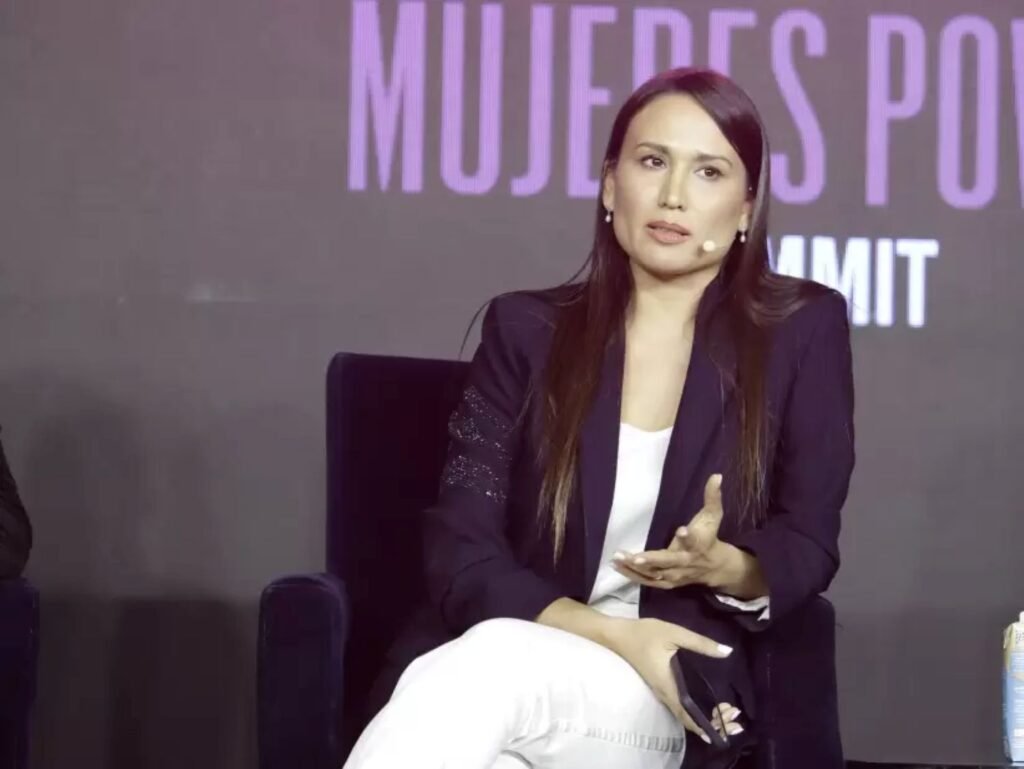
Sabrina Castelli learned the cost of not understanding money by watching her mother. When her father died, her mother had to start working almost overnight without ever having managed the household finances. Years later, an Argentine economic crisis wiped out what was left of the family’s savings. That double lesson stayed with Castelli as she built a conventional career —earning degrees in accounting and business administration from the University of Buenos Aires and spending more than twelve years in investment banking and multinational companies— until 2018, when she started a blog with US$100 and called it Mujer Financiera.
Today, that idea has become the largest financial education ecosystem for women in the Spanish-speaking world, with more than 800,000 students across more than twelve countries, backing from funds such as 500 Startups and Amplifica Capital, and a book published by Penguin. This is the story of the CEO who turned a family experience into a business model.
From a family loss to a business hypothesis
Few companies can trace their origins so precisely to a personal event. Sabrina Castelli points to two episodes as the starting point for everything that followed: the death of her father, which forced her mother to enter the workforce suddenly without ever having managed the family’s finances, and the loss of the family’s savings during one of Argentina’s economic crises.
Those two experiences left Castelli with an idea she would later repeat in interviews and onstage: a woman’s financial vulnerability is rarely just a matter of income. It is also a matter of access to knowledge. The figure the startup uses to illustrate that gap is striking: in Latin America, only about half of women have a bank account and, among those who do, just one in ten keeps savings within the financial system.
Twelve years in the corporate world before making the leap
Before becoming an entrepreneur, Castelli built a solid and fairly conventional career. She graduated with honors from the University of Buenos Aires with degrees in Public Accounting and Business Administration, and spent more than a decade working in auditing, finance and financial planning for investment banks and multinational companies.
There is another part of her background that often receives less attention but helps explain what came next. Her career was not only about numbers. She also held commercial and marketing positions within Argentina’s digital ecosystem, working in regional sales and digital strategy. That combination —accounting discipline on one side and an understanding of products and audiences on the other— later allowed her to approach financial education as a scalable business rather than simply a teaching activity.
Mujer Financiera: from a blog to an ecosystem
The project began in 2018 as a blog, with an initial investment that Argentine media reports placed at just US$100. The following year it was formally incorporated and began operating with its own structure from Buenos Aires.
Its growth can be traced through the figures the company reported at different stages. In 2019, when Castelli was 32 and joined Endeavor Argentina’s Her Business Program, she had trained just over 150 women. By early 2022, that figure was around 60,000. By the middle of the same year, it had surpassed 100,000 students, with a community of half a million people. By 2026, the official website reported more than 800,000 students across more than a dozen countries. The progression has not been linear. It looks more like the curve of a digital product that found its market.
The business model evolved along with those numbers. What began as free content grew into an academy offering courses and themed packages, subscription-based support programs, corporate training and in-person community experiences.
At the same time, the company developed Felicity, a personal finance app that was selected as Latin America’s most innovative solution in the financial inclusion category at FinnoSummit Mexico 2019 and won an award that same year at Galicia Innovation in Argentina. The project was also among seven selected by the Ministry of Production for the Fondo Semilla Impacto program in 2019.
Capital, validation and support from the ecosystem
Mujer Financiera has raised more than US$750,000 from funds including Amplifica Capital, MGV Capital, Myelin VC and 500 Startups. For a financial education company focused on Latin American women —a segment that investors had long viewed as difficult to monetize— the round served as a market signal as much as a source of capital.
External recognition came from several directions. Bloomberg included Castelli among the 50 most influential women in Latin America, while international organizations such as the Financial Alliance for Women invited her to participate in expert panels. In Argentina, she became a regular voice in business media and reached a regional television audience through CNN en Español, where she has defended an idea that runs through much of her work: when a woman gains financial knowledge, that knowledge also spreads through her family.
A leadership style built around conversation
Castelli often summarizes her approach with a simple idea: talk about money without embarrassment. Her argument is that money functions as an inherited taboo in many Latin American households, and that family patterns and emotions can matter as much as technical knowledge when people make financial decisions.
That approach became the basis of Hablemos de dinero, her first book, published by Penguin. The book explores people’s emotional relationship with money, the identification of small recurring expenses, the organization of financial goals and the first steps toward building an investment plan, using deliberately accessible language for readers with no previous financial training.
As a leader, one of Castelli’s most important decisions has been to treat the community as a central part of the business. Mujer Financiera does not simply sell courses to individual users. It builds a space where students recognize themselves in one another, and that sense of belonging helps drive retention and word of mouth. It is a strategy that combines what Castelli knows about finance with what she learned in digital marketing.
What her journey shows
Sabrina Castelli’s career is an example of a kind of entrepreneurship that begins with a problem experienced personally and ends up measuring its impact across hundreds of thousands of people. Her contribution to Argentina’s fintech ecosystem lies less in technological sophistication than in demonstrating that financial education for women is a market with real demand, willingness to pay and the ability to scale beyond the country’s borders.