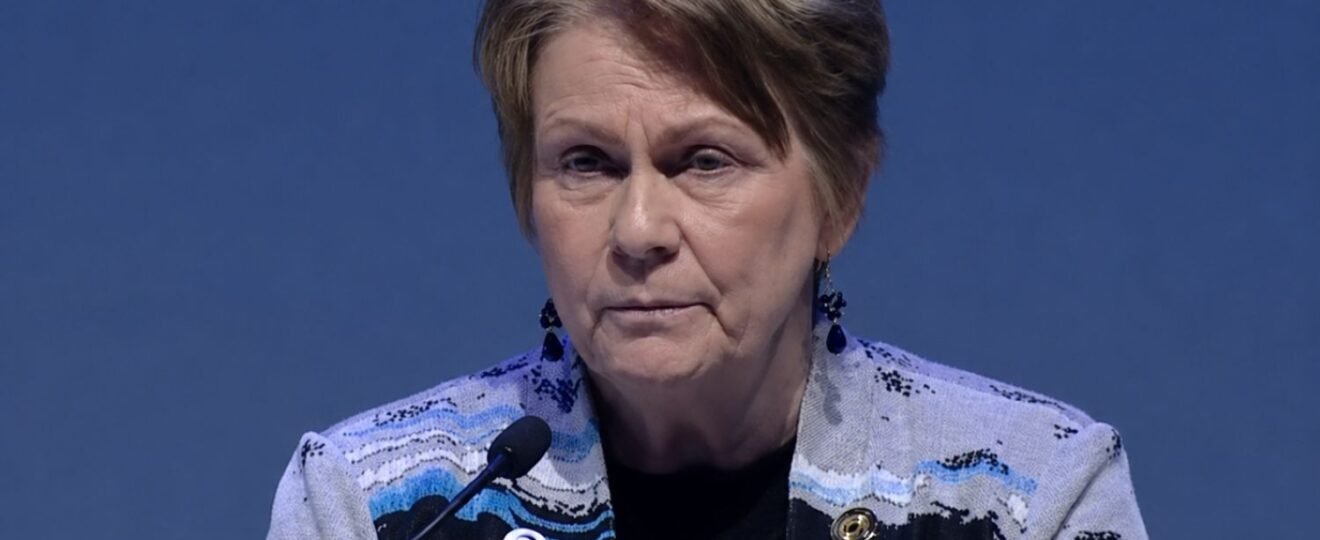
Vicki Hollub
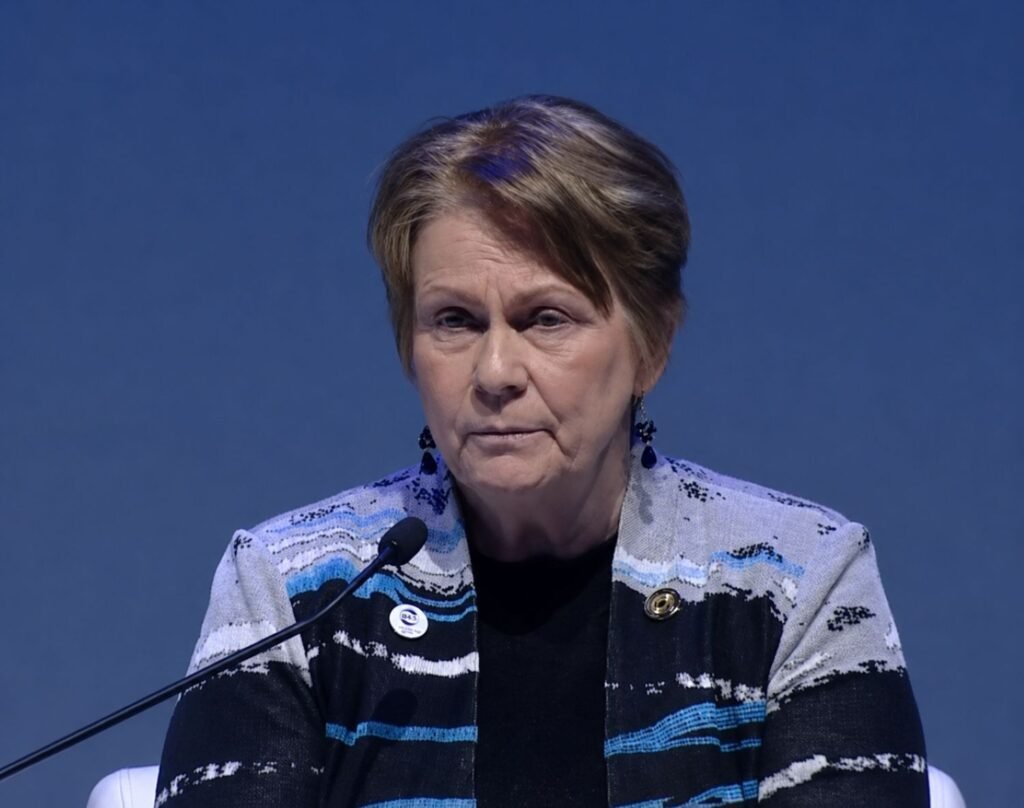
She led the oil company for almost a decade with a distinctive mark: long-term decisions, major bets and operational knowledge rarely found at the top of the sector.
Vicki Hollub represents a type of leadership rarely seen among those who run major oil companies: that of someone who reached the top after spending decades moving through every operational level of the company itself. That trajectory explains the imprint she left on Occidental Petroleum, a company that today, after her departure from executive leadership, retains the course she helped set. Hollub remains linked to the firm as a member of its board, so her influence continues to be present in the decisions ahead.
A leader who knows the operation from the inside
The feature that distinguishes her management is her technical command of the business. Hollub did not lead Occidental from an exclusively financial logic, but with the judgment of someone who worked on platforms, led the expansion of the Permian basin and understands how a reservoir behaves. That knowledge allows her to decide on the company’s portfolio with an operational authority that few executives in the sector possess.
That closeness to the operation also defines her way of handling crises. When she took over as chief executive, amid the fall in crude oil prices, she chose to cut production costs without placing the adjustment on employees, and concentrated activity on core assets while divesting low-profitability fields. The priority was to leave the company more focused and prepared to sustain the cycle, rather than seek immediate results.
The long term as a decision-making criterion
The most visible mark of her leadership is her willingness to make large-scale decisions with an extended horizon. Under her leadership, Occidental undertook the acquisitions of Anadarko Petroleum in 2019 and CrownRock in 2024, transactions that changed the size of the company and defined much of its current structure. The bet on the Permian basin responded to the same logic: by mid-2017, that basin already accounted for half of production, with the rest divided between the Middle East and Latin America.
That long-term criterion is what now organizes the company’s technological agenda. Hollub steered Occidental toward carbon dioxide management and turned it into one of the first major oil companies to set emissions neutrality targets. In Texas, the company is building the STRATOS plant, a direct air capture facility designed to remove up to 500,000 tons of CO2 per year, with an investment of 1.3 billion dollars. The executive projects for Occidental a horizon in which the firm operates as a carbon management company, with oil and gas serving as support for that activity.
A succession planned as continuity
Hollub’s retirement from executive leadership, effective June 1, 2026, fits that same planning style. The departure did not come as a break, but within an orderly succession plan, in which the position was left in the hands of a career executive from within the company itself. The decision aims to sustain the strategic lines she drew, rather than open a change of direction.
Her permanence on the board reinforces that idea of a transition without disruption. The long-term definitions she promoted —concentration on high-performing assets, the bet on carbon capture and cost discipline— remain in force and keep at the decision-making table the person who set them in motion.
What her management leaves underway
The close of her stage at the head of Occidental coincides with a key moment for the projects she promoted. The first phase of STRATOS is scheduled to begin operating during 2026, with a second stage that will scale in the following months. The commercial start of that plant is today one of the most concrete tests of the course Hollub left in place. Her way of leading —technical, oriented toward the long term and willing to make large-scale bets— remains a reference for how one of the sector’s major oil companies was managed for almost a decade.