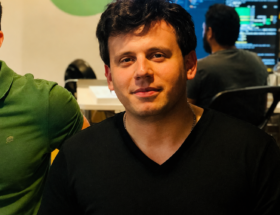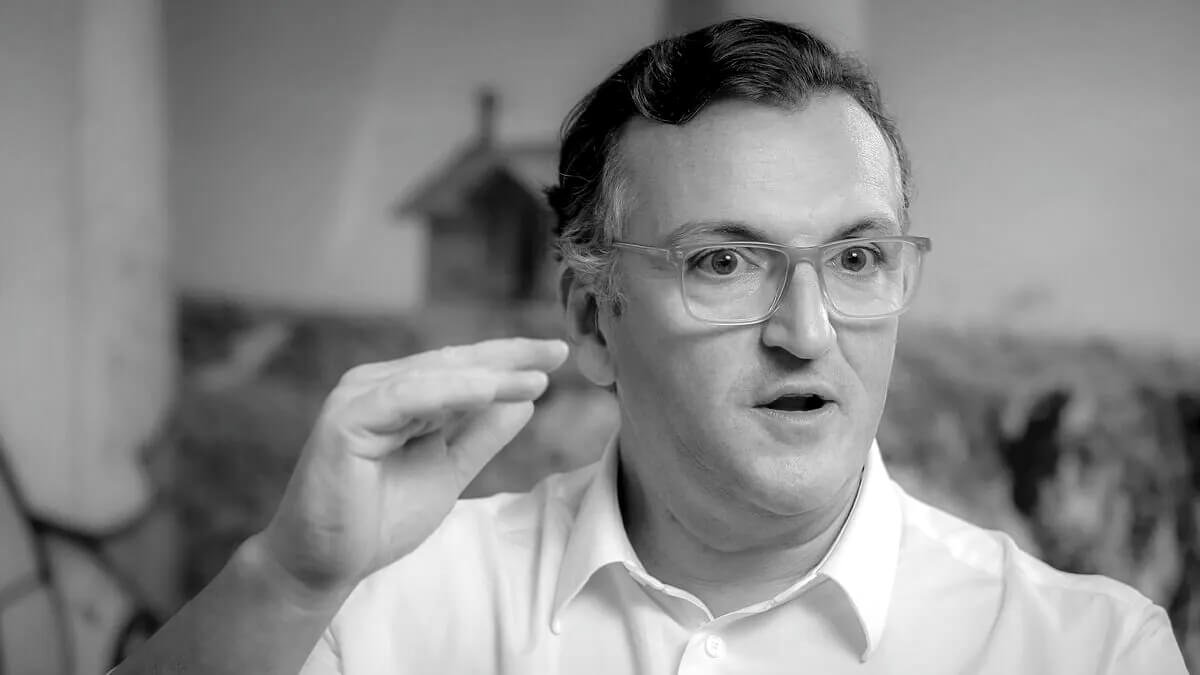
Mariano Wechsler
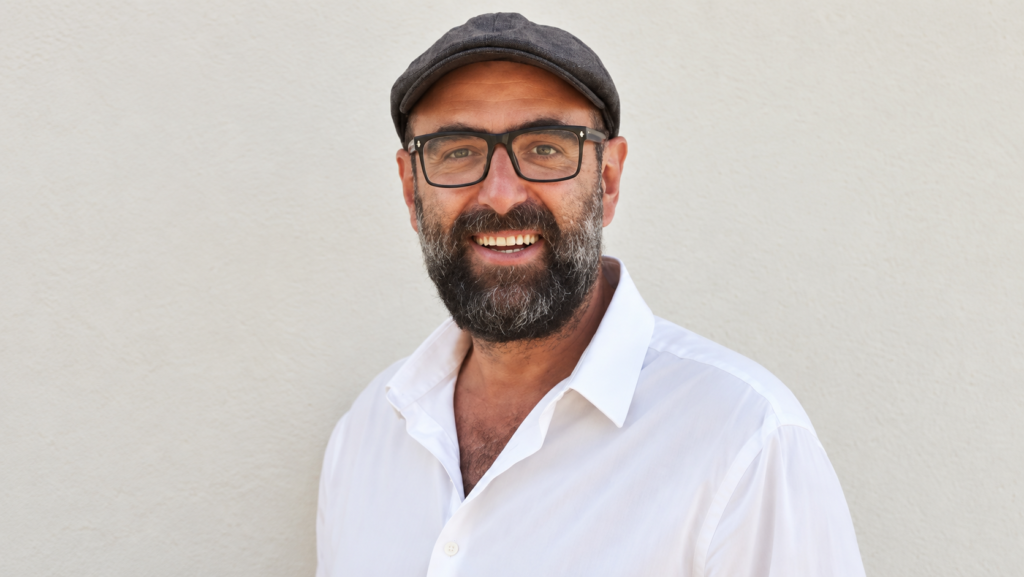
For more than three decades, Mariano Wechsler has divided his time between two pursuits: building technology and teaching others how to do it. At Digbang, he took part in some of Argentina’s earliest digital products; with Digital House, he helped train tens of thousands of programmers across Latin America; and today, at the helm of Teamcubation, he focuses on the stage that schools do not solve: the transition from the classroom to a first job. His story began in a classroom at the ORT Technical School, and it has never moved very far away from it.
Four Goals After High School
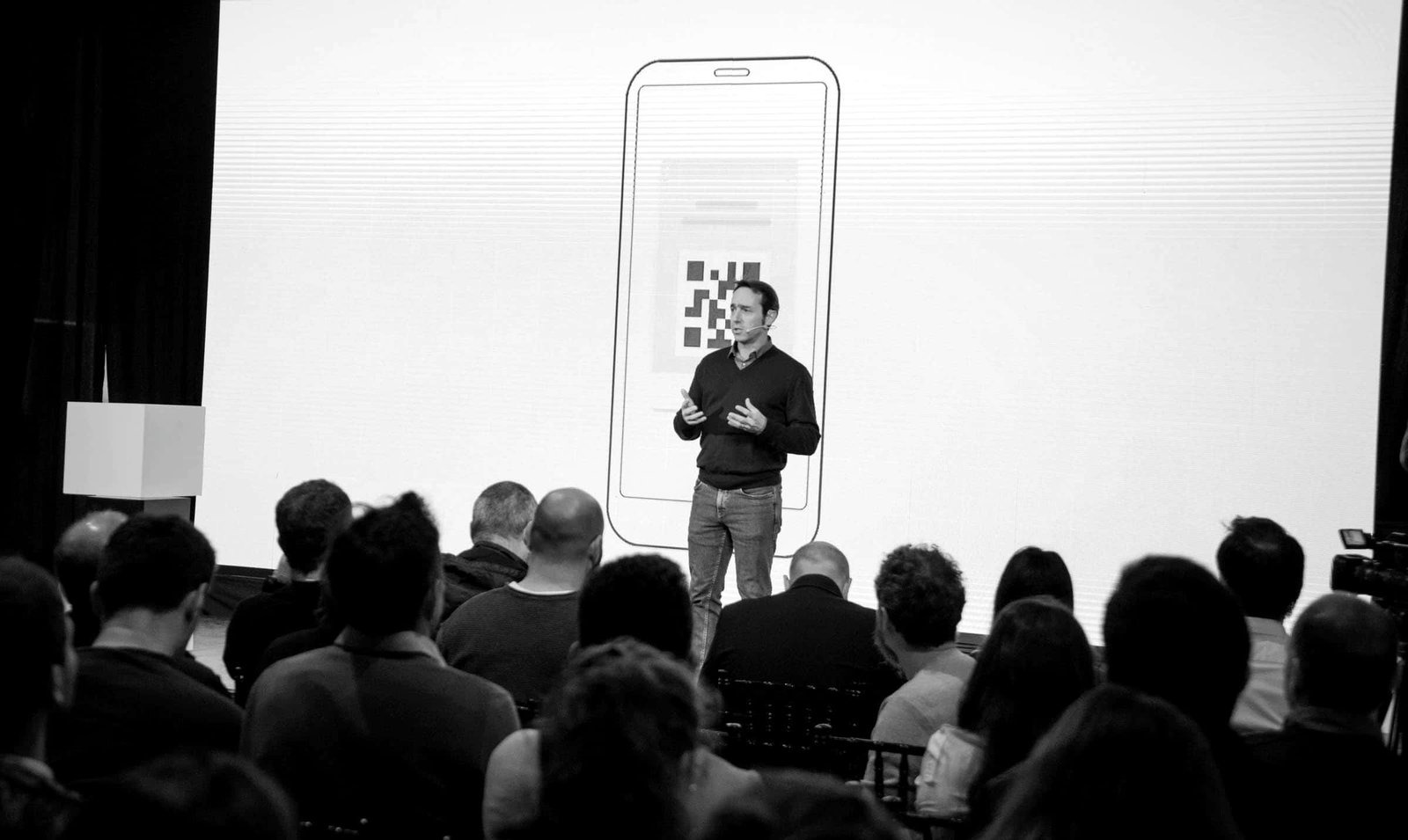
Mariano Wechsler graduated from the ORT Technical School in Buenos Aires in 1991 with a degree as a computer technician and a short list of goals. Years later, he recounted them on stage at Experiencia Endeavor NOA 2024 in Tucumán: to marry the classmate who sat behind him, to have his own software company, and to make the opportunities offered by the technology market accessible to anyone. By his own assessment, he achieved them all.
He describes himself as a nerd, someone who became obsessed with computers at a very young age. That definition runs through a career that has always moved between two pursuits: building technology products and teaching others how to build them.
Digbang and Argentina’s Early Digital Products
In March 1998, when the internet was only beginning to expand in Argentina, Wechsler co-founded Digbang, a company dedicated to developing digital products that did not yet exist in the local market. From there, he participated in the creation of Bumeran, one of the best-known employment portals in the region, and worked for companies including DirecTV and Telecom.
Wechsler often highlights one figure from that period: more than 26 million people used products created by Digbang, a number he says is one of the achievements he is most proud of in his career.
The Classroom as a Starting Point
Alongside his business career, he returned to ORT as a teacher. He describes it as a debt he felt he owed to the technical school that had trained him. He taught programming and web development for 27 years and, during that time, discovered that he enjoyed sharing knowledge as much as he enjoyed programming. From there emerged the question that would define his next project: how to bring that teaching experience to a much larger scale.
Over time, he joined the board of ORT Argentina and became co-director of the Digital Business undergraduate program at Universidad de San Andrés.
Digital House: A Programming School With Major Partners
In December 2015, Wechsler co-founded Digital House together with Nelson Duboscq and Eduardo Bruchou, creators of HSM; Marcos Galperin, founder of Mercado Libre; and Diego Pando, co-founder of Bumeran. Martín Migoya and Guibert Englebienne of Globant later joined as partners. Wechsler served as academic director and was responsible for designing the curriculum and teaching methodology.
The school opened its doors in 2016 with intensive courses in web development, data science, user experience design and digital marketing. In December 2017, The Rise Fund, the impact investment fund of TPG, selected Digital House as its first investment in Latin America and contributed $20 million to support its regional expansion. By then, the school had already trained more than 2,500 students.
Growth accelerated during the pandemic. In 2020, around 28,000 people studied on the platform, and in 2021 the company raised more than $50 million from investors including Mercado Libre, Globant, Kaszek and Riverwood Capital, bringing its total funding to more than $80 million. That same year, together with Mercado Libre and Globant, it launched the Certified Tech Developer program, a two-year course designed to connect graduates with technology companies. Today, the school operates in Argentina, Brazil, Mexico, Colombia, Chile, Uruguay and Peru.
Teamcubation and the Experience Problem
After years of training programmers, Wechsler identified an obstacle that courses could not solve: companies would not hire people who had only recently learned to code because they lacked experience, yet no one was giving them the opportunity to gain that experience. In 2020, during the pandemic, he began developing a solution together with Diego Jolodenco. He jokes that the almost-50 crisis caught up with him and he decided to start another company from scratch.
Teamcubation was born in 2021, with Wechsler as CEO. The company does not teach people how to program. It creates six-month work teams in which senior developers guide junior developers hired by client companies while they build real software those companies need. Wechsler compares it to a medical residency, but for programmers. The process is supported by the company’s own platform, which tracks each junior developer’s progress.
Among its first clients were Mercado Libre, Agrotoken and BYMA. By 2022, the startup had already trained 27 developers who went on to join those companies and was working with another 72. Its founders set themselves the goal of eventually training 30,000 programmers a year.
A Distinct View of the Digital World
Wechsler also participates in the corporate world from another perspective. He served as an independent director at Santander Argentina and sits on the advisory board of consulting firm ABECEB.
In interviews, he often challenges some of the technology sector’s conventional wisdom. During the pandemic, when everyone was talking about digital transformation, he argued that working remotely or selling through WhatsApp did not in itself amount to transformation, and that real change is cultural before it is technological. Another idea he frequently repeats is that programming is not an activity reserved for a select few and that, in Latin America, it can completely change a person’s career prospects.
In 2026, he remains at the helm of Teamcubation and participates in forums such as IDEA’s human capital directors network, where he speaks about the impact of artificial intelligence on talent and the organization of companies. On his social media profile, he describes himself as a believer in individual freedom and in the power to make things happen, a fairly accurate summary of what his career reflects.