Inés Castro
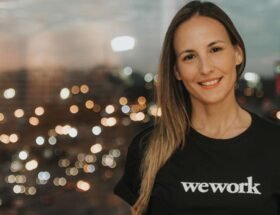
When they tried to register Fernet Foam with the agency that regulates food products, nobody knew which category to put it in. Nothing like it existed. That is more or less the trademark of Inés Castro, the woman who has spent more than three decades leading marketing at Porta Hermanos and who achieved something the industry considered impossible: introducing a second fernet brand into a market that another company had virtually monopolized. She also helped get the word fernet added to the dictionary of the Royal Spanish Academy and filled a public square with 1,882 figures of Isabel Sarli. And when it comes to the company’s many social initiatives, she has a firm position: they are not publicized.
Taking on a monopoly with a new brand
There are difficult markets, and then there is fernet in Córdoba.
The city alone consumes two-thirds of all the fernet drunk in Argentina, and for decades consumers had only one brand in mind. Entering that market with a product of their own sounded like a good way to waste money.
Porta Hermanos had been producing its blend of macerated herbs since the company’s founding, but it was only in the mid-2000s that it launched a version designed to compete seriously. Castro and her team were responsible for the launch and positioning.
It worked. By 2009, the specialized press was already describing the effort as one of the riskiest campaigns of the time. A decade later, 1882 was the only brand in the category that was still growing.
The method did not come from the standard mass-consumer marketing playbook. It was considerably stranger.
A finger, a square and the dictionary
The list of things the team did reads like a catalog of eccentric ideas, except that all of them had a commercial impact.
They managed to get the word fernet into the dictionary of the Royal Spanish Academy.
They created a “fernet finger,” an object designed to measure the exact proportion of the drink in a glass.
They placed 1,882 figures of Coca Sarli in Plaza de la Flor.
And in 2019, they launched Fernet Foam, a product that simply did not exist anywhere else. That was when the bureaucratic obstacle appeared: when they tried to register it with the regulatory agency, there was no category in which to place it. The commercial, produced by Santo Buenos Aires, surpassed four million views in its first week.
Castro explained it with unusual candor for a product launch: nobody had been waiting for it and nobody needed it. It was a surprise, and its possible uses were left to people’s creativity.
Her definition of the team revolves around three verbs: think outside the box, dare and play. She says that this shows in both the products and the communication, and that although they take the work seriously, they enjoy doing it.
Before the foam came another bet: a 354-milliliter can of ready-to-drink fernet and cola. The reaction she describes is people being surprised by how accurately the drink had been reproduced.
How a campaign is decided at Porta
Castro says the process often begins before the product even exists, because everything communicates: the brand, the packaging, the price, the channels, the advertising and, of course, the quality.
They work with internal teams combining research and development, marketing and commercial functions, together with packaging, market research and communications agencies.
And there is one phrase of hers about the process worth emphasizing because it contradicts the way almost any company normally works: at Porta, she says, the budget is not what determines the decision. If a powerful and creative campaign is presented to the board, they do everything possible to make it happen.
Her view of consumers is one that has aged well. She describes them as more proactive, participating in product development through their opinions, searching for information themselves and eventually becoming recommenders. The example she cites is Casalta Aceto Reducción, which grew almost entirely through word of mouth.
Her conclusion challenges the assumption that during a crisis price is all that matters: even when consumption contracts, people still demand quality. And she points to evidence from within the company itself: the products with the highest unit prices were the ones that grew the most.
Eight brands and none of them is called Porta
There is one strategic decision Castro explains very directly, and it defines the entire map of the company.
None of the products carries the Porta name.
The decision was made more than a decade ago. The reasoning was that it made little strategic sense to use the same brand for medicinal alcohol, vinegars and alcoholic beverages, so they chose instead to build strong, category-specific brands.
That is where Bialcohol, Glaze, Casalta, Monte Alto, Guindado, 1882, Nikov and Jamaica Rum come from, within a portfolio of more than 120 proprietary products, not including those manufactured for third parties.
Castro also emphasizes that the tone changes depending on the brand. Speaking as a fernet brand is not the same as speaking through a line of vinegars, and in every case the condition is that consumers feel respected.
The part she decided not to tell
Porta Hermanos is certified as a B Corporation, something relatively unusual in Argentine industry. That status requires it by statute to make decisions considering not only the financial interests of shareholders, but also those of employees, suppliers, customers and the community.
In addition to marketing, Castro also oversees Community Relations. And that is where her most counterintuitive position appears for someone whose job is communication.
She was asked whether there was a risk that corporate social responsibility could be interpreted as a way of generating positive publicity. She replied that it was a matter of consistency: because the company has been socially and environmentally responsible since its beginnings and that commitment forms part of its identity, they do not market it or publicize it. Employees, suppliers, customers and the community already know about that commitment. Marketing it, she said, would run against its spirit.
To understand the scale of what they do not publicize, it includes a local hiring preference under which around 20% of employees live very close to the plant; the Open Doors factory-visit program; handwashing campaigns in health centers and schools; internships and technical-education workshops; an employment-inclusion program for people with disabilities; and a specific supply of special alcohol for patients with cystic fibrosis, offered at affordable prices and shipped to the organizations that care for them.
On the environmental side, the company measures its carbon footprint, manages waste according to the three-R policy and makes full use of its raw materials: the same process produces distillers’ grains, oil for the food industry, food-grade carbon dioxide and calcium carbonate. The water used in milling is completely recycled through biological filters containing worms and ultimately supplies the plant’s toilets.
Citizens first
For more than ten years, Castro has been part of the Comunidad Empresaria de Córdoba, a foundation that brings together business owners and decision-makers around a premise she summarizes this way: first they are citizens and only then businesspeople, doctors or merchants, and that is the perspective from which they look at reality.
The organization is apolitical and nonpartisan, does not analyze day-to-day political developments and has only one admission requirement: participants must be the people who make decisions in their companies.
In May 2025, the group held its first event outside the city of Córdoba. They chose Las Varillas, and the reason was personal: the Porta family has had a century-long connection with the area through the Callerio family and has worked with the municipal hospital for three decades, particularly by providing equipment.
The event was called Desayuno para Líderes and had been postponed since April, when bad weather prevented the aircraft from taking off from Córdoba.
There, Castro presented the argument that organizes all of her institutional work: companies are very important social actors and need to prepare themselves accordingly.
She also said something that sounds less like corporate rhetoric and more like someone who has been doing the job for more than thirty years: what matters is allowing yourself time to think, and because everyone knows how busy people are, they decided to go out and find them rather than wait for them to come.