Alex Pryor
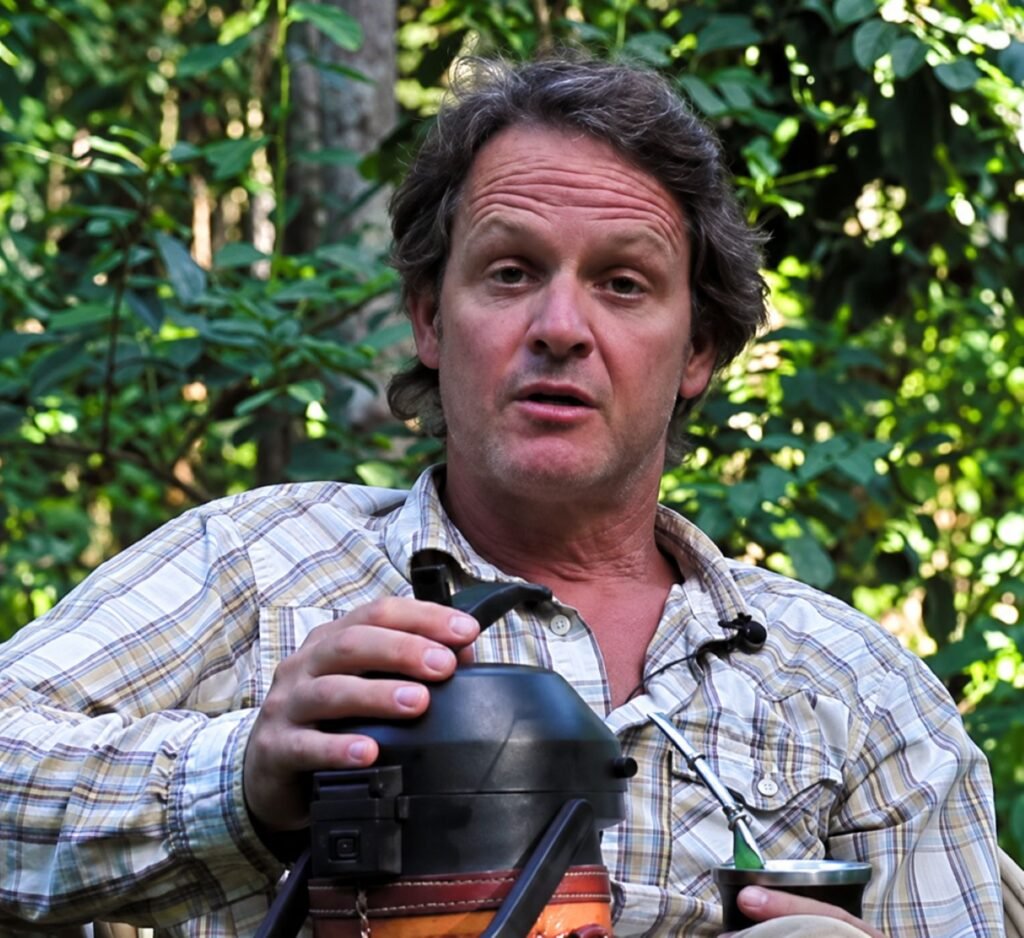
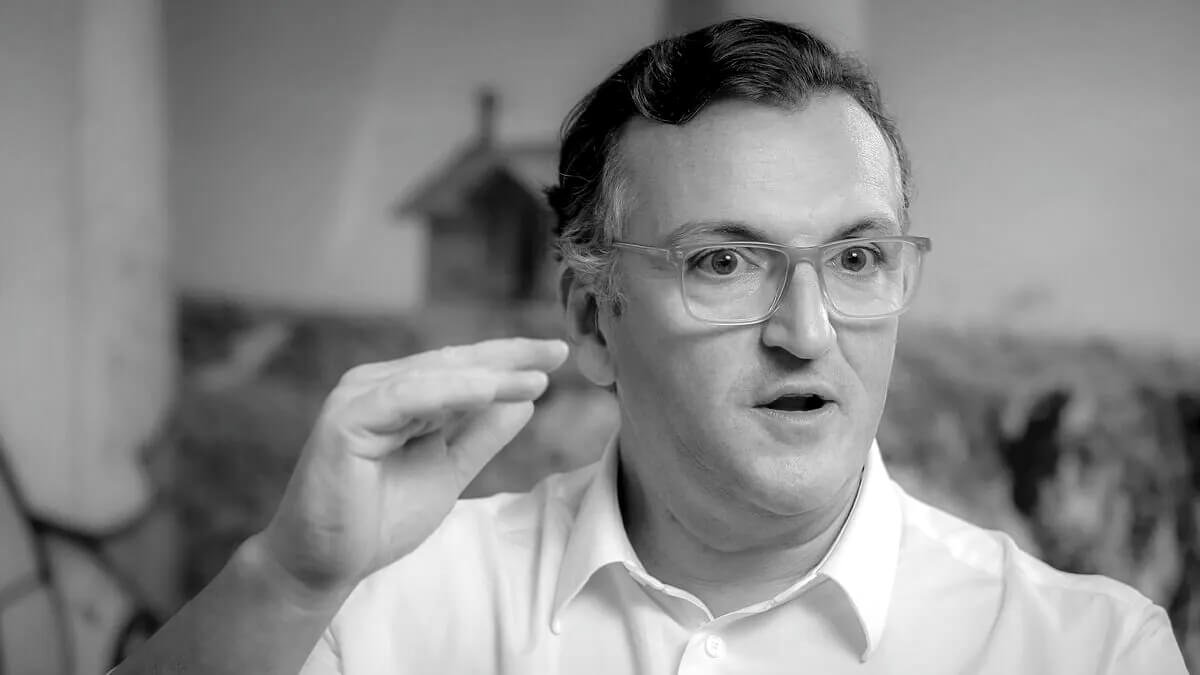
Alex Pryor co-founded Guayakí in 1996 with an idea that took decades to become mainstream: a business could grow while covering its environmental costs. Today, his yerba mate company generates more than $100 million in annual revenue in the United States, has regenerated more than 140,000 hectares of Atlantic Forest alongside Indigenous supplier communities, and has recently reemerged as Yerba Madre. This profile explores his career, achievements, and the model that made him a reference point for businesses pursuing social, environmental, and economic impact.
Mate reached the shelves of Whole Foods and Target because someone missed home. In the mid-1990s, Alex Pryor was studying food engineering at Cal Poly San Luis Obispo, California, and missed the ritual he had left behind in Argentina. In 1996, he shared mate with a university classmate, David Karr. That gathering gave rise to Guayakí, the company that turned the Río de la Plata region’s traditional drink into a business generating more than $100 million annually in the United States—and a case study in how a brand can finance forest restoration.
From sharing mate to a $50,000 loan
The early years were hands-on. Pryor was working as a waiter when he met the president of a local bank. That connection helped secure the initial $50,000 loan that got the company started. Chris Mann, Steven Karr, and other partners joined the founding team, and their sales strategy was simple and physical: travel from city to city on promotional tours, visit health food stores, share a round of mate, and leave packages of yerba behind. The product evolved to suit American tastes: bottled tereré arrived in 2005 and eventually accounted for half of revenue, followed in 2009 by the cans now sold in major retail chains.
The five founding partners called themselves “the seeds,” a nickname that described their approach: grassroots marketing, one location at a time, setting up outside stores and cafés to offer samples and sell directly. The business remained small for almost a decade, until bottled tereré blended with organic juices changed its scale in 2005.
David Karr summed up their thinking at the time: importing mate could be a viable business built on three pillars—fair trade, environmental stewardship, and economic sustainability. Guayakí became the world’s first yerba mate brand to obtain fair trade certification, and it pays its supplier communities above-market prices.
A business designed to grow forests
What set Guayakí apart was never the can itself, but the story behind its label. Pryor and his partners developed what they call market-driven regeneration: every kilogram of yerba sold in the United States finances cultivation beneath the shade of native trees in the Atlantic Forest of Brazil, Paraguay, and Argentina, one of the continent’s most heavily damaged ecoregions. The yerba grows within the forest rather than replacing it, with USDA organic certification, fair trade certification, and biodynamic production—the first in its category.
The connection with supplier communities is reflected in the name. Guayakí refers to Paraguay’s Aché Guayakí people, who have consumed the plant for generations. The company works with the community to preserve the forest where it harvests and compensates it for the use of its name. This model helped Guayakí become California’s first certified B Corporation, and its impact figures have grown alongside the business: more than 140,000 hectares regenerated since 1996 and a stated target of 800,000 by 2030.
The supply chain eventually grew beyond the original name. From its initial agreement with the Aché Kue Tuvy community, the network expanded to 257 Indigenous and family producers across Argentina, Brazil, and Paraguay. That was the official rationale for the rebranding: on May 2, 2025, the company announced that it would become Yerba Madre to honor all its partners, rather than only the people whose name it had used for almost three decades. The iconic yellow cans remained on shelves under the new brand. The packaging transition was completed in the United States that summer and reached Canada in December with bilingual cans. In 2026, it added another industry first: Regenerative Organic Certified Gold certification, along with a commitment to plant 300,000 native trees across North and South America.
The influence of a triple-impact pioneer
Pryor championed this approach decades before it had a widely recognized name. When Guayakí began, talk of regenerative business sounded like a Californian hippie manifesto. Today, the company generates more than $100 million a year, raised $75 million in its sixth funding round in 2023, and renamed its brand Yerba Madre in 2025, with Ben Mand serving as a professional CEO since 2024 and the founders on the board. For the generation of impact entrepreneurs that followed, the Argentine who shared mate on a California campus became proof that a value chain could cover its environmental and social costs while still growing in some of the world’s most competitive retail markets.
The management transition reflects the company’s maturity. Ben Mand, who previously led Harmless Harvest, became CEO in March 2024, while Robyn Lawrie Rutledge became executive chair of the board. The founders retained their seats at the table where the company’s direction is decided. The $75 million funding round in January 2023, the sixth in its history, financed that professionalization and the expansion of distribution, which now combines online sales with chains such as Whole Foods and Target.
The industry itself offers a measure of Pryor’s influence: when he began sharing mate in California, the category did not exist in the United States. Today, it fills an entire retail section, and the company he helped plant remains the benchmark for the category it created.