José Demicheli

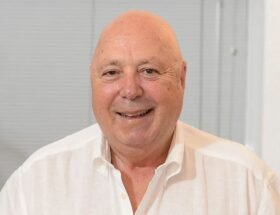
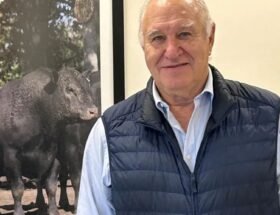
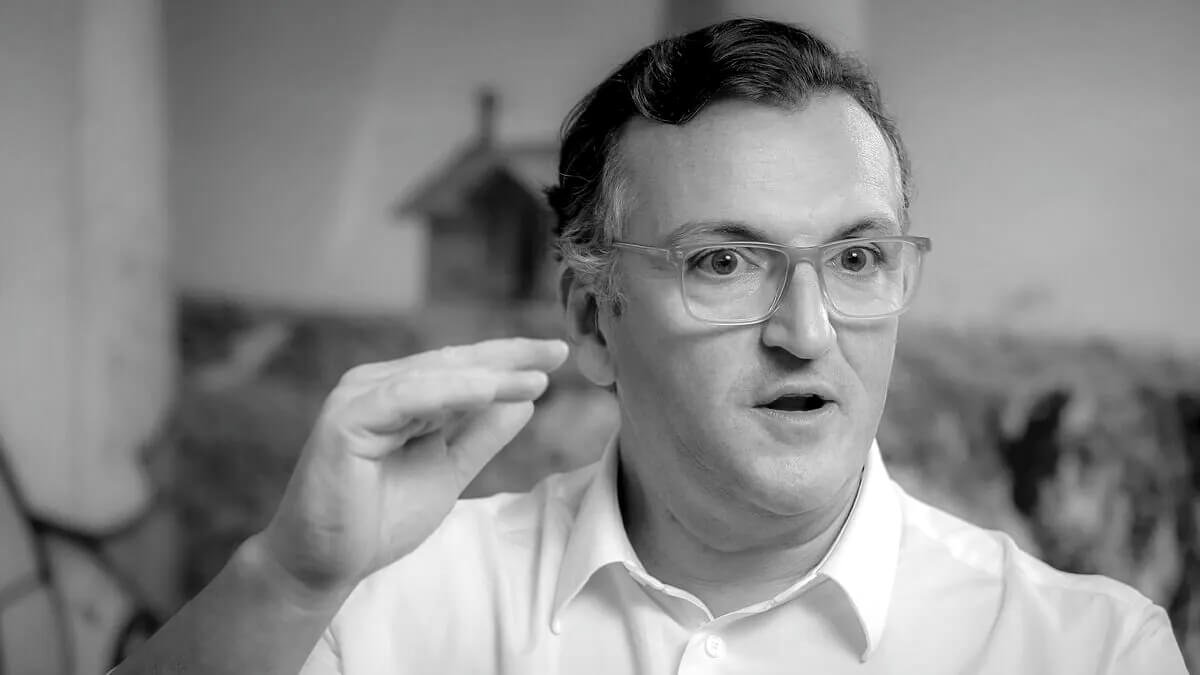
Argentina’s agricultural sector has businesspeople who produce and financiers who invest; José Demicheli built his place at the precise point where those two worlds meet. The founder and CEO of ADBlick, the company he created in 2007 to develop and operate agribusinesses, established a model that allows urban investors to participate in grain, livestock and olive production without owning farmland. Today, the firm manages three closed-end investment funds, brings together more than 1,500 investors and employs a team of over one hundred people, with operations ranging from extensive crop farming to high-tech olive farms in Mendoza.
An accounting education and a corporate background
Demicheli studied at the Escuela Superior de Comercio Carlos Pellegrini and graduated as a public accountant from the University of Buenos Aires. He completed an Executive MBA at IAE Business School in 1993—he serves as secretary of his graduating class—and, years later, a postgraduate degree in Agribusiness at the University of CEMA, which he finished in 2006, just before taking the leap into entrepreneurship.
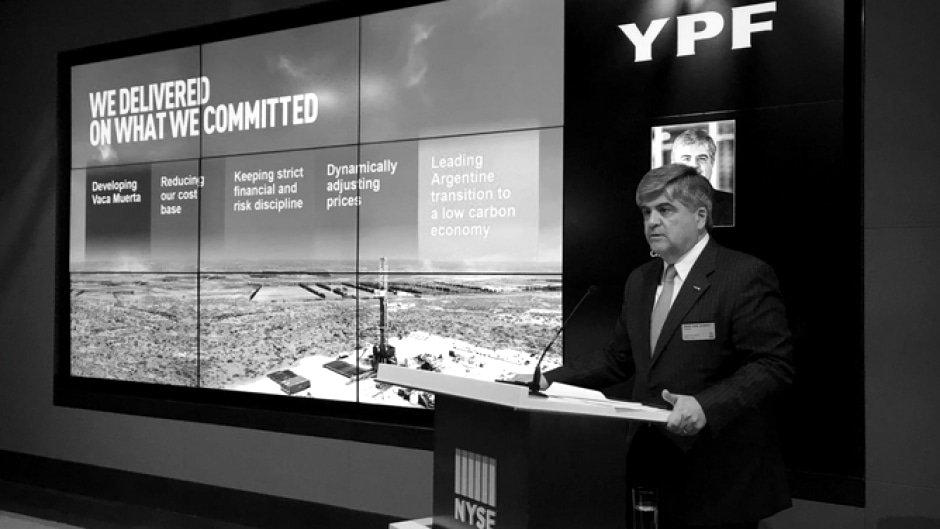
His earlier career took place at major companies. He held management positions at Ringer and Arimex Group and, as head of distributors and wholesalers at Molinos Río de la Plata, led the merger of the company’s indirect distribution teams and incorporated Granja del Sol’s frozen products into its commercial structure. He then became managing director of Pro Entertainment, formerly TyC Entertainment, which had emerged from Grupo Torneos y Competencias. That combination—an accountant’s eye for numbers and large-scale commercial management—explains much of ADBlick’s subsequent design.
ADBlick: an eagle’s view of Argentina’s countryside
The company’s name captures its proposal: it comes from the German words Adler (eagle) and Blick (view), a way of signaling that the business involves looking at Argentina’s countryside from above and identifying opportunities others do not see. Founded in 2007, ADBlick was created to structure professionally managed agricultural investment projects: the company originates the business, manages it and reports on its results, while the capital comes from investors seeking exposure to the real economy.
Over the years, that idea took the form of closed-end investment funds in three areas: grains, livestock and olive production. ADBlick Granos manages extensive crop farming through its own network of partners and directors, while the olive business has become the group’s technological showcase: two projects in Mendoza totaling approximately 830 hectares, with average yields of 9,000 kilograms per hectare, pressurized and automated irrigation across the entire area, and mechanical harvesting that takes the fruit from the tree to the processing plant in three or four hours, with premium clients such as Zuccardi winery.
Connecting the agribusiness ecosystem
Demicheli’s influence can also be measured beyond his financial statements. He is the driving force behind Argentina Visión 2040, an annual event he organizes with Argensun Foods, the University of Austral’s Agribusiness Center and Lartirigoyen. The event has held more than ten editions, bringing together business leaders, researchers and agricultural entrepreneurs. Through this platform, he emphasizes an argument he frequently repeats in public: a company that tries to build its business alone is doomed, and the sector needs to work as a network to capture the transformation taking place in Argentina.
His reading of the financial context points in the same direction. He argues that the country has entered a stage in which competitiveness is no longer optional and foreign exchange speculation is losing ground, making productive assets attractive. From that perspective, he promotes agriculture as part of diversified investment portfolios alongside financial and real estate instruments, and organizes events such as Investor Day, where the company shares its figures and projects with those who provide the capital.
Leadership in the classroom, a foundation and a glass half full
Demicheli never gave up teaching. He is a professor of Management Practices in the Business Policy area at IAE Business School, where he has taught since 2011 and where he had previously been invited as a part-time professor in the late 1990s. Before that, he taught Costs for Decision-Making at the University of Buenos Aires School of Economics. His work in the classroom is complemented by a concrete social commitment: he chairs BisBlick, an organization dedicated to supporting talented young people with fewer opportunities, based on the conviction that education serves as a bridge to social mobility.
His leadership style combines an accountant’s rigor, a commitment to partnerships and an optimism he has turned into a motto. In the face of the ups and downs of Argentina’s macroeconomy, he often urges people to see the glass as half full and remember that what matters is not what happens to us, but what we do with what happens to us. With that formula, he transformed an idea from 2007 into a platform that channels private savings into production, professionalized the relationship between the agricultural sector and urban investors, and earned a place as one of the most listened-to voices in Argentine agribusiness.