Agustín Llanos
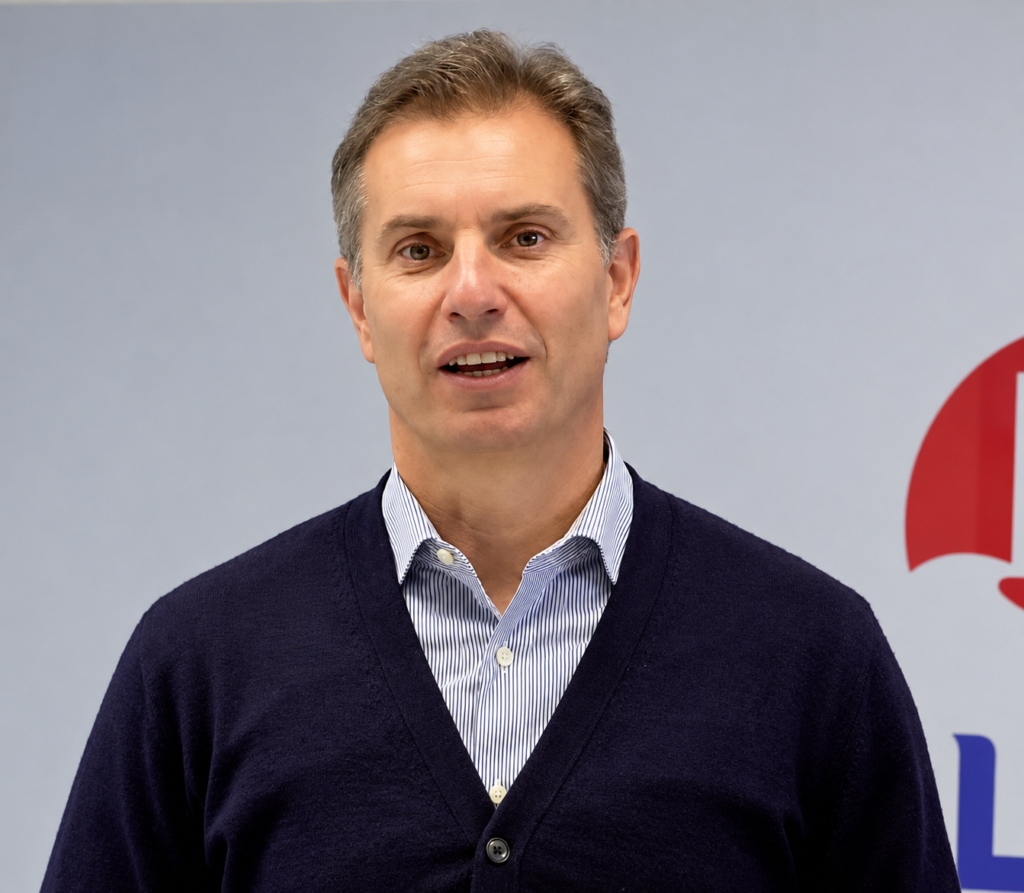
Leading Molinos Río de la Plata means managing one of the largest suppliers to Argentine household pantries. The Pérez Companc group’s food company, with more than 120 years of history and brands that have spanned generations in cooking oils, pasta, yerba mate, rice and frozen foods, has been led since late 2016 by Agustín Llanos, an economist from Córdoba who built his entire executive career within the company. His is the story of a leader developed in-house: eighteen years of internal promotions before reaching the top position, followed by nearly a decade leading an operation that manufactures, distributes and sells nationwide.
From Río Cuarto to the heart of consumer goods
Llanos holds a degree in Economics from the National University of Río Cuarto and completed his education with an MBA from IAE Business School, the business school of Austral University. He joined Molinos Río de la Plata in 1998, the same year the Pérez Companc family bought control of the company from Bunge y Born, so his career has run parallel to the company’s current chapter.
Within the organization, he held commercial and business management positions before taking over as General Manager of the Branded Business in 2012, the area responsible for the portfolio of products Molinos brings to store shelves. Four years later, in November 2016, the board appointed him CEO. The appointment came during a year of major moves: Molinos had acquired 50% of Viña Cobos winery for just over 12 million dollars and announced an investment of 1 billion pesos in its plant in San Lorenzo, Santa Fe.
A management approach rooted in brands and sustainability
At the head of Molinos, Llanos leads a large industrial and logistics operation, with production plants, distribution centers and its own fleet supplying the country with established brands such as Lucchetti pasta, Cocinero cooking oil and Nobleza Gaucha yerba mate, among many others. His management message returns to a founding idea he cites whenever he can: encouraging Argentines to eat better, with a business designed for the long term.
That principle has translated into concrete environmental decisions. In September 2023, the company signed an agreement with YPF Luz to supply its production plants with solar energy, a step Llanos presented as part of a business strategy aligned with sustainable development. The commitment to renewable energy accompanied broader work to improve production efficiency and modernize the company’s industrial operations.
Entering the biscuit market: the 2026 move
The most notable move of his recent tenure came in September 2026, when Molinos announced the purchase of Complejo San Salvador, an industrial plant in Tucumán owned by businessman Martín Luque, to enter the biscuit category for the first time. The facility, one of the largest in northern Argentina, produces crackers, sweet biscuits, filled biscuits and baked snacks, and is scheduled to be handed over to the company in November 2026, once the conditions of the transaction have been met.
The logic behind the acquisition bears Llanos’s imprint: instead of building a factory from scratch, Molinos is entering a widely consumed product category with operating facilities, equipment and an established workforce, and plans to develop the new line using brands already present in Argentine homes. The CEO himself described the purchase as a step in the company’s long-term growth strategy and an opportunity to expand the range of occasions on which consumers choose its products.
The value of an in-house career
Llanos’s leadership has a characteristic that is becoming less common in Argentine management: longevity. Nearly three decades at the same company have given him first-hand knowledge of every link in the business, from relationships with sales channels to plant operations, as well as a close understanding of the shareholder, the Pérez Companc family, now headed by Luis Pérez Companc. That continuity helps explain his low-profile, operational leadership style, more inclined toward announcements backed by action—an investment, an acquisition, an energy agreement—than personal exposure.
His influence on Argentina’s food industry operates on that quieter scale: the decisions he makes affect agricultural supply chains, industrial employment across several provinces, and the prices and variety consumers see on store shelves every day. After nearly ten years as CEO, Llanos embodies a proposition that can be tested in the results: knowing a company from the inside over decades remains a competitive advantage that is difficult to replicate.