Fernando Storchi
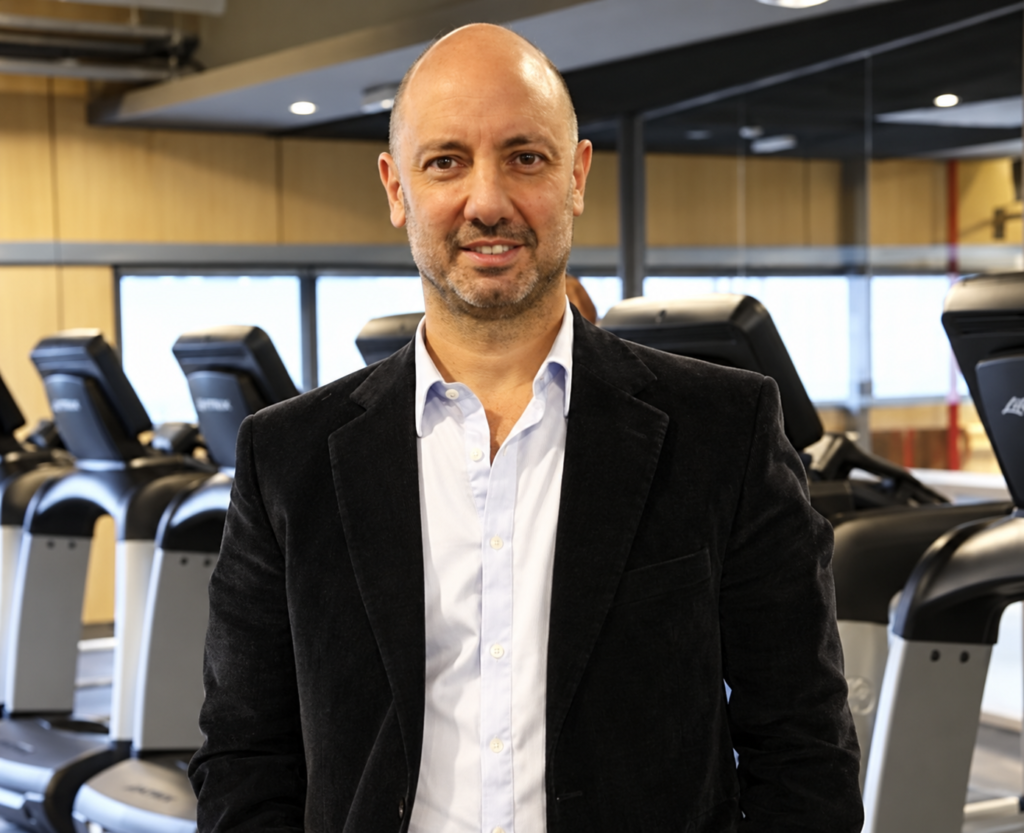
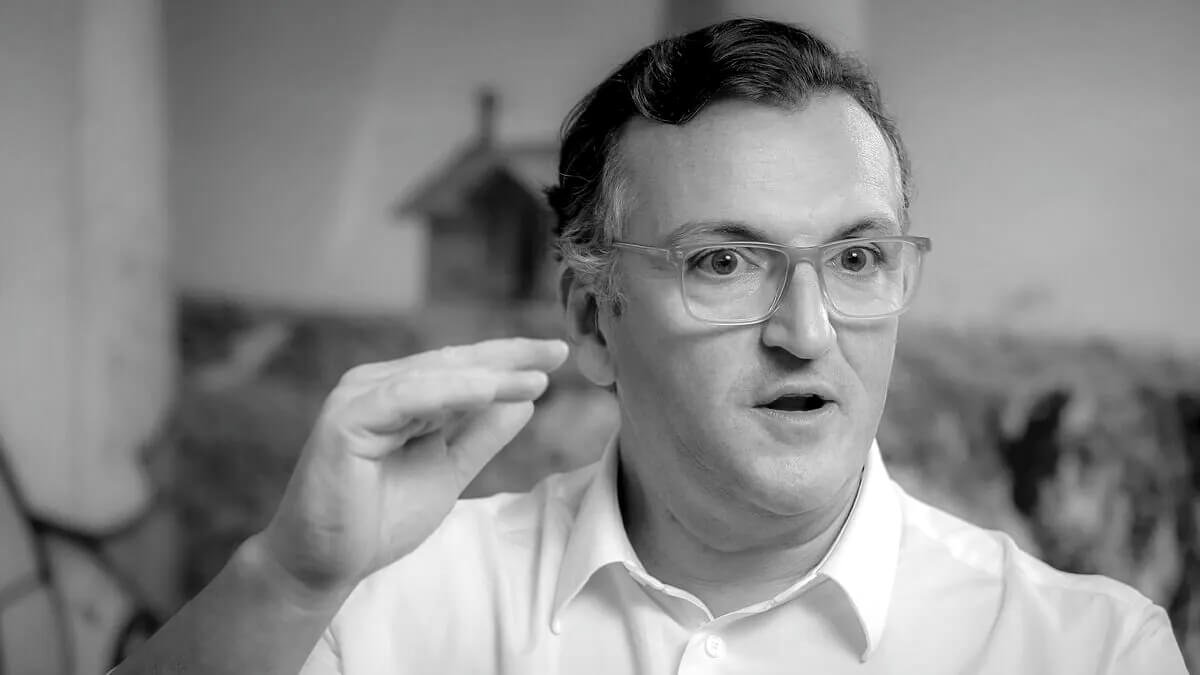
Few figures explain the professionalization of fitness in Argentina as well as Fernando Storchi. The founder and CEO of Megatlon, the country’s largest gym chain, has spent three decades building a business that now brings together 51 locations—twenty of them under the Fiter brand—1,700 employees and 205,000 registered members, with around fifty thousand people training at its clubs every day. His career combines an academic background in business administration, commercial instinct and an idea he has repeated from the beginning: a gym does not sell machines or abdominal exercises; it sells community and health.
From an abandoned bus depot to neighborhood clubs
Storchi graduated with a degree in Business Administration from the University of Buenos Aires in 1991 and, almost at the same time, opened his first sports venture: Parthenon, a complex with five-a-side soccer and padel courts and a small gym, built with family and friends on a former bus parking lot in the Buenos Aires neighborhood of Floresta. He was around 25 years old and had not inherited a company. What he does acknowledge receiving from his father is a set of values and a work ethic that shaped his approach to management.
The next step was to look toward neighborhood clubs. In the mid-1990s, he took over the concession for the gym at Club Almagro, on Medrano Street, and later restored neglected spaces in institutions such as a club in Devoto. That period taught him two things he would later apply on a larger scale: abandoned spaces could once again fill with people, and the business, as it was structured, was brutally seasonal, with strong revenues between September and December and unpredictable months throughout the rest of the year.
Megatlon: one network, one membership card and the end of seasonality
After a business partnership split in 1998 divided the original project into what would become Megatlon and Sport Club, Storchi launched the brand that would define his career in 1999. The concept was new to Argentina at the time: a network of connected gyms where a single membership card provided access to every location. The name came from an existing gym he bought, whose sign he liked enough to keep until he found a use for it.
The boldest decision was not about marketing but about the revenue model: he cut the membership fee in half and linked it to automatic debit payments. This gave him predictable income every month and broke the seasonality that was suffocating the industry, anticipating by years the subscription model that digital platforms would later popularize. Megatlon stopped being a gym and became an ongoing service, with membership as a bond of belonging.
Expansion, corporate clients and a gym in Antarctica
With the model proven, the chain grew in locations, members and business lines. Megatlon developed gyms inside companies—it worked with firms such as Oracle, HSBC and Techint—and corporate agreements under which companies such as American Express paid for their employees’ memberships. By 2009, revenue was around 100 million pesos, 25% above the previous year. Among its less conventional ventures was equipping gyms at Argentine Antarctic bases, a move that served both as an exercise in extreme logistics and a brand statement.
The growth received external recognition: Storchi was selected as an Endeavor Entrepreneur at an International Selection Panel held in Lima, when Megatlon already had more than 30 locations and 130,000 active members. He received offers to buy the company on three occasions and rejected them all: his plan was never to sell, but to sustain the business over time.
The pandemic and the voice of an industry: Argentina’s Gym Chamber
The complete shutdown of 2020 hit an industry built almost entirely on fixed costs. As president of Argentina’s Gym Chamber—an organization that brings together several hundred establishments across the country—Storchi became the sector’s leading spokesperson before governments and the media. He introduced a definition that shaped the public discussion: gyms are health agents, not recreational spaces. On that basis, he promoted health protocols developed with infectious disease specialists from Stamboulian, which served as a reference for reopening with capacity limits, and defended the continuation of the activity when new restrictions threatened another shutdown.
Within the company, the response was digital. Megatlon moved its schedule to live classes open to the community, and its Instagram account grew from 40,000 to 200,000 followers, with days on which the broadcasts accumulated around 100,000 views. The crisis that could have destroyed the business ended up expanding its audience.
Fiter and the current stage: two brands for two audiences
In 2018, before the pandemic, Storchi had already diversified with Fiter, a low-cost gym chain designed for an audience that Megatlon’s premium format did not reach. The move follows a portfolio strategy seen in other industries: covering different price segments without cannibalizing the parent brand. Today, Fiter accounts for twenty of the group’s 51 locations and represents a significant part of its expansion plans, which Storchi is pursuing by opening company-owned locations and looking toward new markets.
His position on technology is less enthusiastic than the times might suggest: he incorporates it as a management and training tool, but rejects the idea that it should replace the human connection that, in his view, sustains the business. He puts it plainly: a gym is a health center disguised as a social club.
A leadership style built on community
Those who look back on his story find a pattern: Storchi identifies dormant spaces—a bus depot, a declining club, an underserved price segment—and brings them to life through professional management and a sense of belonging. He admits that in the early days there was more intuition than spreadsheets, although that intuition came with a university education in business administration and an obsession with operational details that he retains to this day. He often says that nothing can be built without a team, and that he can be the founder and lead the project, but cannot replace the people who carry it out.
His influence extends beyond his companies’ balance sheets. He changed the way Argentines train by transforming the gym into a social meeting place, put physical well-being on the public agenda as a health issue and gave the industry a representative organization with a voice of its own. Three decades after that first complex in Floresta, he remains at the head of the operation, with no intention of selling and with the same hypothesis as always: where there is community, there is a business that lasts.