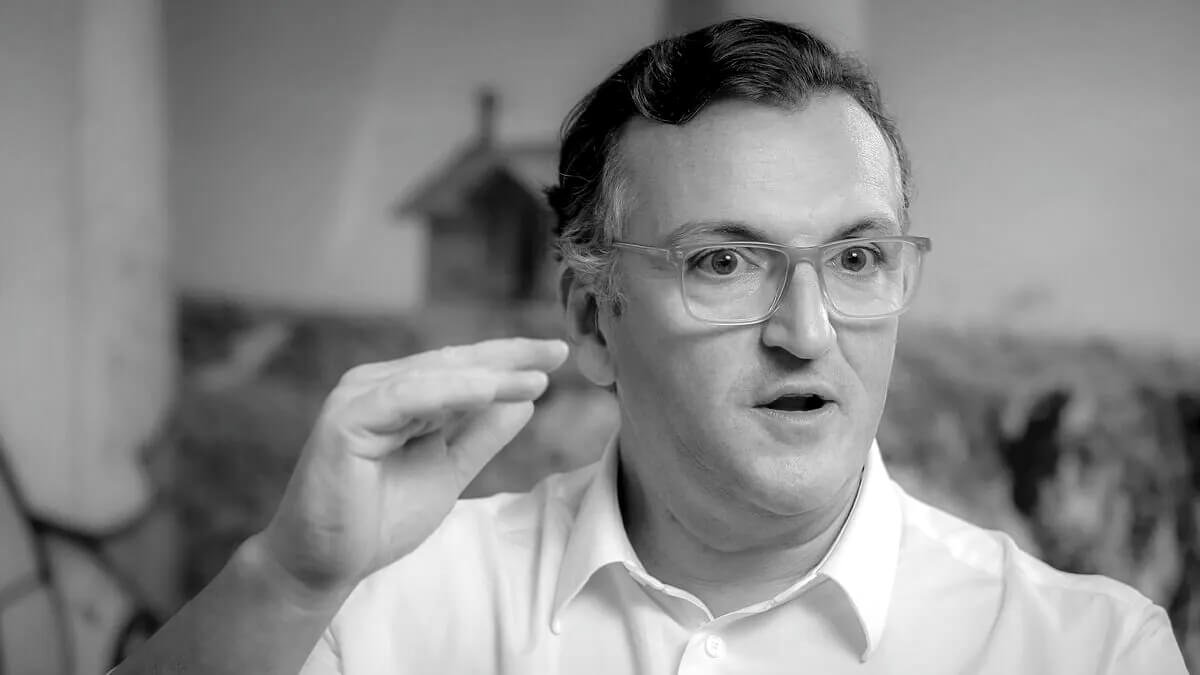
Matías Peire
In 2013, Matías Peire sold his stake in the software company he had helped build and did not do what might have been expected: he did not start another company or go out to raise a fund. Instead, he spent three years trying to answer an uncomfortable question about Latin America. The region had world-class researchers publishing in leading journals, but almost no science-based companies in which an investor could put money.
The conclusion he reached was that the problem was not capital but supply: you cannot invest in companies that do not exist. That led to the creation of GRIDX in 2016, a company builder that does not search for existing science startups but creates them by pairing researchers with business professionals. Eight years later, the portfolio includes more than eighty companies across seven countries, with around 700 scientists working inside them.
Three years looking for a model before investing a single dollar
The story of GRIDX begins with an unusual pause in the entrepreneurial world. In 2013, after selling his stake in 3Way Solutions —a software and electronics company specializing in digital video— Matías Peire did not immediately raise a fund or start another company. He spent three years investigating a specific question: how to connect Latin America’s scientific system with venture capital.
What he found explains everything that followed. The region had world-class researchers, publications in high-impact journals and collaborations with global institutions, but almost no science-based companies in which a fund could invest. The problem was not a lack of money. It was a lack of companies. Investors could not fund businesses that did not yet exist.
That became the model. GRIDX, founded in 2016, does not look for finished startups. It builds them.
How a factory for science-based companies works
The mechanism is systematic and repeats every year. GRIDX selects around twenty scientific projects and another twenty professionals with business experience, then puts them together in a three-month program. The founding teams of new companies emerge from those combinations.
When one of those pairings works, the fund becomes one of the company’s first investors, typically writing an initial check of between US$200,000 and US$250,000. From that point on, the work is no longer purely financial. It becomes operational: hiring people, organizing capital, going to market and finding the next investors. Peire describes it as helping run the business, not simply choosing where to invest.
Eight years later, the result is a portfolio of more than eighty companies with founders from seven countries across the region and around 700 scientists working within them. Companies such as Bitgenia, focused on genomic bioinformatics; Stamm, which patented an industrial-scale laminar-flow bioreactor; Beeflow, which applies molecular biology to improve yields in bee-pollinated crops; and Bioeutectics all emerged from that system.
The capital: from US$10 million to a third fund
The first investment vehicle began taking shape in early 2017 together with members of the Argentine Chamber of Biotechnology and was fully established in 2018 with US$11 million. Its early rounds were backed by major local industry players, including Grupo Insud, Bioceres, Bagó, Gador and Vicentin.
The second fund, worth US$30 million, started in 2022 and is still being deployed. A third fund was planned for launch in 2026. Together, they represent more than US$40 million directed toward an asset class that had almost no specialized investors in Latin America when Peire started.
That remains one of the main bottlenecks, according to his own analysis. These companies often need five, six or seven years of research and development before they can fully prove their scientific promise, and there are still too few funds in the region willing to support timelines that long.
That is why much of Peire’s agenda is also geographic. In April 2025, he took 21 portfolio startups on a roadshow through Tulsa, New York and San Francisco. For him, the challenge is to build permanent bridges to investors in the United States, Europe and Asia.
A thesis about the region
Peire often makes two arguments that shape his view of the business. The first is about scale. Latin America has roughly 200,000 life-science researchers and very few companies capable of employing them. Against that number, even a portfolio of more than eighty companies —the largest in the region— looks small to him.
The second is about biodiversity. More than twenty GRIDX companies use the region’s biodiversity as a starting point for developments in agriculture, food and health. Peire’s view is that nature contains valuable information about how to solve problems and that turning biodiversity into an economic asset can also create concrete incentives to preserve it.
Argentina occupies a central place in that map. Around fifty companies in the portfolio are Argentine, something Peire attributes both to the country’s high concentration of researchers and to the fact that the project started there.
He also stresses a point that is often missing from entrepreneurial narratives: none of this happens without public funding for basic science, because that knowledge provides the foundation on which the companies are eventually built.
Leadership, teaching and ecosystem building
His influence extends beyond GRIDX. Peire is vice president of Seed Capital at ARCAP, Argentina’s association for private, entrepreneurial and seed capital, and coordinates the Biotech & Business program at Universidad de San Andrés, where he trains executives in the logic of an industry that barely existed as a business category in the region a decade ago. Outside his professional work, he also serves on the council of Educar2050.
Internationally, he appears as a speaker at forums focused on investment and applied science. In 2025, those included the Milken Institute’s Global Investors Symposium in Mexico City and the Synthetic Biology Summit.
What distinguishes his leadership style
One idea runs through much of Peire’s career: build the supply before competing for it. Faced with a market that had almost no investable science startups, he did not simply adjust his investment thesis to what was available. He created the machinery needed to produce the companies that were missing.
That move —identifying a structural gap and building the system needed to fill it— makes him as much an ecosystem builder as an investor.
The other defining trait is patience. Three years of research before founding the company, R&D cycles that can last more than five years and successive funds designed to support long processes. In an industry obsessed with speed, Peire chose to work on the timeline of science.