Ariel Szarfsztejn
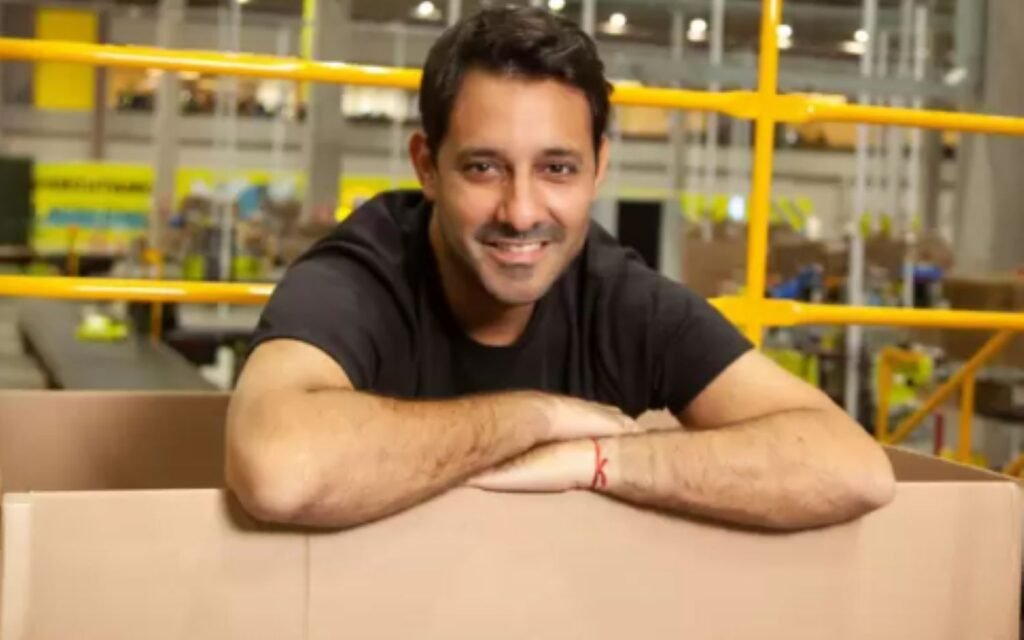
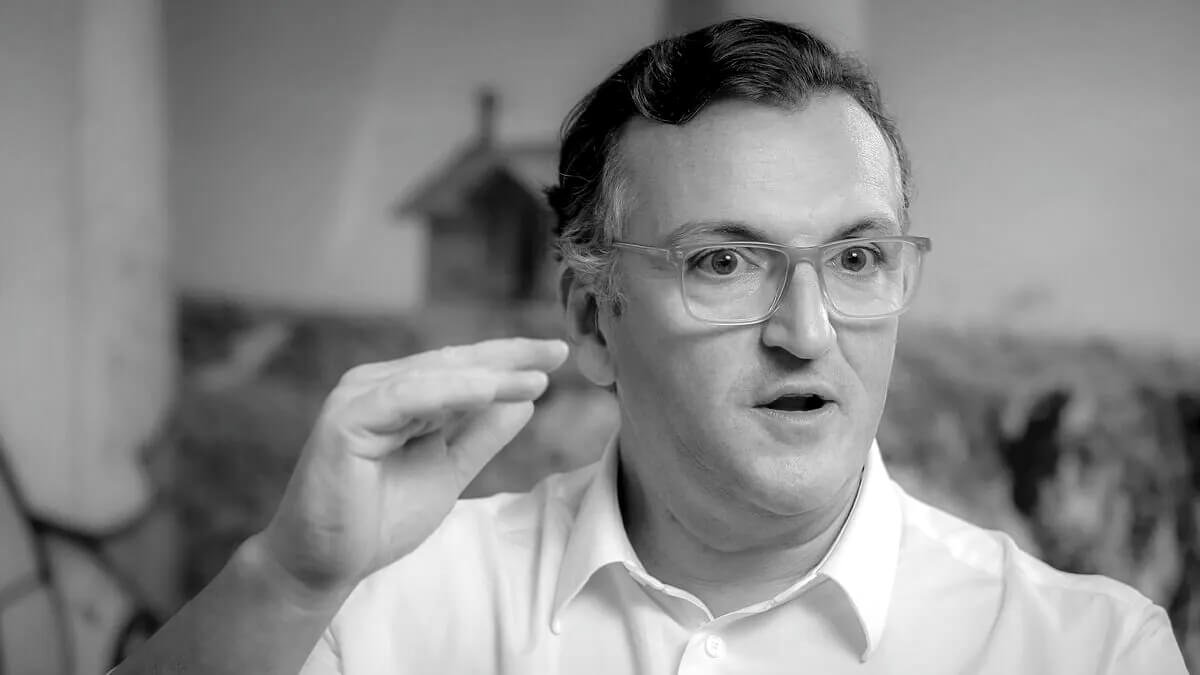
For twenty-six years, Mercado Libre had only one CEO. Since January 2026, it has another: Ariel Szarfsztejn, an economist from the University of Buenos Aires with an MBA from Stanford, who joined the company in 2017 without knowing anyone there and took eight years to reach the top of Latin America’s most valuable company. This is his path, the way he understands the business and the challenges now in front of him.
A succession announced more than six months in advance
On May 21, 2025, Marcos Galperin announced on X that he would step away from the day-to-day management of the company he founded in 1999. The name of his successor was no surprise to those who followed Mercado Libre closely: Ariel Szarfsztejn, then president of Commerce, had been prepared for the role for years.
The transition took place on January 1, 2026, with Galperin moving into the role of Executive Chairman, focused on long-term strategy, product evolution, capital allocation and artificial intelligence.
From the UBA to Stanford, with a classroom in between
Szarfsztejn studied Economics at the University of Buenos Aires and graduated cum laude in 2006. While studying, he taught Economics, Accounting and Business Administration at St. Mark’s School.
Six years later, he completed an MBA at Stanford Graduate School of Business, the same program Galperin had attended two decades earlier. That academic coincidence became part of the story surrounding the succession, although their previous career paths could hardly have been more different.
Consulting, banking and a stop at Despegar
Before joining Mercado Libre, he built what looked like a textbook résumé: an early role at Citibank in Human Resources, positions at Goldman Sachs and several years at The Boston Consulting Group, where he joined as a consultant and eventually led projects.
That period gave him two things he would later use extensively: analytical discipline and exposure to very different industries.
In 2014, fresh out of his MBA, he joined Despegar.com as General Manager of the Hotels unit for Spanish-speaking markets. In 2016, he was promoted to vice president of Hotels. It was his first experience running a complete business unit inside a regional internet company.
2017: the job he was not convinced about at first
His arrival at Mercado Libre began with doubt. Pedro Arnt, then the company’s CFO, approached him about a strategic role, and Szarfsztejn replied that a team that had been working together for twenty years probably did not need his opinions on how to do things.
It took nearly a dozen informal meetings to persuade him. What ultimately convinced him was the internal culture, where, in his view, a good idea carries more weight than title or seniority.
He joined in 2017, at 36, as vice president of Strategy, Corporate Development and Investor Relations, and later said that by his second day he already knew he had made the right decision.
Logistics: the business that put him on the CEO track
Less than a year later, Galperin handed him one of the company’s most demanding operations: shipping. Szarfsztejn became VP and COO of Mercado Envíos and later Senior VP of Logistics between 2020 and 2021.
Under his leadership, the organization grew from 60 people to more than 70,000, with major investments in automated distribution centers, its own transportation fleet —including cargo aircraft and electric vehicles— and last-mile delivery solutions.
The result can be measured: in 2024, the company shipped around 1.8 billion items across 18 countries, reaching efficiency levels comparable to those of its global competitors in the markets where it operates.
Building that network almost from scratch was what turned him into a serious candidate for the top job.
The move into the heart of the ecosystem
In 2021 came the decisive test. Co-founder Stelleo Tolda was beginning to step away from executive duties, and Galperin decided to give Szarfsztejn oversight of the Marketplace, the company’s core business.
He became executive vice president of Commerce in 2022 and, in April 2024, was named regional president of Commerce, with full responsibility for results and operations: the seller base, new categories, marketing, loyalty and coordination with payments and credit.
During that period, the company maintained its market share despite the arrival of new competitors.
How he sees the business: one system, not two
His central diagnosis is that marketplace and fintech are not separate businesses but parts of the same system, each feeding the other.
A customer who enters through e-commerce may end up becoming a user of the digital wallet; a small business selling on the platform may gain access to working-capital credit backed by its transaction history. Subsidized free shipping and interest-free installments only work because of the profitability and data generated by the financial business.
His ambition in that area is explicit: to turn the company into the largest provider of digital financial services in the region.
He also argues that fintech can support several winners at the same time, unlike e-commerce, where each market tends to end up with one or two dominant players.
On geographical expansion, his position is one of focus: with more than 650 million people in Latin America and so much still left to build within the region, he considers looking for customers elsewhere a poor use of resources.
A different style from his predecessor
He describes himself as an introvert and prefers to listen and prepare before speaking. People who work with him describe him as data-driven, someone who identifies opportunities for improvement, builds a vision and then gets the team behind it.
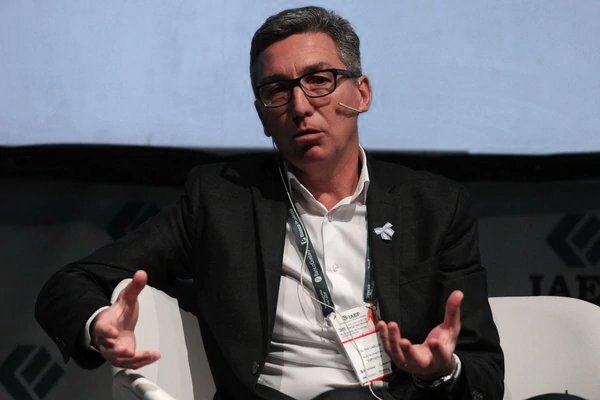
His public profile was always much lower than Galperin’s, although that began to change deliberately. Part of the succession plan involved meeting quarterly with major institutional shareholders and representing the company at events such as J.P. Morgan’s global technology conference in Boston.
Galperin himself once said that investors now know Szarfsztejn better than they know him.
In September 2025, Szarfsztejn made his first major public appearance alongside Galperin at an event in Mexico City attended by around 8,000 sellers, partners and employees.
There he laid out his central thesis: Mercado Libre is a company of enormous scale that is still growing at startup speed, with opportunities ahead equal to or greater than those it faced during its first 26 years.
Market reaction
Investors took the announcement calmly. After the news, the stock remained around $2,300 on Nasdaq, giving the company a market capitalization of approximately $120 billion.
Analysts at HSBC, Morningstar and Santander broadly viewed the transition as a natural progression and valued the fact that it was taking place while the company was expanding rather than during a crisis.
More cautious observers pointed to the other side of the picture: after peaking in mid-2025, the stock entered a period of volatility and by November had fallen nearly 20 percent from its high, a correction attributed more to profit-taking and global market conditions than to doubts about the new CEO.
The challenges in front of him
None of his challenges are abstract. Amazon has advanced in Brazil and Mexico, Mercado Libre’s two largest markets. Chinese platforms such as Temu and Shein are putting pressure on prices and have pushed several governments in the region to reconsider import tariffs.
In fintech, Nubank and increasingly digital traditional banks are competing for the same ground. Szarfsztejn has described Brazil as one of the most competitive markets on the planet and argues that the answer is to anticipate rather than react.
There are also the constraints that come with operating in the region: geopolitical volatility, infrastructure and security.
And there is an internal bottleneck that he identifies himself: the company does not lack ideas or projects; it lacks development capacity. With around 20,000 programmers, deciding how that time is allocated is one of his most delicate tasks.
Mercado Libre rarely acquires companies and prefers to build its own software, making technical talent one of its scarcest resources.
Meanwhile, the company is testing new verticals: a pharmaceutical platform in Brazil, food delivery in Argentina, remittances in Mexico and artificial intelligence applications for the user experience.
In 2025, it committed at least $13.2 billion in investments across the region. In September 2024, already seen as a potential successor, Szarfsztejn had announced a $75 million fulfillment center in Argentina expected to generate more than 2,300 direct jobs.
The personal side
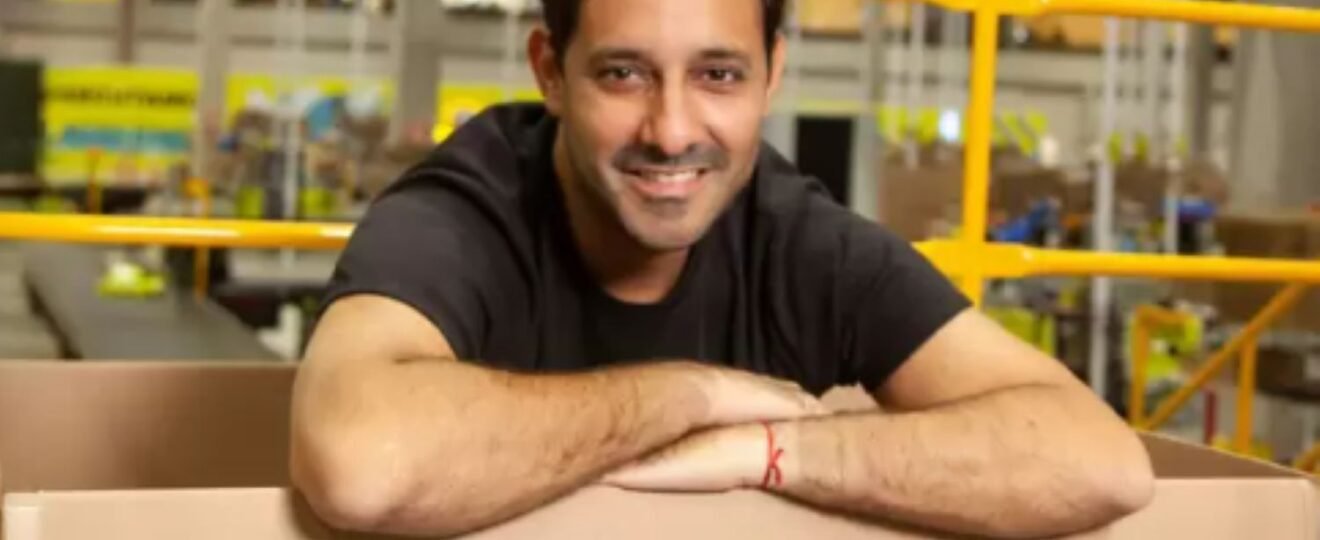
He lives in Buenos Aires, is married and has two young daughters. He is almost always seen wearing jeans, sneakers and a black T-shirt with the company’s logo, even at formal events.
He supports Boca Juniors, admires Rafael Nadal and reads sports biographies, a genre he often chooses for what it teaches about discipline and mental resilience.
In August 2025, he appeared on the podcast Aprender de Grandes, where he spoke about building teams, hiring criteria and competition with Chinese platforms.
The kind of leader who reached the top
His career did not involve spectacular jumps, but rather a structured path through the company’s most sensitive areas: first strategy and investor relations, then logistics and finally the marketplace.
Eight years took him from newcomer to CEO of Latin America’s most valuable company.
Galperin explained the choice by saying that his successor combines capability, leadership and culture, in that order.
The real test is only beginning, with the founder’s imprint still fresh and a region where nothing sustains itself on its own.