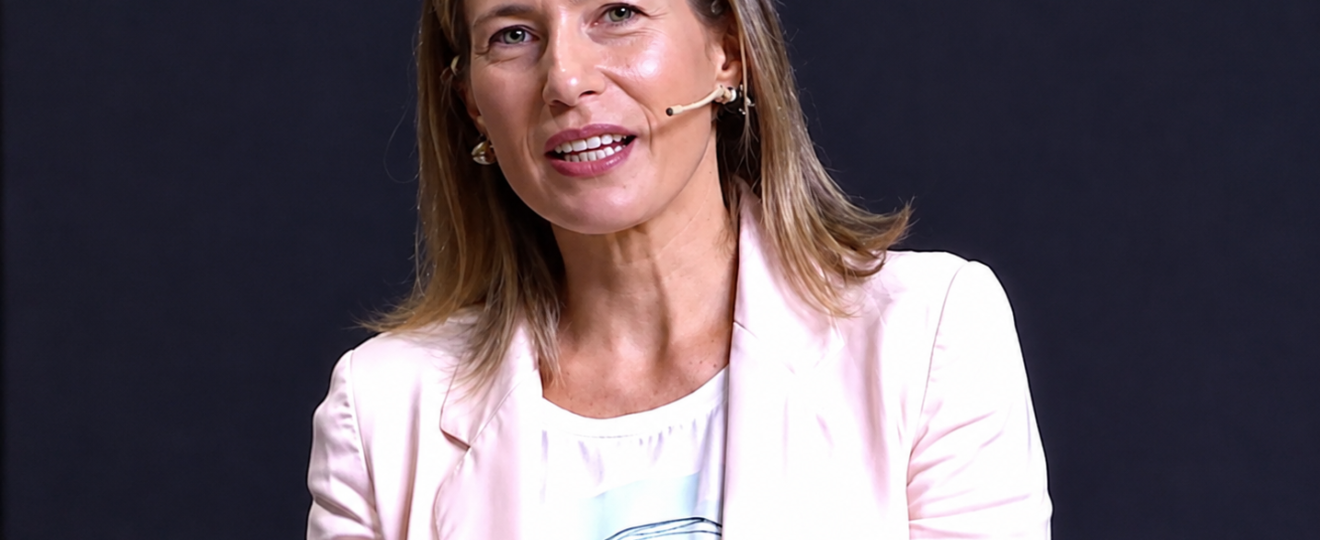
Carolina Castro
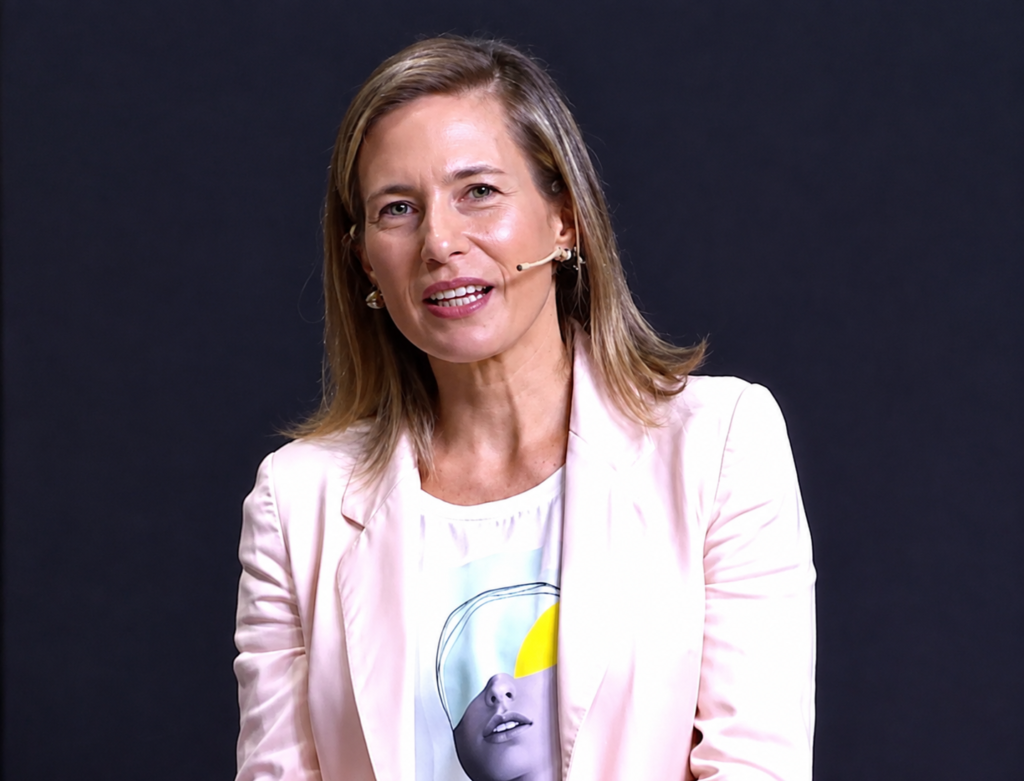
In 2003, a recent Political Science graduate from the University of Buenos Aires was looking for work in the aftermath of Argentina’s 2001 crisis and applying for executive secretary positions without much success. Eventually, she suggested to her mother that she join the family factory in Burzaco, where she was seated next to the accountant and put to work entering invoices. The company had one hundred employees and some of its staff had been suspended.
Two decades later, Carolina Castro chairs that same company, now with around 600 employees and two plants. Along the way, she has held a national government post, coordinated a G20 business forum, written a book and become the first woman to sit on the inner leadership committee of the Argentine Industrial Union.
A family business without a family mandate
Industrias Guidi manufactures metal parts for the automotive industry: bumpers, reinforcements, brackets, floor panels and hoods. Her grandfather founded the company in the 1960s, and one decision he made helps explain much of what came later: he established that any of his children could lead the business, regardless of gender. That is how Juana Guidi, Carolina’s mother, eventually took charge.
That detail matters because, as Castro herself tells it, there was never any obligation or expectation that she would join the company. She studied what interested her without choosing a degree based on its job prospects, and became the first university graduate in her family. Joining the factory was her decision, not a family mandate.
It also explains her relationship with male-dominated leadership tables. When asked what it feels like to be the only woman among twenty-five men, she says it always felt normal because she had watched her mother do it her entire life.
From data entry to the decision-making table
Her path inside the company was slow and started at the bottom. First came data entry, then different administrative and operational areas, until she eventually took charge of imports. To prepare for that role, she studied foreign trade at Fundación Banco Boston. She values those years because they put her in direct contact with the realities of the work before she had to make decisions about it.
The company’s leap in scale came with its Zárate plant, its second facility, built along Route 9 near its main customer, Toyota Argentina. Castro was part of the team that developed it from the search for the land through the construction tender and completion of the project. She describes it as the turning point in her professional career.
Four years away and a different return
The second milestone she points to was leaving.
Between 2016 and 2017, she served as Undersecretary for Small and Medium Enterprise Policy and Management at the Ministry of Production, overseeing a structure of around two hundred people. She later coordinated the B20, the business forum that runs alongside the G20, during the edition hosted by Argentina.
The way she interprets that period is one of the most revealing parts of her story as a leadership case. When someone is the son or daughter of an owner, she says, there is always some doubt over whether the position was earned or inherited. Leading a public-sector team with no connection to her previous career worked as external validation: there, she was no longer the owner’s daughter. She returned to Guidi, in her own words, more solid.
The pressure did not disappear. Castro says leadership has to be validated again every day, particularly in a country where the external environment constantly affects internal management. She says she experiences that demand as motivation rather than as a burden.
The first woman at the UIA’s inner table
In June 2019, the Argentine Association of Component Manufacturers selected her to represent the auto-parts sector on the Executive Committee of the Argentine Industrial Union. She became second deputy secretary and the first woman to join the organization’s leadership in more than 130 years of history.
One anecdote from the time captures the scale of the change: women were so unlikely to reach the floor where the presidency was located that there was not even a women’s restroom. Castro saw the appointment less as a personal achievement than as a way of opening a path for others.
Within Argentina’s business association network, she accumulated several roles: second vice president of the Industrial Union of Almirante Brown, SME secretary at AFAC, president of Diálogo UIA Joven, coordinator of AFAC Joven and president of the UIA’s Legislation Department. Since 2012, she has also been part of Argentina’s employer delegation to the annual conference of the International Labour Organization.
Industry 4.0: the condors and those who have not started climbing
Her most consistent public agenda has been the digital transformation of Argentina’s industrial base. In 2020, using data from a UIA survey, she described the landscape with a mountain metaphor: at the summit were the “condors,” companies at the technological frontier, representing just 6% of industrial firms; at the bottom were the 49% that had not even begun to climb.
The example she uses is her own company. Guidi has spent six decades in metalworking and around fifteen years undergoing transformation. The indicators she cites are concrete: inventory fell from thirty days to one or two, while the number of welding robots increased from six to fifty-one.
That leads directly to her argument for public policy. She points to Germany, which launched an Industry 4.0 plan in 2011 with a US$2.75 billion fund for SMEs, and argues that the world has stopped debating whether countries should have industry or add value. It is simply moving forward.
The other issue is education. Castro points to the shortage of engineers and technology specialists and warns that even universities are struggling to keep pace with technological change. Her proposal is for government and companies to work together on curricula, both for technical trades and university degrees.
Women on the factory floor
On gender diversity, her contribution can be measured. When the Zárate plant opened, she decided from day one to bring women onto the production floor, in a sector where female participation was around 3%. In 2021, she reported that women represented 27% of operators; by 2025, they accounted for 40% of the plant’s workforce, well above the average for the metalworking sector.
Her current concern is that the issue is losing ground on the corporate agenda. She argues that the backlash against what has been labeled woke is affecting diversity and mentoring programs that until recently had board-level support, and says women’s access to the labor market goes beyond that debate: without their own income, there is no autonomy.
In 2020, she published Rompimos el cristal, a book of conversations with eighteen Argentine women from business, art, politics and science.
Her move into politics and the criticism it brought
In July 2021, Castro agreed to become the second candidate for national deputy for Buenos Aires Province on Florencio Randazzo’s list within the Vamos con Vos coalition. She described the decision as one of the most difficult of her life and justified it by saying that business leaders cannot limit themselves to pointing out what does not work.
Her campaign diagnosis revolved around what she called the three Argentinas: one connected to the world and the technological frontier; the formal SME economy, which employs millions but struggles to pay wages and taxes; and the Argentina living on the margins. Her proposal was to bring the three together.
The list won a single seat, which went to Randazzo after the final count, so Castro did not enter Congress and remained at the head of the company.
The candidacy also brought criticism from the left. La Izquierda Diario published a profile challenging what it described as employer feminism. It argued that Castro spoke about breaking the glass ceiling while supporting lower tax pressure, hiring incentives through reduced employer contributions and changes to labor rules, and contrasted her position with wages under the metalworkers’ agreement at the time, which were below the poverty line. The article also noted that the company reduced part of the pay of suspended workers during the 2020 lockdown and received support through the ATP program.
What her career shows
Castro represents an unusual case in Argentine business: someone who reached the leadership of a family company but made a point of building legitimacy outside it before fully exercising authority inside. Her own formulation is direct: you stop being the owner’s daughter when you lead because of what you know.
Another distinctive feature is the way she approaches education. She is no longer enrolled in formal study but describes herself as constantly learning through books, podcasts and close attention to global debates on artificial intelligence and technology regulation.
The advice she says she would give herself twenty years ago is the same one she follows today: listen more, speak less