Luiza Trajano
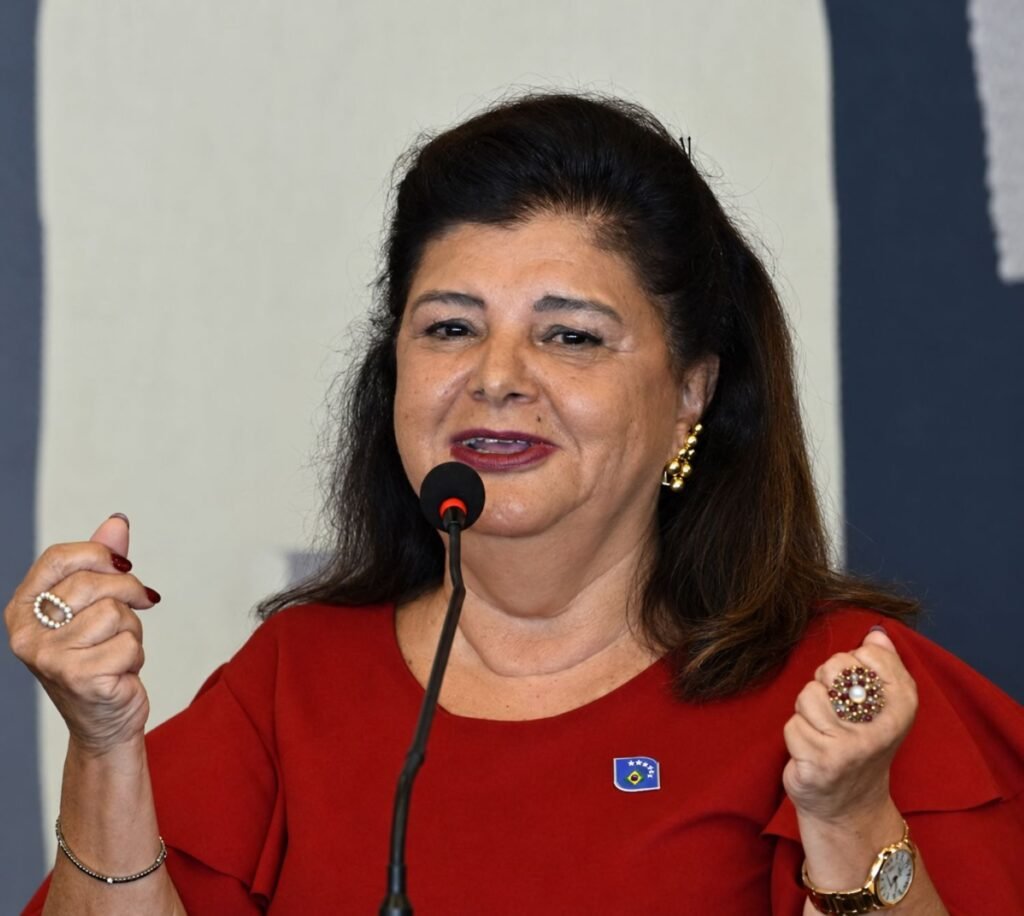
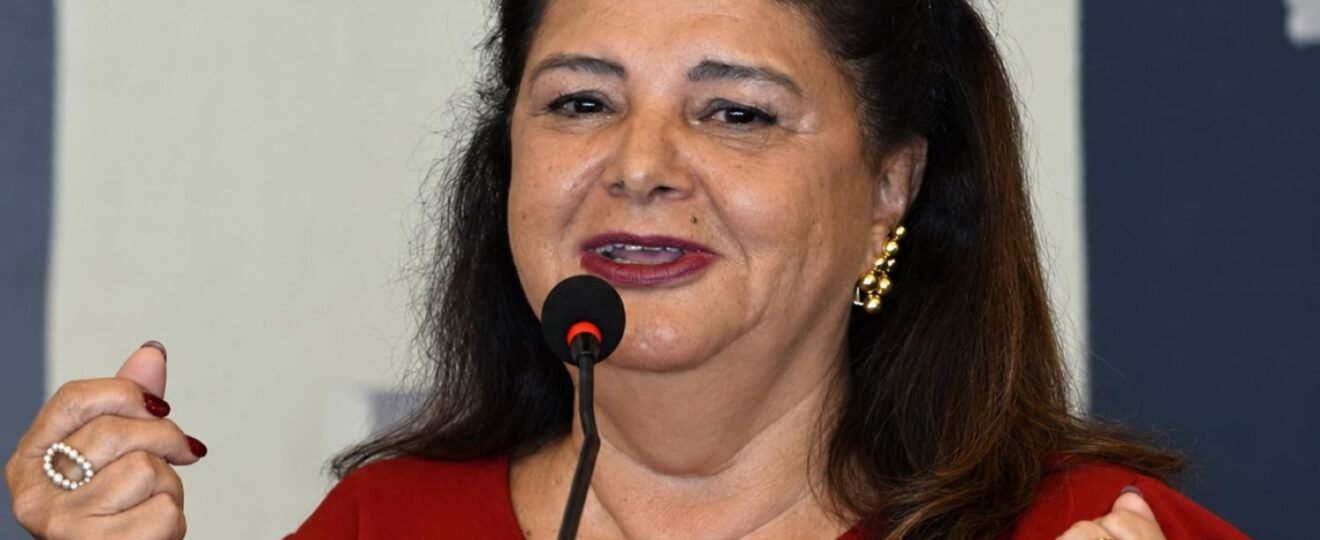
She began helping in her aunt and uncle’s business during school holidays when she was twelve. She became managing director in 1991, opened the first merchandise-free stores in Brazilian retail the following year, and took the company public in 2011. In January 2016, with the company growing, she handed leadership to her son and moved to chair the board of directors. Today, Magazine Luiza has more than twelve hundred stores, generated 38.7 billion reais in revenue in 2025, and remains profitable in a year with the Selic rate at 15%. Alongside that, she built a women’s organization operating in fourteen countries.
Twelve Years Old, School Holidays and a Store Called A Cristaleira
She did not found the business and has never presented it otherwise. In 1957, in Franca, her uncle Pelegrino José Donato and her aunt Luiza Trajano Donato bought a store called A Cristaleira. Its current name came from a popular vote: they organized a contest with a local radio station, and Magazine Luiza won, in honor of her aunt.
She entered through the service door of learning. At twelve, she helped during school holidays, which in a small shop means standing behind the counter and watching how a sale is decided. Her formal career began at eighteen, and before taking charge, she worked in sales, purchasing and management.
Meanwhile, she studied law and graduated from the Faculdade de Direito de Franca in 1972. Her legal training partly explains how she argues: when she talks about customer service, she does not talk about emotion; she talks about procedure.
That sequence matters in understanding her method, because her method is rooted in the shop floor. Her best-known description of herself is that she considers herself more of a psychologist than a salesperson, and behind that phrase lies a practical rule: understand what the person who walked in needs before offering them something.
1991: Managing Director and Organic Management
She became managing director in 1991, when the company was still concentrated in the interior of São Paulo state.
What she built from that position has its own name in the company’s vocabulary: organic management. Operationally, it translates into a set of decisions unusual in Brazilian retail at the time. Explicit tolerance for mistakes, so employees could try something without losing their jobs. Diversity in hiring before it became a public issue. And a structure in which information rises from the store rather than descending from headquarters.
One practice sums it up better than any definition: she visits the stores. Not as a publicity gesture, but as a source of information. The salesperson provides the information she needs to make decisions, so she goes to find it where it is.
The measurable result of that period is expansion. Under her leadership, the company grew from a regional chain into a national network present in most Brazilian states, with a customer base numbering in the tens of millions and a workforce that reached thousands.
The Virtual Stores of 1992
The move that best demonstrates how she reads a market predates commercial internet in Brazil.
In 1992, she opened Magazine Luiza’s first virtual stores. They were physical locations, staffed by salespeople, but with no merchandise on display: customers chose products at multimedia kiosks, and the goods were dispatched from a warehouse. The reasoning concerned costs, because a small store without inventory can open in cities where a traditional store would not be financially viable, while also solving the problem of variety.
Viewed today, it was the integration of physical and digital retail before the vocabulary existed to name it. E-commerce itself arrived in 2000, and technology acquisitions came much later: in August 2020, the company bought Hubsales, Canaltech and InLoco Media, among other transactions that built today’s Magalu ecosystem.
The initial public offering took place in 2011. For a company born in an inland city, reaching the São Paulo stock exchange was the change in scale that enabled everything else.
Handing Over Leadership at 67
In January 2016, her son Frederico Trajano became CEO, and she became chair of the board of directors.
It is worth pausing here, because this is where most family businesses break down. A founder who has spent decades building something faces a structural difficulty in letting go, and handing it to a child adds layers of conflict. She made the transition while the company was expanding, rather than during a crisis that forced her hand, and has spent a decade chairing the board without returning to executive leadership.
The following period brought the company’s greatest technological transformation, with the creation of the marketplace and the acquisitions of 2020. Stepping aside just before that leap, rather than afterward, reflects a fairly precise understanding of her own limitations.
Mulheres do Brasil
In October 2013, forty women from different sectors founded Grupo Mulheres do Brasil. She has chaired it ever since.
The organization does not resemble a corporate foundation. It operates through chapters across Brazil and abroad, with thematic committees and concrete projects: combating violence, Mais Mulheres na Política, and a series of initiatives including the Pula pra 50 movement, which seeks to have women occupy half the seats in Brazil’s Congress. According to Forbes Brasil, the group had 140,000 women in October 2026.
Within the company, her strongest intervention in this area has a date and an event behind it. In 2017, after the femicide of a Magazine Luiza manager, she established a reporting channel for employees with psychological and legal support, and required the company’s suppliers to ensure that at least 2% of their hires were women who had experienced violence.
In November 2020, the company announced that its trainee program would accept only Black candidates as a measure against structural racism. The decision sparked a national controversy and criticism from conservative sectors. She did not back down.
The Numbers from a Difficult Year
The figure that frames the company’s current situation is the cost of money in Brazil.
In 2025, the Selic rate reached 15%, and that is visible in the financial statements. Net revenue was R$38.7 billion, up 1.7% from the previous year. Adjusted EBITDA grew 3.4% to R$3.06 billion, with a margin of 7.9%. Adjusted net profit fell 42.6% to R$158.9 million because adjusted net financial expenses rose 33.2%, consuming R$2.04 billion.
Two figures from the same financial statements point in another direction. Physical-store sales exceeded R$20 billion for the first time in a year, growing 6%. Operating cash generation was R$2.7 billion, with a total cash position of R$8 billion.
The company’s own interpretation was summarized by its director of investor relations, Vanessa Rossini: they managed to grow net revenue and record a profit in an environment of very high interest rates. For a retailer selling appliances on credit, enduring a double-digit Selic rate without losing money is the difficult test.
What Her Career Offers as a Leadership Case
Her career serves as a counterexample to several beliefs in the business world.
She did not found the company she led; she inherited it when it was small and made it large, a different and less celebrated kind of work. She did not compete on price in a category where price is almost everything, but through customer relationships and store formats. She did not separate business management from the social agenda: the reporting channel, the requirements imposed on suppliers and the trainee program are human resources decisions with consequences for the financial statements.
And at 67, she handed over executive leadership while everything was going well. She turned 78 on October 9, 2026, and continues to chair both the company’s board and the organization she founded in 2013.