Mariana Costa Checa
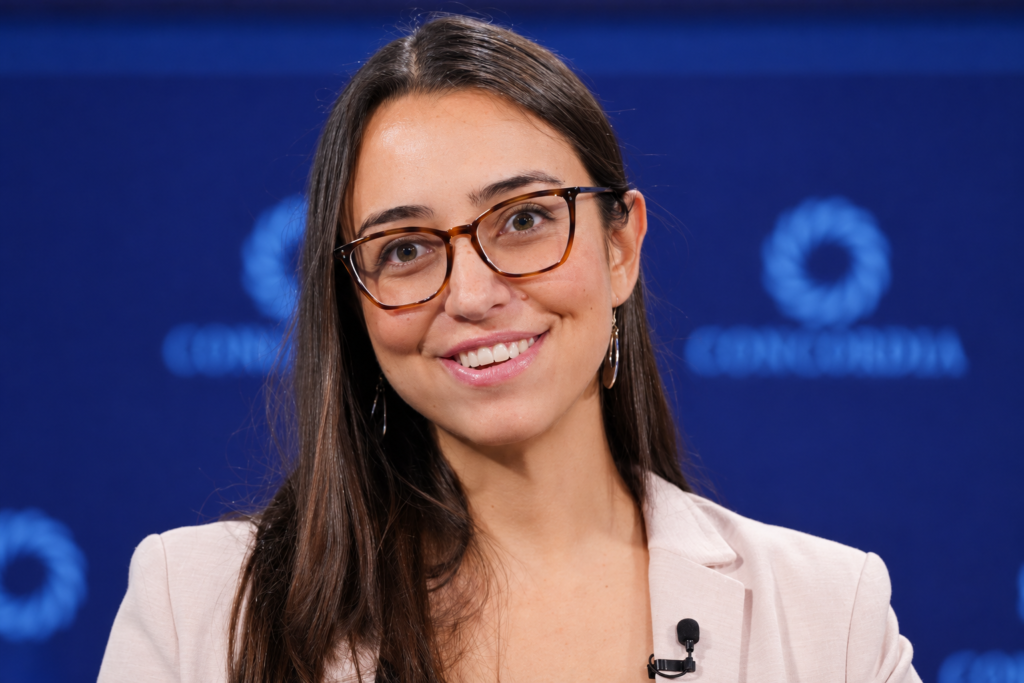
Some leaders measure their performance in valuations, while others measure it in lives changed. Mariana Costa Checa belongs to a third, more demanding category. She measures both. As co-founder and CEO of Laboratoria, she built a social enterprise that trains Latin American women from disadvantaged backgrounds to become web developers, UX designers, and data analysts. Its main measure of success is how many students find jobs in technology and how much their incomes rise, beyond how many enroll. That focus on employment outcomes, closer to the logic of a business than that of a traditional NGO, helps explain why Costa Checa, who was born in Lima in 1986, became one of the most widely heard voices in the region’s technology sector, with a seat at global forums and in corporate boardrooms.
From Lima to London and New York
Costa Checa’s education prepared her for a career in international development. She studied international relations at the London School of Economics from 2004 to 2007 and went on to earn a master’s degree in public administration and development from Columbia University in 2013. She had previously worked on development projects in several countries in the region.
The move into technology began with a frustration. Back in Lima, she started a small software development agency with her husband, Herman Marin, and her business partner, Rodulfo Prieto. They struggled to find local developers to build their team, and there were very few women in the field. Where others saw a hiring bottleneck, she saw two problems that could be solved together. The industry needed developers, and thousands of young women without access to quality higher education needed a path to a career.
Laboratoria designed its program around the jobs graduates would pursue
Laboratoria started in Lima in 2014 with an approach that was unusual in education. The team designed the program by working backward from the jobs students would need to secure. They built an intensive bootcamp lasting about six months to train front-end web developers, UX designers, and, more recently, professionals in data and artificial intelligence. Alongside technical training, students develop interpersonal skills and confidence and prepare for job interviews.
Three features define the model. First, admissions focus on women with high potential and few opportunities, especially young women who have been unable to access or continue a quality higher education. Second, graduates are expected to pay for the program once they are working in the sector, giving Laboratoria a direct stake in their employment outcomes. Third, the program operates across the region. It expanded from Peru into Mexico, Chile, Brazil, and Colombia, has enrolled students from 11 Latin American countries, and has run more than 80 bootcamps.
Employers take part in the training
What sets Laboratoria apart from other coding schools is the way it brings employers into the training itself. Each cohort ends with a hiring event. At hackathons and talent fairs such as Talent Fest, companies work alongside graduates in intensive sessions, give them real technical challenges, and see how they tackle them. For candidates without university degrees, that can tell employers much more than a résumé.
More than 1,100 companies across the continent have hired Laboratoria graduates, including Google, IBM, Globant, and Accenture. Job placement rates reached roughly 85–87% in some cohorts and now stand at about 73% across a much larger group. Graduates can earn up to three times what they did before. For companies, the benefits are twofold. They gain access to scarce digital talent, in a region that the Inter-American Development Bank estimated would need 1.2 million developers by 2025, and diversify teams historically dominated by men. Costa Checa understood early that getting graduates hired meant working directly with the people who make hiring decisions.
From a panel with Obama to the IEEE President’s Award
International recognition came early. In June 2016, while Laboratoria was still in its early years, Costa Checa shared a panel with Barack Obama and Mark Zuckerberg at the Global Entrepreneurship Summit at Stanford. The photograph introduced her to a global audience and to much of Peru as the face of a new generation of Latin American social entrepreneurs.
Further recognition followed. MIT Technology Review named her one of its Innovators Under 35, the BBC included her among the world’s most influential women, Forbes Perú listed her among Peru’s 50 most powerful women in 2022, and the 2023 Merco ranking recognized her in the technology category. In 2026, IEEE, the world’s largest engineering professional organization, gave her its President’s Award for her leadership in the digital economy and in advancing women’s inclusion. By then, Laboratoria had trained more than 10,000 women in 11 countries. Her work as a director also extended beyond Laboratoria. She has served as an independent director on the board of Engie Energía Perú since 2019.
A view of education shaped by employment
Costa Checa argues that education should be judged by the opportunities it opens up and that people can build a worthwhile career through routes beyond a traditional university degree. When asked why Laboratoria admits only women, she said it would open to men once the gender gap closed. That position, together with Laboratoria’s practice of publishing its job placement figures much as an investment fund publishes its returns, has made it a case cited by multilateral institutions, forums such as the World Bank’s, and academic programs across the region.
Laboratoria has added training in data and artificial intelligence as the job market has shifted. Costa Checa has also published her first book, Carreras con propósito. More than a decade after struggling to hire developers in Lima, she leads an organization tackling that problem across the continent, making the case that hiring women can help fill a talent shortage in Latin America’s technology sector.