Mariana Schoua
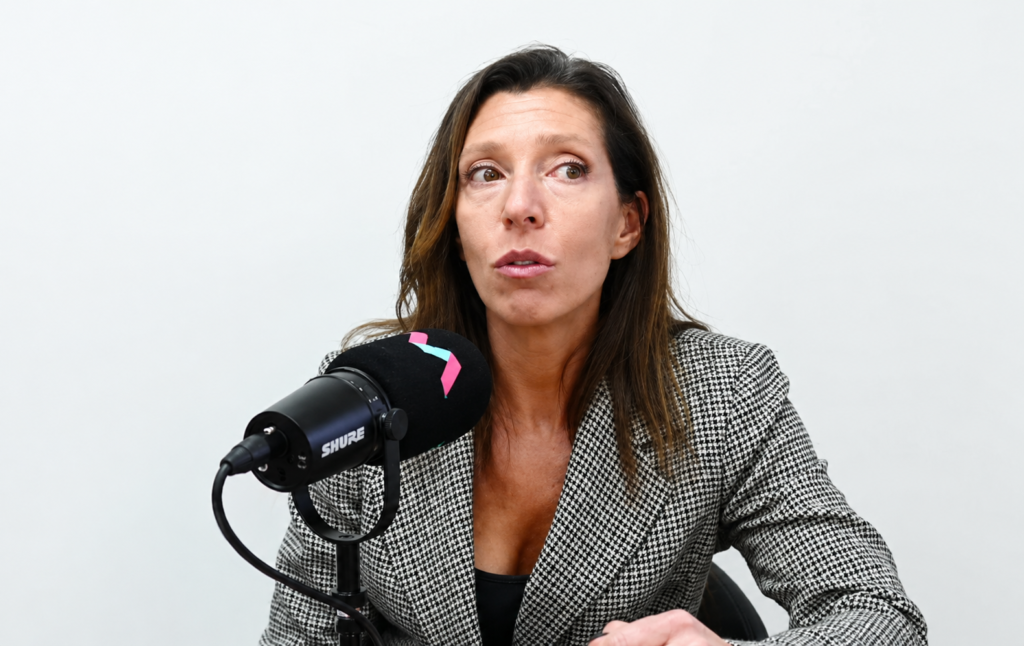
In 1994, a newly graduated accountant joined the Buenos Aires office of a power generation company that had just been privatized. She was practically the second person hired at that office, after the general manager. Three decades later, those power plants had changed owners four times, and she was still there, moving up one step with each transition.
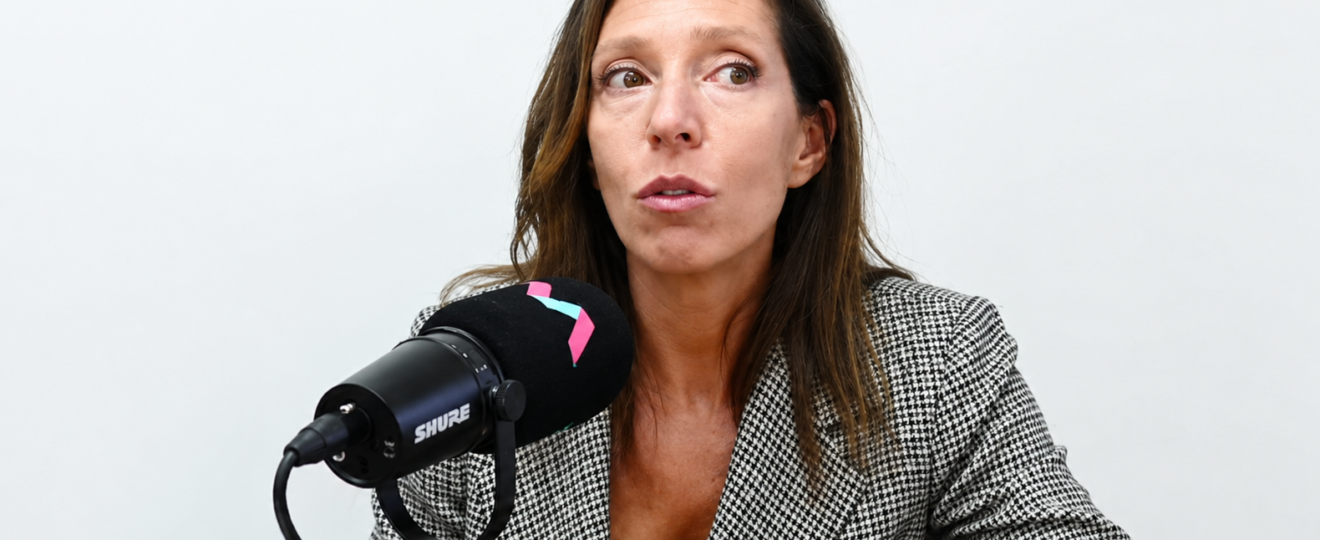
Mariana Schoua now leads Aconcagua Energía Renovables and chairs AmCham Argentina, the chamber representing more than seven hundred companies and which had never before been led by a woman. Her career offers a snapshot of the recent history of Argentina’s electricity market, told from the inside.
A privatization as a starting point
The initial setting was the breakup of Hidronor. In 1993, U.S.-based Dominion obtained the concession for the Cerros Colorados complexes in Neuquén as part of the electricity privatizations of the 1990s. The operation was split between the province and Buenos Aires, without a clearly defined structure yet.
That was when Schoua joined, hired by the general manager just after completing her degree in Public Accounting at the University of Buenos Aires. She handled a little bit of everything, perhaps the best possible training when a company is still being built. She was young, she was a woman, and she was an accountant in an industry dominated by middle-aged male engineers. Years later, she summed up that combination with humor: being young eventually passed; the rest remained.
Those meetings, where she felt that every contribution she made was subjected to an additional filter, left her with a method: arrive more prepared than necessary. Her working hypothesis was simple. If she had something valuable to contribute, gender would become secondary. She later acknowledged the cost of that strategy as well: it made her more rigid than she would have liked during her first years in leadership.
Duke, Orazul and a step-by-step rise
In August 1999, Duke Energy bought Dominion’s operations in Argentina, Peru, Bolivia and Belize for $405 million and took control of the Neuquén plants in March of the following year. Schoua spent a decade in administration and finance before becoming chief financial officer, and in 2012 she took charge of the entire Argentine operation.
That promotion had a particular feature she herself later pointed out: the final decision was made by another woman, the group’s international CEO. Schoua thus became the first woman to hold that position among the company’s businesses, at a time when meetings of power generation industry associations included almost no women at all.
In October 2016, Duke announced its withdrawal from Latin America and sold its regional assets for around $1.2 billion to I Squared Capital, which renamed the operation Orazul Energy, with a presence in Chile, Ecuador, El Salvador, Guatemala and Peru as well. Schoua remained president of the Argentine subsidiary.
The return to Argentine ownership
The most significant shift came in December 2023. Aconcagua Energía, founded by former YPF executives Diego Trabucco and Javier Basso, acquired Orazul Argentina for $9.2 million. The package included 576 MW of installed capacity at Planicie Banderita and Alto Valle, stakes in the Manuel Belgrano, San Martín and Vuelta de Obligado power plants, the Coronel Dorrego wind project, licenses to trade gas and electricity, and 102 employees.
In February 2024, she was appointed CEO of Aconcagua Energía Renovables. After thirty years working for foreign groups, it was the first time she answered to Argentine shareholders. The group holds thirteen hydrocarbon concessions in the Neuquén and Cuyo basins, with operations in Mendoza, Río Negro and Neuquén.
The outcome of this part of the story has an interesting twist. The Cerros Colorados concession, awarded for thirty years in 1993, expired, and the government reopened bidding for the Comahue hydroelectric complexes. At the end of 2025, Aconcagua sold the concessionaire to BML Inversora, part of Grupo MSU, and in December the dam was awarded for another three decades to Grupo Edison, which offered $64.1 million. The hydroelectric facility that Schoua had accompanied since her very first day at work no longer belongs to the company she leads, although Aconcagua retains the thermal power plant, stakes in other generators, the wind farm and the gas business.
Six months within a thirty-year career
While serving as CFO, Schoua became pregnant with twins who were born at six and a half months and spent two months in hospital. At first, she arranged a shortened workday, from eight in the morning until three in the afternoon, with two hours set aside for breastfeeding —two because there were two babies— and then returned to the hospital. Eventually, she took a six-month leave of absence.
The way she framed that episode says a great deal about how she thinks: six months within a career spanning more than three decades could not define her. Her children are now twenty years old.
There is another detail from those years that she often brings up. When she was offered leadership of the Argentine operation in 2012, she did not answer immediately: she first discussed it with her husband because the job would involve more travel. Over time, she began to wonder whether a man in her position would have felt the same need to consult his partner.
Diversity without quotas and conscious leadership
Her position on gender differs considerably from the standard corporate playbook. She prioritizes integration over numbers and is skeptical of committees that bring together only one group, because they can end up creating closed spaces. She argues that positive discrimination is still discrimination and that cultural change requires everyone, not just half of the population.
That is why she insists on a point often left out of the debate: flexibility benefits must also extend to men. In her view, a man who leaves work on time and picks up his children from school creates the material conditions that allow the woman beside him to lead.
When she became president of the Argentine operation and noticed how few women were leading power generation companies in the country, she approached Vital Voices to better understand the gap. Today she sits on the board of Voces Vitales Cono Sur and mentors other female executives. From that experience came her idea of conscious leadership, in which the words one chooses, the example one sets and the way one listens all matter.
When it comes to education, she has one consistent piece of advice, drawn from her own experience: complement a basic degree with specific knowledge of the business. She did so through a postgraduate program in Electricity Markets and Natural Gas at ITBA, encouraged by one of her early bosses, a nuclear engineer trained at the Balseiro Institute who led with a degree of openness unusual in Argentina in the 1990s. He was her mentor, although he never knew it.
A voice in Argentina’s energy debate
Since June 2025, Schoua has chaired AmCham Argentina, reaching the position from an Argentine-owned company, an unusual fact for a chamber historically associated with U.S. businesses.
Her public diagnosis has been consistent. At the AmCham Energy Forum in August 2025, she argued that the country should not resign itself to being merely an exporter of commodities, supporting the point with data: 64 percent of the gas produced in Argentina already comes from unconventional sources, and the Neuquén Basin accounts for more than 70 percent of that volume, while large quantities of crude oil are exported without being refined and local refineries operate below capacity.
She identified the new financing structure for the Vaca Muerta Sur pipeline as a potential turning point and highlighted the bottlenecks in the electricity system: saturated transmission networks that constrain renewable development, distribution systems in need of investment and a thermal generation base still awaiting renewal. She added to that the pressure from energy-intensive consumers such as data centers and electric mobility, along with Argentina’s potential in lithium and copper.
Her summary of what the world looks for in a supplier fits into three words: reliability, scale and clear rules. The phrase she repeats at the opening of events points in the same direction: without investment there is no development, and without clear rules there is no investment. In March 2026, she took that message to New York during Argentina Week, an event organized to attract investment to the country.
What her career offers as a leadership case
Schoua’s career challenges the idea that remarkable professional trajectories are built by jumping from company to company. She did the opposite: she stayed with the same industrial asset for thirty years while the owners, regulations and even the reference currency of the business changed, turning that continuity into accumulated knowledge.
Her story also shows a way of leading that placed learning above certainty. She has publicly acknowledged that she was too rigid at the beginning and became more flexible over time; she has said that the best advice of her career came from the people who worked with her; and when asked about her role models, she did not name a famous CEO but the woman in her family who pushed her to study and become financially independent.