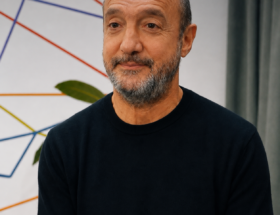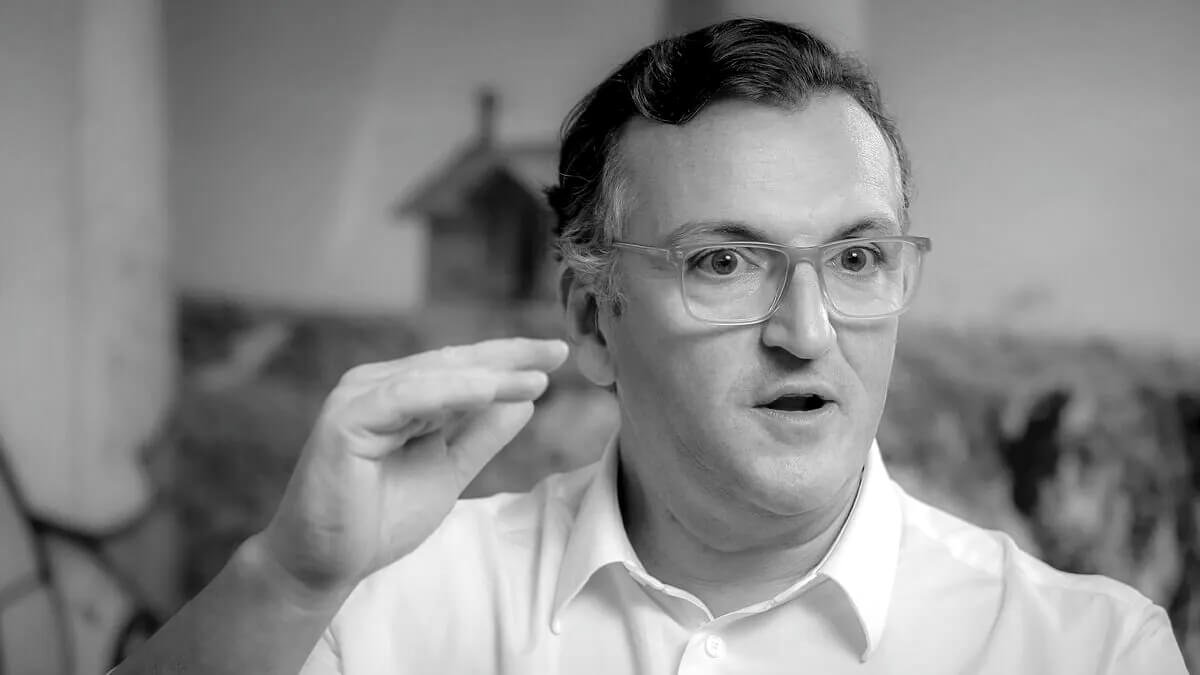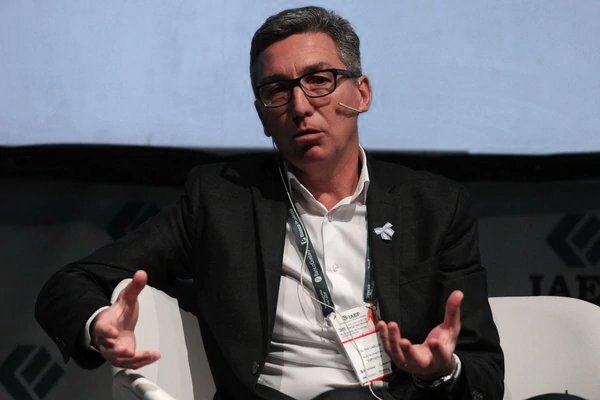
Nicolás Berman
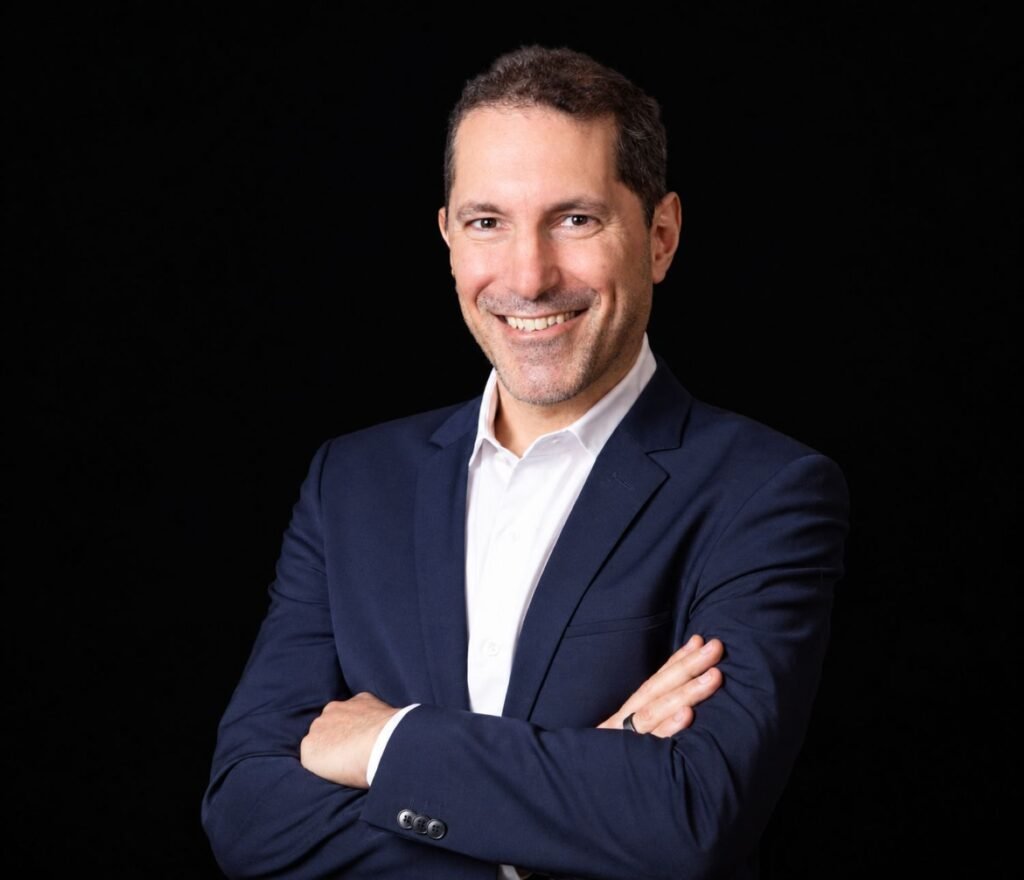
Before going into technology, he sold insurance. He joined Mercado Libre as its eighth employee, when the platform sold two or three products a day, and stayed for thirteen years. Today, he is a partner at Kaszek, Latin America’s largest venture capital firm, which manages more than $3 billion and has around 124 companies in its portfolio. His definition of his own role is modest and precise: he helps with the map, but does not drive the car.
Two or Three Products a Day
There is one detail in his biography that explains almost everything that came afterward: when he joined Mercado Libre, the platform sold two or three products a day.
He was employee number eight. Before that, he had sold insurance, the least glamorous job the commercial world has to offer, and had worked at LG Electronics as a commercial manager, where he received an internal company award for an idea with global reach.
He stayed for thirteen years. And he spent them moving through areas that do not usually share a career path: he was vice president of Advertising, vice president of Marketing and Marketing manager, but also held positions in technology and product. He led projects in search, business intelligence, user experience and search engine optimization.
The most concrete achievement of that period was the affiliate program, which he created and which became the largest in Latin America.
That combination is unusual and worth emphasizing because it defines his value as an investor. He is neither a financier who learned about technology nor an engineer who learned about business: he was inside a company as it grew from nothing, and worked behind the scenes on both sides.
The Fund Built by Those Who Had Already Built Companies
Kaszek was founded in 2011. Its founders were Hernán Kazah and Nicolás Szekasy, two names from Mercado Libre’s inner circle: Kazah co-founded the company, and Szekasy was its chief financial officer. The firm’s name, in fact, was formed from the first syllables of their surnames.
Berman joined as a partner and completed his formal training as an investor within the firm itself, in Class 21 of the Kauffman Fellows Program, with Kazah as his mentor.
What they built in little more than a decade explains why he matters. Kaszek now manages more than $3 billion and has around 124 companies in its portfolio. In 2021, it raised $1 billion across two funds, and in 2023, it repeated the operation with another $975 million.
According to Berman, the firm’s first two funds have already returned their investors’ capital several times over.
Why Invest in a Region With Little Capital?
His thesis on Latin America underpins the entire operation and has three pillars: a growing middle class, a young population and high technology adoption.
But the central argument is different, and it connects his work with social impact. He argues that in many of the region’s industries, service quality falls far short of what technology makes possible. His example is Nubank, which emerged precisely to bridge that gap in Brazil’s financial system.
That is the business logic. Where there is poor service and available technology, there is a potential company. And in Latin America, where venture capital is scarce compared with the United States or Europe, whoever finances that gap does more than seek returns: they determine which of those companies come into existence.
The names in his portfolio give a sense of the reach. He sits on the boards of Kavak, the Mexican used-car buying and selling platform; Konfío, which provides credit to small businesses; and Contabilizei, which handles accounting for microbusinesses in Brazil. His investments in Chile include NotCo, which develops plant-based foods, Xepelin, Fintual, PhageLab and Compara.
They are all companies that solve problems of access: to a car, a loan, an accountant or an investment instrument.
The Metric He Challenges
He becomes most interesting as a manager when discussing how he measures success, because he challenges the consensus within his own industry.
Venture capital’s instinct is to celebrate the exit: an acquisition by another company or an initial public offering. Berman argues that this confuses the instrument with the outcome. For him, the measure is the company’s strength, its ability to generate cash and its growth, and he points out that funds extend their timeframes and use secondary transactions when they need to provide liquidity to investors.
It is a more uncomfortable position than it seems, because a fund raises money by showing exits. Choosing a different yardstick means asking those providing the money to be patient.
His selection criteria, by contrast, are traditional, and he states them plainly: a large market, an extraordinary team and an attractive business. He invests at every stage, from an idea in a PowerPoint presentation to late-stage rounds.
Co-Pilot, Not Driver
His definition of his role alongside founders is the phrase that best captures him: he describes himself as a co-pilot who helps with the map but does not drive the car.
For someone who spent thirteen years building a company from employee number eight onward, the temptation to take the wheel must be constant. Having held all those operational positions gives him an opinion on almost any decision a founder faces, and the discipline of not imposing it is part of his chosen profession.
That same vocation appears outside the fund. He is a mentor at Endeavor Argentina and a director of Endeavor Chile, two organizations dedicated to supporting entrepreneurs, and also a director of Educatina, a project aimed at democratizing access to quality education in the region. Previously, he chaired AMDIA, Argentina’s direct marketing association.
What His Career Says About the Ecosystem
Taken as a whole, his career maps how Latin American venture capital developed: people who first built a large company and then used that money and knowledge to finance the next generation.
Mercado Libre served as a school and also as a source of capital. Kazah and Szekasy founded Kaszek, Berman joined, and the three built the firm that now decides a substantial share of what gets funded in the region. Ariel Szarfsztejn, Mercado Libre’s current CEO, was recruited in 2017 by the company’s then-chief financial officer. The network is small and interconnected.
The effect is cumulative and fairly measurable. Each portfolio company employs people, develops talent and produces founders who, over time, start their own companies or invest in others. In a region where capital has always been the scarce resource, the work of someone like Berman consists of something less conspicuous than founding a company: deciding who gets the money to try.