Sebastián Sajoux
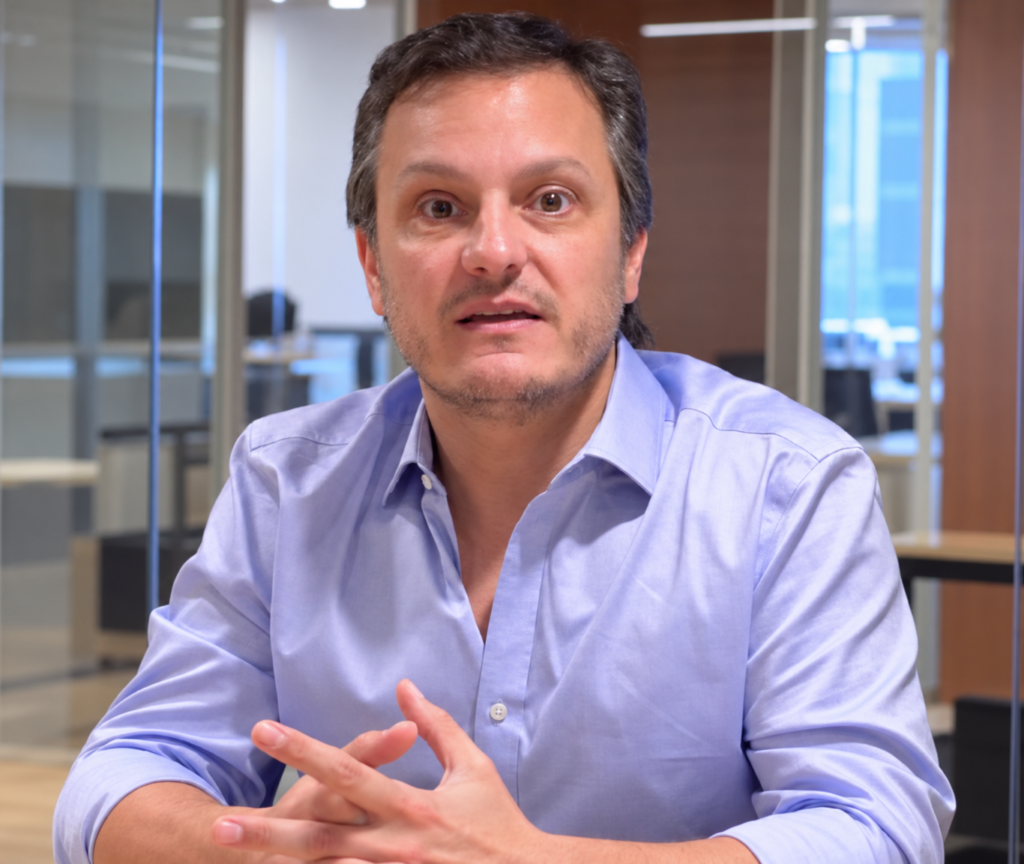
Sebastián Sajoux founded Arqlite in 2015 to tackle the plastic nobody wants: the kind recyclers reject and that ends up buried or burned. His company turns it into synthetic gravel three times lighter than stone. The journey took him from a laboratory in Argentina to a plant in California that processes more than one metric ton of complex plastics per hour, with Cemex as a strategic partner. This profile explores his career, business model, and why his venture changed the conversation about waste considered impossible to recycle.
The plastic nobody wants
Before becoming an entrepreneur, Sajoux worked at B Green, an environmental consultancy that advised major companies on sustainability. From that position, he saw a gap in the system: multilayer packaging, films, and mixed plastics have no buyer in the recycling market, so they end up in landfills or incinerators, regardless of who pays. In 2015, he decided there was a business opportunity there and founded the company with Andrés Manzur and Jorge Gordillo.
Validating the concept took them to Seattle for three months at Fledge, an impact accelerator. Back in Argentina, they spent 2016 on engineering: custom-designed laboratory equipment, technical testing with INTI, provisional patents in Argentina, and international protection through the PCT system. Production began on a tiny scale—half a metric ton per month—and their first industrial machine, a standard Chinese unit modified with proprietary technology, increased that output four hundredfold.
A stone that floats in the market’s logic
The product is synthetic gravel three times lighter than conventional aggregate and ten times more insulating than ordinary stone, reducing transportation and installation costs. It can be used in lightweight concrete, precast street furniture, social housing components, and drainage systems. From the beginning, Sajoux expressed his approach in a phrase he repeated in several interviews: “We want demand to be driven by the stone’s technical benefits, rather than depend on people who want to protect the environment.”
The revenue model also has two streams. Arqlite charges waste-generating companies a fee competitive with landfill disposal or incineration, providing recycling certificates in return. It then sells the gravel to material suppliers. Companies pay to bring the waste in, and customers pay to take the gravel out.
For end consumers, the product is called Smart Gravel: reusable gravel with a neutral pH, certified free of BPA and leachates, sold for gardening and hydroponics as well as construction. A single one-pound bag, Sajoux explains, diverts the equivalent of 7,200 energy-bar wrappers from landfill.
From an Argentine warehouse to Santa Ana, California
The move brought a significant increase in scale. In March 2020, Arqlite began building its 24,000-square-foot plant in California, which now processes more than one metric ton of complex plastics per hour, or around 8,760 metric tons a year. There, it also gained a partner with substantial industrial backing: Cemex, one of the world’s largest building-materials companies, became a strategic ally.
Financing followed that journey in stages: an initial $1 million from angel investors, a subsequent effort to raise $2.5 million to process post-consumer waste, and a crowdfunding campaign on Wefunder that brought in more than 2,000 retail investors. “We have a patented technology that can recycle mixed plastics, unlike any other available,” Sajoux says.
The Argentine entrepreneur’s influence extends beyond revenue. Where the recycling industry saw worthless waste, Arqlite introduced the idea of turning it into a commodity: a standardized input with a price and a buyer, made from material the system had written off. That reframing—using difficult-to-recycle plastic as a raw material for construction, the sector that consumes the most aggregates worldwide—is Sajoux’s contribution to the circular economy, and the reason his name comes up whenever the discussion turns to what to do with the half of all plastic that no recycler accepts.