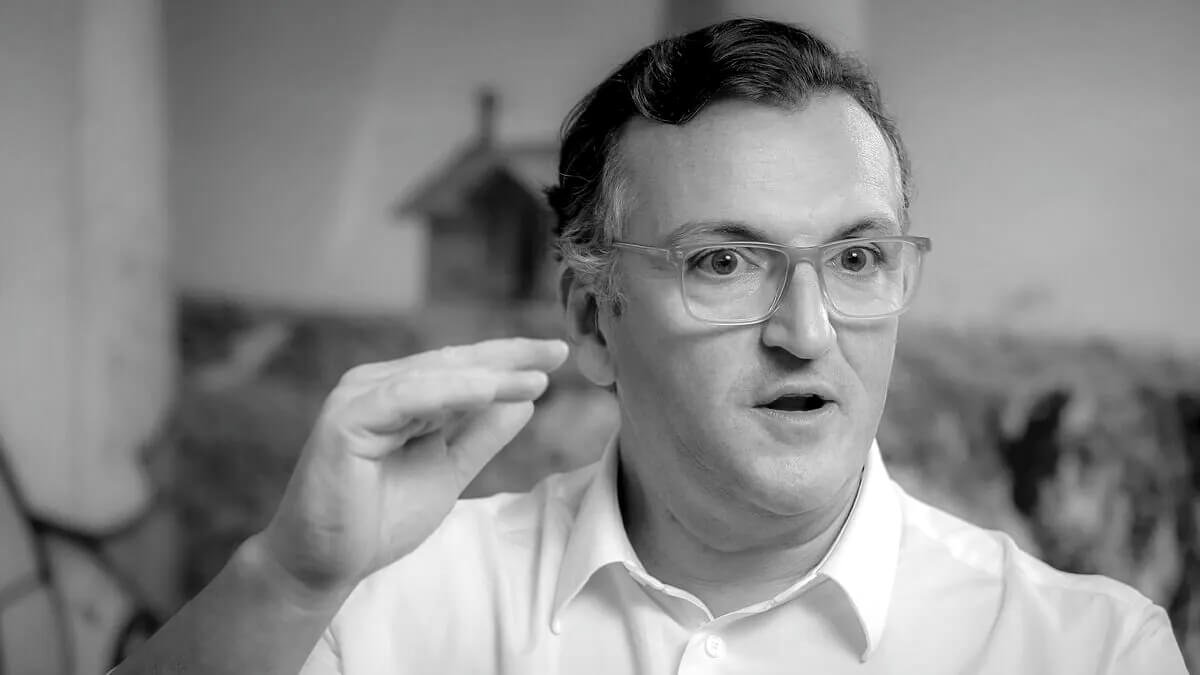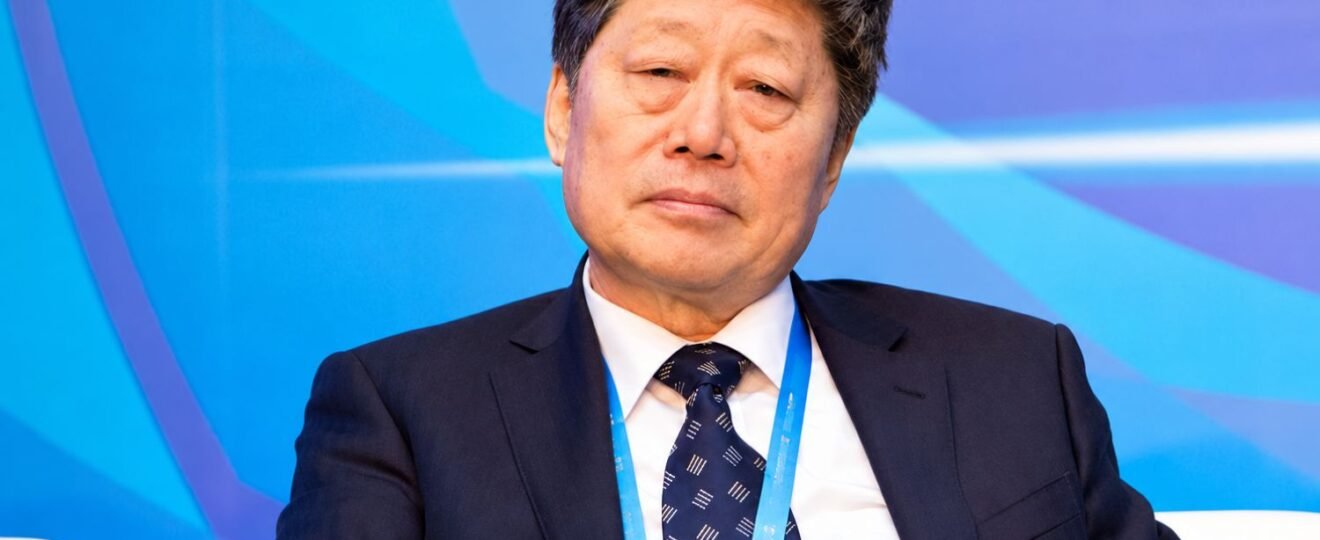
Zhang Ruimin
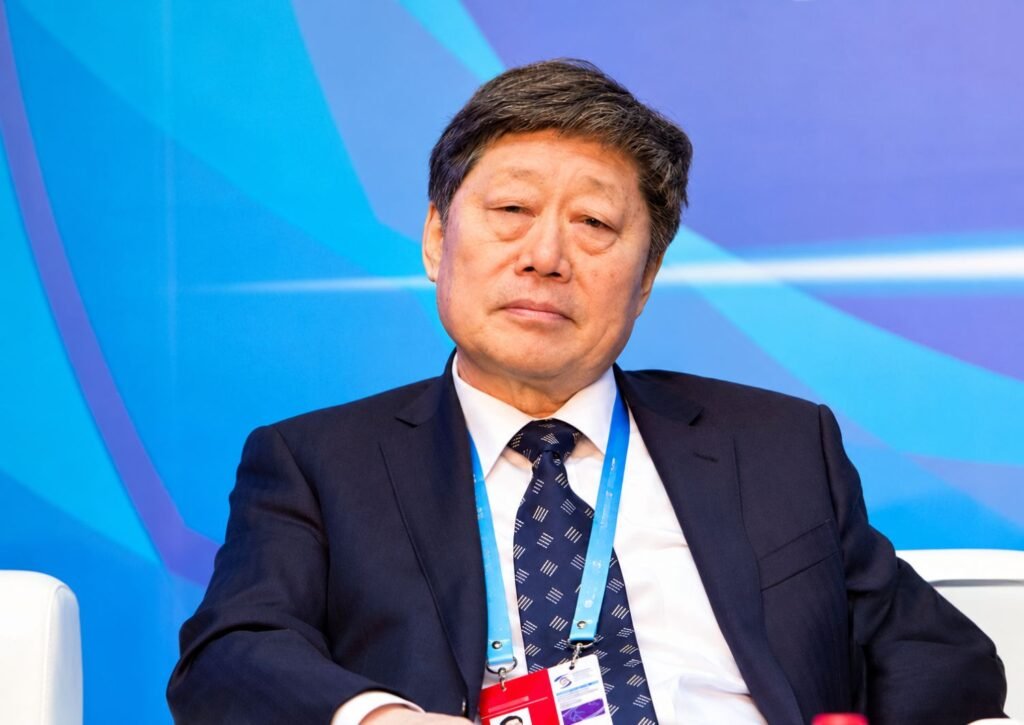
In December 1984, he was put in charge of a refrigerator factory in Qingdao that generated annual sales of 3.48 million yuan and lost 1.47 million. He was its fourth director in a year. Thirty-seven years later, when he stepped down as chairman, the group generated 230 billion yuan in revenue and employed more than 70,000 people across twenty-nine plants. What he did between those two dates included smashing seventy-six refrigerators with sledgehammers in front of his workers and removing an entire layer of middle management, comprising around ten thousand positions, to replace it with approximately four thousand microenterprises that develop their own strategies, hire their own people and distribute their own profits. The model has a name, a date of birth and a bibliography.
1984: A Factory Losing 1.47 Million Yuan
The starting point leaves no room for an epic interpretation. In December 1984, Qingdao’s municipal government appointed him director of a collectively owned refrigerator factory that generated annual revenue of 3.48 million yuan, around 544,000 dollars, and lost 1.47 million.
He came from that background. Born in 1949 in Shandong, he grew up in Qingdao in a working-class family and later earned a master’s degree in management at the University of Science and Technology of China. He had joined the Communist Party in 1976 and became a member of the 16th Central Committee in 2002.
His first decision was not about the product. It concerned what working there meant: a state-owned factory that lost money and changed directors every few months did not have a machinery problem.
The Seventy-Six Refrigerators
In 1985, a customer complained about a defective refrigerator. He inspected the warehouse and found seventy-six faulty units.
The expected response was to sell them to employees at a discount, as was customary. Instead, he handed out sledgehammers to the workers and had them destroy the refrigerators in the factory courtyard, starting with himself. A refrigerator cost more than a Chinese worker’s annual salary at the time.
The episode works as a press anecdote, which is why it is repeated so often, but its real value lies elsewhere: it established a quality standard in an organization that had none, and did so at a cost everyone could see. That scene ultimately turned Haier into a recognized brand in China, before the product that would make it known abroad existed.
Haier Group was formally established in December 1991. In 1999, he became chairman of the board.
September 20, 2005
The date matters because the model was announced; it did not simply emerge.
That day, Zhang introduced rendanheyi, which combines three ideas: ren, people understood as creators of value; dan, a user’s specific order; and heyi, the integration of the two. It translates awkwardly into Spanish, and the most faithful version is that each person’s work must be directly reflected in the value received by the buyer.
The underlying diagnosis was specific. In a company with tens of thousands of employees, the distance between decision-makers and those serving customers fills with middle managers who pass information upward and orders downward. That layer costs money and, more importantly to him, disconnects each person’s income from the user who pays for it.
The reorganization that followed affected more than 80,000 employees and removed the management layer between executive leadership and the customer-facing frontline. Around ten thousand middle-management positions disappeared as such. Many of those people created their own projects within the new structure, while others left, in a process the company describes as structural change rather than mass layoffs.
Four Thousand Companies Within One Company
What replaced the pyramid was around four thousand microenterprises, each with ten to fifteen people.
Each has its own profit and loss statement and decides three things: what strategy to pursue, whom to hire and how to organize itself, and how to distribute what it earns. Members have the right to make independent decisions, seek the talent they need and distribute profits. The company’s own formulation is that every employee becomes the chief executive of their own unit.
The most profound technical change lies in how people are measured. The traditional system pays according to position, rank and a superior’s evaluation. Rendanheyi pays for the value recognized by the user: income comes from sharing added value, rather than hours worked, seniority or a boss’s approval.
Gary Hamel described him as the representative chief executive of the internet age. Thinkers50 honored him twice, in 2015 for putting ideas into practice and in 2023 for his lifetime achievements, and placed him 15th in its 2019 ranking of management thinkers. In 1998, he became the first Chinese business leader to give a lecture at Harvard.
Buying GE Appliances
The test of whether the model could hold up outside China came with a challenging acquisition.
On June 6, 2016, Qingdao Haier completed its acquisition of GE Appliances, headquartered in Louisville, Kentucky, for around 5.4 billion dollars, along with the right to use the GE brand on appliances until 2056. The transaction followed a failed attempt: in September 2014, General Electric had agreed to sell the division to Electrolux for 3.3 billion dollars, but the US Department of Justice sued to block the agreement, which collapsed in December 2015.
Buying an American industrial brand with a century of history is one thing. Applying a Chinese management model to it is another, and this is where the case becomes interesting, because the implementation of rendanheyi in Louisville became study material for business schools.
The result appears in the financial statements. In 2025, GE Appliances maintained the leading position in its market for the fourth consecutive year, and revenue from premium brands grew 7%.
The Numbers for 2025
On March 26, 2026, Haier Smart Home, the group’s listed subsidiary, presented its 2025 results and crossed a threshold.
Revenue reached 302.35 billion yuan, up 5.71% from the previous year, exceeding 300 billion for the first time. Net profit attributable to shareholders was 19.55 billion yuan, up 4.39% and a company record. Operating cash flow was 26 billion, around 1.33 times net profit, and the dividend payout rose to 55% of earnings.
The product breakdown shows its market position. In refrigeration, it was the world’s best-selling brand for the eighteenth consecutive year. In washing machines, it reached 14.4% of the global market, ranking first according to Euromonitor. Global air-conditioning volume grew 14.8%, the fastest in the industry. In China, the premium brand Casarte holds 75% of the high-end washing-machine segment, and the Leader brand exceeded 10 billion yuan in revenue for the first time, growing 30%. In Europe, revenue grew at a double-digit rate, and Italy’s Candy returned to profitability. In emerging markets, revenue rose more than 24%.
What His Career Offers as a Leadership Case
His career is used as an argument in discussions that extend beyond him.
He did not arrive with a product idea; he came to fix a money-losing factory, and the first move that made him known was destroying his own merchandise to establish a standard. He did not compete with multinationals on cost, the obvious move for a Chinese manufacturer in the nineties, but through branding and later through acquiring other brands. And the decision that made him a subject of study is the hardest to copy: eliminating middle management in an organization of 80,000 people and returning to each unit the authority to decide, hire and distribute profits.
In November 2021, he stepped down as chairman of Haier Group and became honorary chairman, with Zhou Yunjie as chairman and chief executive and Liang Haishan heading the group. He also offered not to participate in nominating new directors, which, for a founder who had spent thirty-seven years in charge, is a precise way of stepping aside.