Fernando Polack

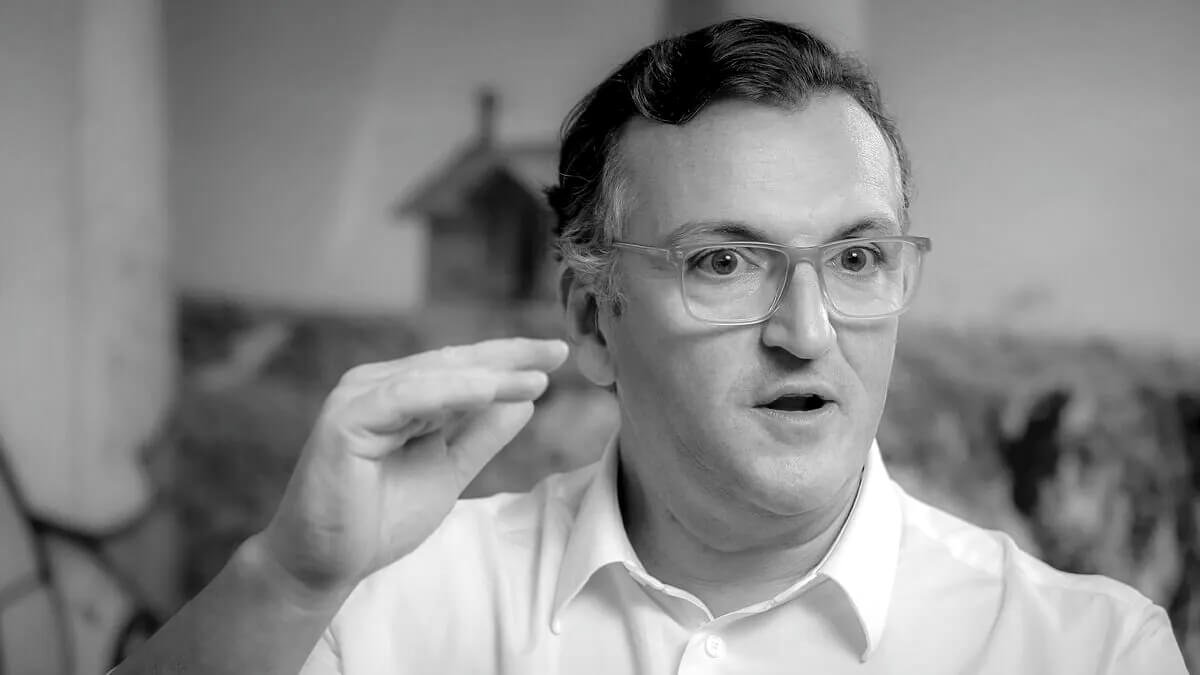
Fernando Polack is a pediatrician and infectious disease specialist, the founder of Fundación INFANT and one of the researchers who participated in the international trial of the Pfizer-BioNTech COVID-19 vaccine. His career also includes a project outside medicine: Alamesa, a Buenos Aires restaurant designed to enable neurodivergent young adults to work in the kitchen and serve customers.
The initiative grew out of a family concern and took shape using tools familiar to Polack from research: organizing teams, designing procedures and reviewing how they work. He says the restaurant has managed to combine employment inclusion with profitability.
INFANT: conducting research from Buenos Aires
Trained in Argentina and the United States, Polack devoted much of his career to childhood respiratory diseases, including those caused by respiratory syncytial virus.
In 2003, he established Fundación INFANT. The organization investigates conditions such as bronchiolitis, asthma, pneumonia and influenza, seeking to bring research findings into patient care.
That work requires more than a scientific question. Clinical studies need trained teams, protocols, participant follow-up and coordination between institutions. As the leader of a research organization, Polack also had to manage those responsibilities.
Research during the pandemic
In 2020, Polack helped lead the Pfizer-BioNTech vaccine trial in Argentina. The local study took place at the Central Military Hospital and formed part of an international investigation involving thousands of volunteers.
He is listed as the first author of the vaccine safety and efficacy paper published in December 2020 in The New England Journal of Medicine. The article brought together the work of researchers from several countries and institutions.
At the same time, researchers from INFANT and other organizations studied early treatment with convalescent plasma in older adults with COVID-19. That study, whose publication listed Romina Libster as first author, also appeared in the journal. Polack was part of the author team.
The pandemic raised his public profile. But the question that would lead to Alamesa came from elsewhere: opportunities for his daughter Julia to work and develop greater independence.
Alamesa: organizing work differently
Polack is the father of a young woman with a pervasive developmental disorder. Thinking about her opportunities after completing school, he began planning a workplace that would accommodate her needs and those of other young adults.
The result was Alamesa, a Buenos Aires restaurant employing around forty neurodivergent people. It opened in March 2024 and was designed to make kitchen and service tasks more accessible.
Working with chef Takehiro Ohno, the team reconsidered standard restaurant procedures. The kitchen uses electric ovens and avoids open flames and knives. Visual references, colors and prepared portions help organize the work.
Plates and service equipment include guidance that helps employees recognize what to do at each stage. There is also a quiet space for anyone who needs to step away from the activity and regulate themselves.
The aim is to enable people to perform real jobs within a business. Polack maintains that the restaurant is profitable and that inclusion is compatible with financial goals.
A project captured on film
The restaurant’s preparation and opening were documented in Alamesa, directed by Pablo Aulita and produced by Juan José Campanella and 100 Bares. It premiered on Max on December 3, 2024.
The film follows both the restaurant’s organization and its employees’ experiences. Employment is connected to wages, but also to responsibilities, friendships and greater independence.
In November 2026, Polack revisited that journey in the Constructores series, discussing his experience as a social entrepreneur. He hopes other businesses will examine their processes and create similar employment opportunities.
From the laboratory to the restaurant
Leading a clinical trial and organizing a restaurant are different jobs. In both, however, Polack had to bring people together, distribute responsibilities and design procedures that could work consistently in practice.
At Alamesa, that process began by examining the difficulties a job might present and how it could be adapted. Visual supports, ingredient preparation and the organization of service are part of the response.
The project does not establish that everyone needs the same support or that the model can be copied without adaptation. It offers a practical example for discussing how jobs are designed and what opportunities emerge when their conditions are reconsidered.