Emiliano Fazio
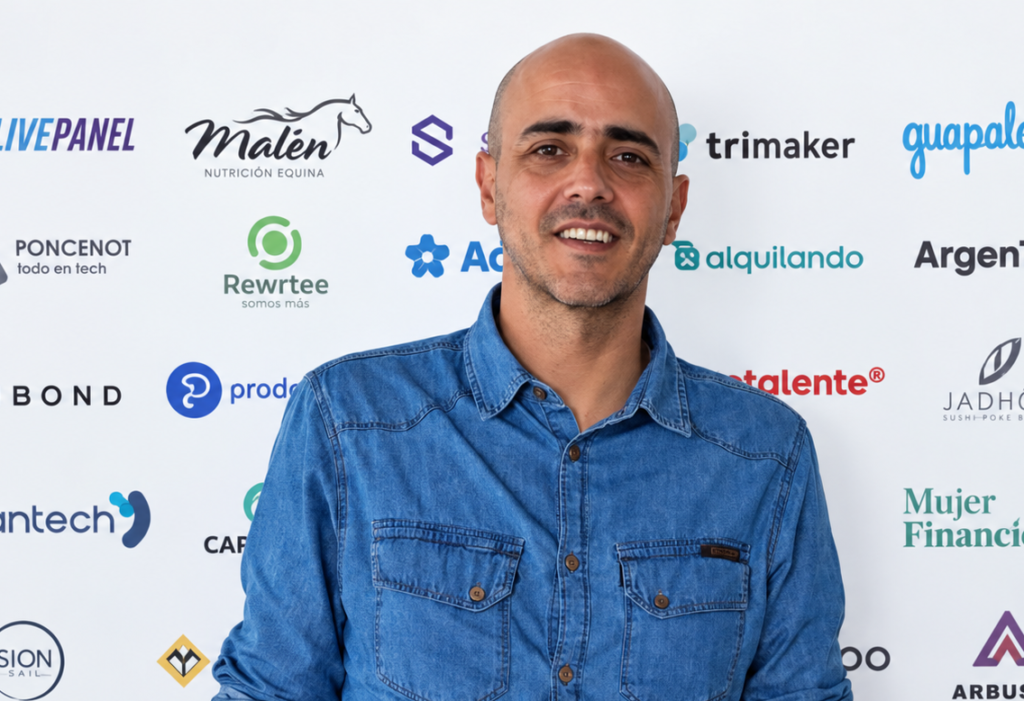
For more than two decades, Emiliano Fazio has been testing an idea that initially sounded naive: that a company can make money while at the same time solving social problems that have remained unresolved for generations. From Mendoza, he promoted corporate responsibility networks and a food bank, co-founded Njambre, one of Argentina’s first impact-business incubators, and from there helped create Arbusta, a technology company that employs young people from underserved neighborhoods across Latin America. Today, he leads it as CEO.
A Business Administrator With a Social Agenda
Fazio earned a degree in Business Administration from the Faculty of Economic Sciences at the National University of Cuyo. His career, however, took an unusual path for a graduate of that field. Rather than focusing on a single business, he spent years promoting corporate social responsibility models in different provinces.
In Mendoza, he was part of the founding group of VALOS, a forum that brings together companies committed to sustainability, where he eventually became vice president. He also participated in the creation of the Mendoza Food Bank, set up the province’s first coworking house and even opened a pizza chain, Nat. He was involved with the Argentine CSR Network and the Conscious Consumption Network, an organization that encourages people to consider the impact of what they buy on themselves, on others and on future generations.
Those who have followed his career describe him as someone driven by fair trade, regenerative ventures and full citizenship, and far removed from those who believe the world can no longer be fixed.
A Swarm of Entrepreneurs
At the beginning of the 2010s, Fazio joined forces with Paula Cardenau, who had worked with social entrepreneurs at Ashoka, and Federico Seineldin, founder of technology company Openware. Together they created Njambre, a name that plays on the Spanish word enjambre, meaning swarm. The idea was to build a space offering support, advice and mentoring to entrepreneurs seeking to solve social and environmental problems through sustainable business models.
From the beginning, Njambre combined an accelerator with coworking spaces in Mendoza and Rosario. The three founders insisted that building community was central and that ventures become stronger when they share values and a workplace. Over time, the project defined itself as a factory for impact-innovation companies: a place where ideas are tested, adjusted and, if they work, turned into businesses.
The Question That Gave Rise to Arbusta
Njambre’s best-known project began with a question the three partners asked themselves in 2013: why is talent evenly distributed around the planet while opportunities are not? At the same time, the technology industry was hungry for workers and offered formal jobs with long-term prospects.
From that intersection came Arbusta, a company designed to provide technology jobs to young people aged 18 to 28 from socioeconomically vulnerable backgrounds. Its founders viewed it more as a responsibility than as a business opportunity. The first trials took place within Njambre, with a small team providing initial services to companies. They worked, clients were satisfied and the project began to grow.
Learning by Working
Arbusta’s model breaks with the traditional approach of training people first and employing them afterward. Young people enter formal employment from their first day and learn on the job. During their first three months, they work alongside more experienced colleagues and then begin participating directly in client projects.
The company provides software quality assurance, large-scale data management and digital interaction management services, and later added tasks such as algorithm training. To sustain its impact, Arbusta competes like any other technology provider: it sells real services to companies across industries, from e-commerce to media.
The figures show the scale it achieved. In 2018, it closed the year with revenue of $1.5 million and 330 employees, 300 of them young people from underserved neighborhoods. For many of those families, a job at Arbusta was the first formal employment ever to enter the household. By 2022, the company had more than 400 employees across three countries, with women representing 60% of its workforce.
From Rosario to Montevideo
Expansion proved that the model could be replicated. Operations in Buenos Aires and Rosario were followed by Medellín, Colombia, and Montevideo, where the company opened offices in 2019. Most of its clients are located in those three countries, although it also works with companies in Europe and the United States.
Fazio is currently CEO of Arbusta and is based in Montevideo. His original partners remain connected to the project, and the company continues to have long-term investors supporting its growth.
A Book About What They Learned
In 2020, the company’s story was documented in La potencia del talento no mirado, a book by Carlos March and Andrea Vulcano published by Editorial Temas. The title summarizes the idea Fazio has defended for years: young people from underserved neighborhoods are digital natives with potential that the market often overlooks, and when they receive a real opportunity, they perform at the same level as anyone else.
Arbusta’s founders say that one of their goals was to dismantle, through evidence, some of the most common prejudices in recruitment processes, such as the idea that a young person from an informal settlement lacks a work ethic. Their response was to build a company that works precisely with those young people.
The Logic of the Swarm
Fazio’s career has a clear common thread: almost nothing he has done was done alone. VALOS was a network of companies, the food bank was a collective effort, Njambre was a community of entrepreneurs and Arbusta was a project created by three partners that became the workplace of hundreds of young people. Like a swarm, the result depends less on one individual figure than on the ability of many people to move in the same direction.