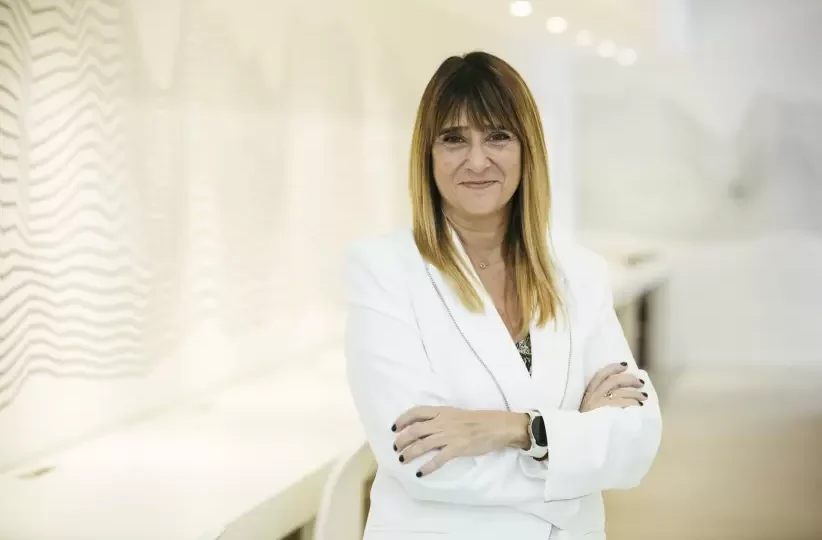
Gabriela Gutiérrez
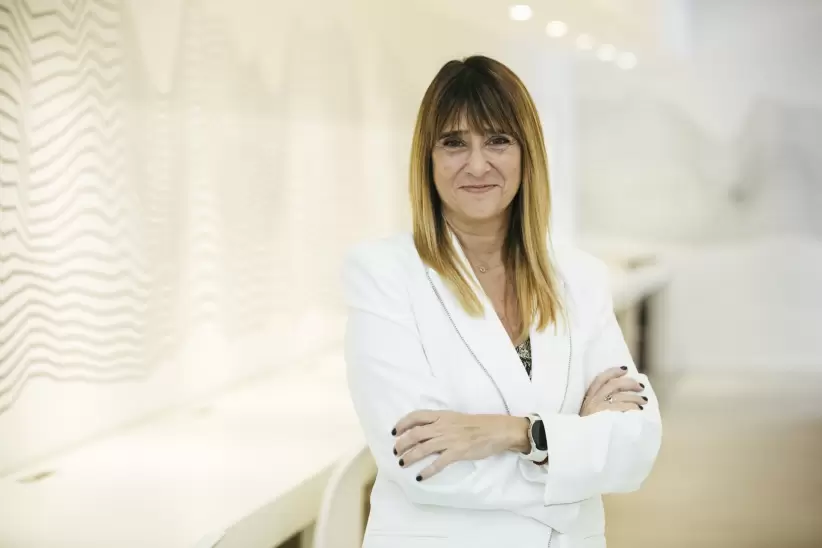
An independent CONICET researcher, specialist in reproductive immunology and CEO of Microgénesis, the Argentine company that reached Silicon Valley with an unexpected discovery: a significant part of severe female infertility begins in the gut. She founded two technology-based companies around patents developed with public funding, studied more than 3,000 women over the course of her career and achieved a 75% pregnancy rate among patients whom conventional medicine had already considered out of options. Her technology was declared of interest by the Argentine Senate, and her startup was even identified as a potential unicorn.
A vocation decided at the age of three
Gutiérrez says her first memory is playing with her father and knowing that she would dedicate herself to science. Over the years, she hesitated between medicine and reproductive biology and chose the latter for a practical reason: doctors have very little time to conduct research. She graduated from CAECE University, earned her doctorate at the Faculty of Pharmacy and Biochemistry of the University of Buenos Aires and completed a postdoctoral fellowship at the University of Jena in Germany. She joined CONICET in 2005 and specialized in reproductive immunology.
Among her role models, she mentions Christiane Dosne de Pasqualini, the French-born researcher who became an Argentine citizen and helped open the way for women in the country’s scientific system. The lesson Gutiérrez takes from that story is simple: if she could do it in her time, there is no excuse now.
From the laboratory to the clinic: the origin of the method
In 2007, with a CONICET grant, she began working at a fertility center where she created and led the research and development department. She spent five years there and studied more than 3,000 women. That period produced her first piece of intellectual property: the TIME test, designed to detect inflammatory causes that do not yet produce symptoms but are already affecting reproductive capacity. On that basis, she founded Inmunogénesis in 2015, a technology-based company whose intellectual property remained in the hands of the scientific agency.
The question that opened the second stage was where that silent inflammation came from. She found the answer in the digestive system. Her hypothesis is that the loss of diversity in the gut flora —a consequence of food industrialization, the indiscriminate use of antibiotics and urban life with less contact with other species— triggers inflammatory processes that damage reproductive potential. Over the same period, global infertility rose from 2% to 10% of the population.
Microgénesis: a test patients can perform at home
Together with Agustina Azpiroz, a microbiologist and former doctoral fellow who became her business partner, she developed a second patent. The idea was to replace two things at once: the endometrial biopsy with a swab that women can administer themselves, and anti-inflammatory drugs with personalized supplements, vitamins and probiotics.
The process begins with a virtual consultation. The sample is sent to the laboratory, where it is classified into one of the 64 microbiota profiles identified by the team. Each profile has its own three-month treatment combining probiotics, prebiotics, a dietary plan, exercise and psycho-emotional support. The cost difference compared with the traditional route is significant: an in vitro fertilization treatment can cost up to $20,000, while the kit with professional guidance costs around $400.
The clinical figures support the business. The initial study included 287 women who had already failed several assisted reproduction attempts and had spent an average of a decade trying to become pregnant. After 90 days of treatment, 75% became pregnant within the following six months. A total of 199 babies were born. A replication of the study in the United States produced a 38% pregnancy rate within the first three months. The scientific study was published in the American Journal of Reproductive Immunology.
The move to San Francisco, at the worst possible time
Microgénesis was established thanks to an Empretecno grant from Argentina’s Ministry of Science and work with GRIDX, Matías Peire’s company builder focused on creating biotechnology companies. Between 2016 and 2018, they had obtained Fontar funding to finance trials involving the first 300 patients. Incubation at Grid Exponential lasted throughout 2019 and made it possible to open the Spanish operation just before lockdown.
The turning point came through a side door. Applications for IndieBio, the world’s leading biotechnology incubator, had already closed. Gutiérrez and her team had applied for a funding program linked to COVID-19 and, during that first virtual interview, casually mentioned their fertility results. The evaluators asked why they were presenting a coronavirus project when their expertise was in another field. They made an exception and added them as the eleventh company. They were selected from more than 2,000 applicants, finished first in the program’s ranking and became the fifth Argentine company to go through the accelerator. IndieBio invested $1.6 million.
Then came the corporate restructuring: Microgenesis Corporation was headquartered in the United States, while the Argentine and Spanish operations became subsidiaries. Accelerator AvantLab added financial backing, with the explicit expectation that the company could become a new Argentine unicorn. CONICET shares the patent and receives royalties on sales.
Changing the question the industry asks
The contribution Gutiérrez claims is not only technical. She argues that the fertility industry was organized around achieving a baby and neglected what happens to the woman during the process, including the consequences of hormones and treatments. Her position is that every patient has the right to know the alternatives before entering an in vitro fertilization cycle.
That approach has expanded to other conditions. The team is working on endometriosis —which affects one in ten women of reproductive age, three of whom do not even know that it compromises their fertility— as well as menopause, polycystic ovary syndrome, diabetes and obesity. At Forbes Argentina’s Health in Action Summit, Gutiérrez argued that the food industry will have to develop individualized dietary profiles and that there is no single healthy-eating formula that works for everyone.
Institutional recognition and the question of gender
In March 2023, the Argentine Senate declared Microgénesis’s scientific work to be of interest, following an initiative by Senator Silvina García Larraburu. Almost at the same time, Patricia Bullrich visited IndieBio’s facilities during a trip to the United States. The founders stressed that they had made no political effort to obtain either recognition.
Gutiérrez is direct when asked about sexism in science: she says there are still researchers from older generations who believe that women belong at home taking care of the children, although they are becoming fewer. She also describes motherhood as both a beautiful and a critical period for a professional, something she experienced three times while building her career. Her view of women’s contribution to research is that a woman’s perspective gives science a sense of social impact that can otherwise be difficult to find. Matías Peire offers a figure that supports that interpretation from the investment side: 70% of the founders of GRIDX’s 56 companies are women, despite there having been no deliberate policy to achieve that result.
Among her future projects are extending the analysis to men, studying how microbiota are exchanged within a couple and comparing children’s microbiomes with those of children with autism and celiac disease, with the goal of anticipating inflammatory diseases before they appear.