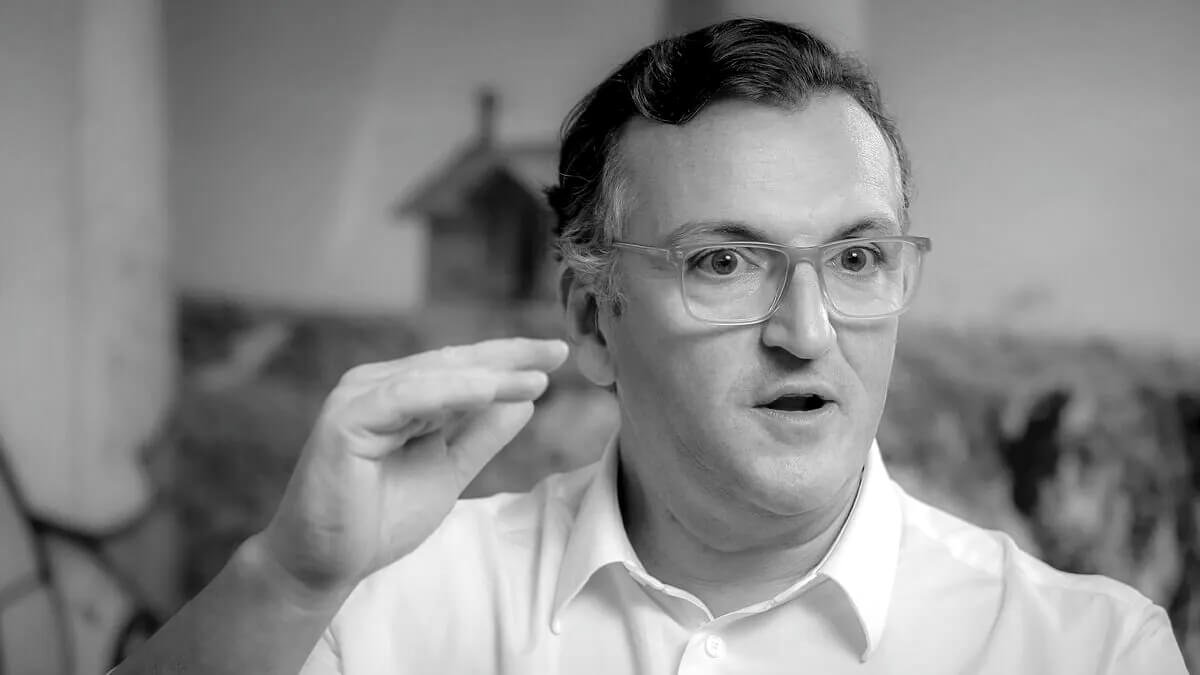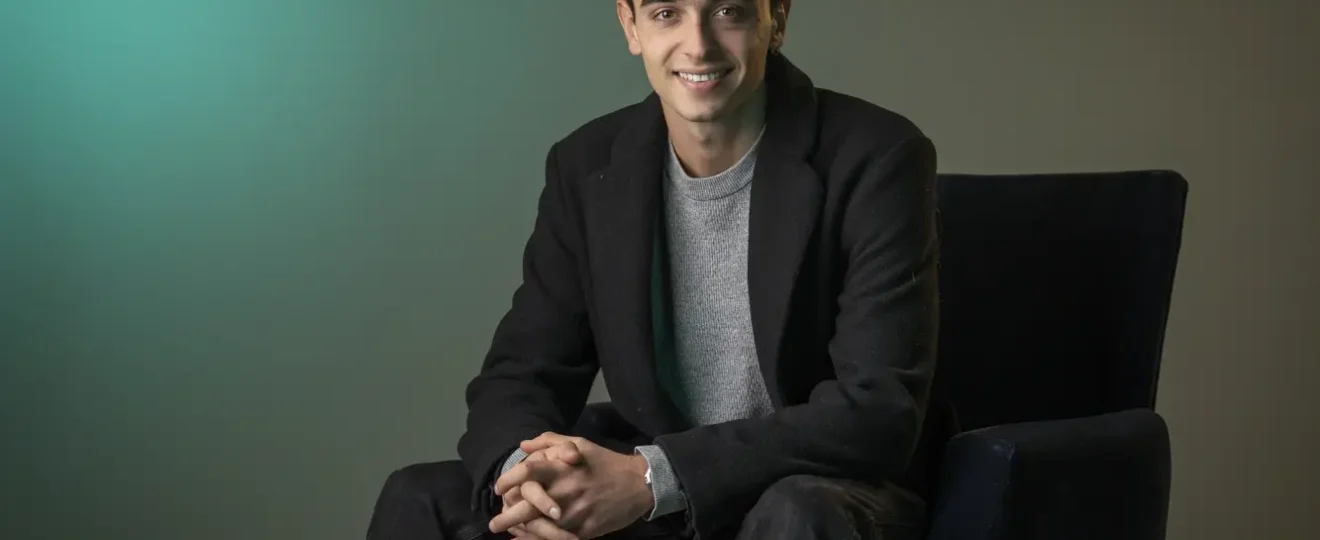
Franco Rodríguez Viau
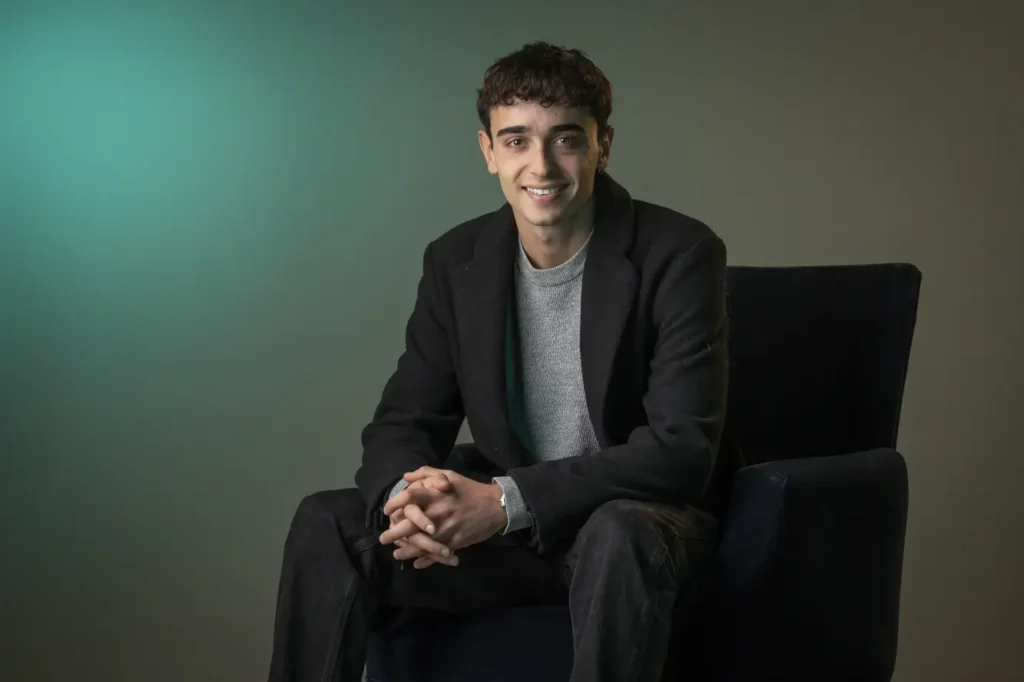
Co-founder and CEO of Satellites on Fire, the Argentine climate-tech company that uses artificial intelligence to detect wildfires 35 minutes earlier than NASA’s traditional systems. It began in 2020 as a school project at ORT Technical School, when he was 16 and wildfires were devastating the hills of Córdoba. Six years later, the platform monitors 41 million hectares across 21 countries, has more than 55,000 users and has raised $2.7 million from international funds led by Dalus Capital. This is the journey of a CEO who began negotiating with governments and major corporations before turning 18.
A problem that was not his, but that he chose to make his own
Franco Rodríguez Viau grew up in the City of Buenos Aires, far from forests and with no direct contact with firefighting brigades or fire stations. In 2020, at 16 and confined during the pandemic, he watched on television as fires advanced through the hills of Córdoba. Friends and relatives lost their homes that season. He himself described that period as a mixture of anger and helplessness in front of a screen.
That frustration could have remained nothing more than outrage discussed at home. Instead, it became a school project at ORT Technical School that Franco took on with two classmates, Joaquín Chamo and Ulises López Pacholczak. After four months of development, they had a system that combined satellite imagery with artificial intelligence models. They submitted it at school and received their grade. The story would have ended there if not for one decision that now explains everything that followed: they wanted to know whether it actually worked.
The “no” that shaped the strategy
They took it to organizations involved in wildfire management. The response was blunt: with delays of between three and five days before the information arrived, the tool had no operational use. Rodríguez Viau remembers that moment as a hard blow, but also as the project’s greatest lesson.
Instead of tweaking what they already had, they went back to the starting point. They interviewed hundreds of firefighters, emergency managers and technicians until they identified the real bottleneck: organizations that protect forests —national parks, forestry and agricultural operations, fire departments and governments— often learn about a fire because a nearby resident calls. Where there are no residents, there is no warning, and that is where a fire can become catastrophic. Early detection became the core of the entire product.
Software before hardware: the bet that defined the model
The second structural decision was to refuse to build their own hardware. While several competitors were launching their own satellites, Satellites on Fire chose to become a software layer integrating what already existed: constellations from NASA, NOAA and the European Space Agency, together with 360-degree rotating optical cameras, weather towers and drones belonging to its own customers.
The system processes data from more than ten satellites every five minutes and runs three proprietary artificial intelligence models: one for early detection, another that identifies smoke columns through tower cameras and a third that predicts how the fire front will spread. On average, the result is an alert 35 minutes faster than those generated by NASA’s traditional systems, currently the most widely used in the world. The warning is sent through WhatsApp directly to the firefighter on the ground.
Rodríguez Viau often points to the advantage of an approach without proprietary hardware: it allows the company to scale faster and at lower cost in a market where launching satellites is difficult to sustain financially.
From a customer paying one thousand pesos to government contracts
The transition from school project to company took time. The first paying customer arrived a year and a half later: a resident of Córdoba who paid around one thousand pesos a month to monitor the area around his home. Then came Forestal Argentina, the country’s largest forestry company, in a relationship that has now lasted nearly four years.
The rest of the commercial journey accelerated. A year and a half ago, the company had three Argentine customers; today it has more than thirty across different countries and industries. The model combines an open freemium version —where anyone can check active fire hotspots from the previous hour in Latin America— with subscriptions for forestry, energy and agricultural companies, insurers and governments that need real-time alerts and operational coordination.
Concrete cases are the strongest sales argument. In the State of Mexico, firefighter mortality fell to zero after improving the information available to respond to fires. The province of La Pampa and the Córdoba municipality of Despeñaderos have been customers for more than two years. Argentina’s National Council of Volunteer Firefighters implemented the system in sixty locations. Fundación Patagonia Natural used it at its La Esperanza reserve, near Puerto Madryn, to track the evolution of a fire and evacuate in time. In Uruguay, they worked with the Society of Forestry Producers. During 2025, the platform helped coordinate the response to more than 600 fires.
More than a hundred rejections and a round that nearly doubled
The first round was $900,000, with backing from the United Nations, MIT, Cornell University and Reddit co-founder Alexis Ohanian. With that money, the team grew from three people to seventeen.
The second came in 2026: $2.7 million led by Dalus Capital, with participation from Draper Associates, Vitamin C and Draper Cygnus VC, among other international funds. They had set out to raise $1.5 million and closed at nearly twice that amount, with five U.S. funds on the cap table. Behind that figure is a statistic the CEO himself repeats without sugarcoating it: more than one hundred investors told them no. The rejections that hurt most, he says, were from those who could have opened doors for them in Brazil or the United States.
Diego Serebrisky, managing partner at Dalus Capital, explained the investment by describing the company as an example of Latin American talent applying world-class artificial intelligence to climate change.
Leading at seventeen years old
Rodríguez Viau lists two personal obstacles. The first was starting without specific knowledge and having to learn finance, legal issues, sales and product development along the way. The second was his age: sitting across the table at seventeen from corporations and public agencies that, reasonably enough, tend to trust long track records.
His role also changed. He worked in development, product, sales, fundraising, legal matters and team building. Today he focuses his time on strategy, investor relations and leading the commercial and product areas, at the head of an organization of more than twenty people. Internally, he maintains a practice that is unusual for a company of this size: monthly workshops designed to help the entire team get as much as possible out of artificial intelligence models, with the explicit goal of enhancing each person’s capabilities rather than replacing them.
Prevention, detection, monitoring and, eventually, suppression
The goal he describes is a comprehensive wildfire protection system. They already cover detection, monitoring with fire-spread analysis and prevention through risk assessments based on the previous decade of data. They also detect lightning strikes —the main natural cause of fires— and illegal deforestation in national parks.
One final piece is missing: suppression. The company plans to integrate drones capable of performing the initial containment automatically as soon as a satellite identifies a heat point, with the aim of stopping catastrophic losses before a fire front gets out of control.
At the same time, three commercial fronts are moving forward: parametric wildfire insurance with AON in Latin America, the first paid pilots in the United States —including negotiations with the California government— and entry into the Brazilian market, for which they are looking to add someone to lead the expansion.
The context driving the business
The scale of the problem explains why the market is growing. Today, more than twice as much land burns as it did twenty years ago. Around 95% of wildfires are caused by humans, and in Chile that figure rises to 99.7%. Rodríguez Viau’s operational conclusion is less heroic than realistic: wildfires will continue to exist, so the objective is not to eliminate them but to prevent them from becoming catastrophes.
His advice for people just starting out has the same tone. He recommends paying attention to the real problems faced by people around you, validating quickly, listening before building and respecting your own style, because there is no single formula. He learned that in the hardest possible way: by being told that his first system, after four months of work, was useful to no one.